A huge ambition finally achieved.
01st January 2026
Many years ago, I watched a wildlife programme on TV and I witnessed the spectacle of Carmine Bee Eaters flying around and landing on large animals like Hippos. Ever since I have wanted to see these birds up close because their vibrant colours fascinated me. Most Bee Eaters are either coloured with a variety of greens, blues, yellows or a small amount of red. These are so different, with their carmine red, pink and turquoise bodies and a bottle green head with a black mask - I have always thought they were absolutely beautiful.
I have been trying to locate these birds in The Gambia for five years but have always come up short. It’s been very frustrating. l have seen all the other species of Bee Eater in the country, but these birds have remained stubbornly elusive.
They are an intra African migrant and although fairly widespread can still be awkward to find. They can turn up almost anywhere but also be frustratingly absent the next day. On our last visit to The Gambia, we were due to travel ‘Up-river’ to Janjanbureh near Georgetown in an attempt to see them but we were delayed. To rub salt into the wounds they had been seen a few days earlier but were not there when we arrived, it was so disappointing!
Fast forward to just before Xmas last year when we had an email from the new owners of the lodges we always stay at, offering a special deal on accommodation, food and airport pick-up, which was very tempting indeed. By a remarkable coincidence a few days later while we were considering the offer I also received a WhatsApp message from our bird guide friend Dawda Barry, it read ‘Steve, do you still want the Carmine Bee Eaters’?
He told me he had found a site ‘Up-river’ where these birds were turning up every morning around the same time to feed on grasshoppers and dragonflies etc. This was the straw that broke the camel’s back, we booked up immediately and we told him to pick us up from the lodges the day after we arrived.
After a straightforward flight and journey to the lodges, arriving on a Friday, the new owners who are very nice people, were a little surprised after being told we would see them on Monday afternoon.
It was a smash and grab attempt for the Carmines.
The following morning after a quick breakfast and a packed lunch we were on the road in Dawda’s Mercedes. The journey was broken up into two stages because to attempt it in one isn’t realistic, it’s just too far. We stopped at Tendaba camp first and had a boat trip where we saw the Pel’s Fishing Owl, so a good start. Next morning we were on the road again, and after a few hours we arrived at our new accommodation, we went out for a bit of birding and didn’t see much really and I confess to being a little disappointed because Dawda said he had seen Carmines there previously. I was beginning to get those old feelings of Déjà Vu. However, Dawda assured me that tomorrow would be better. We had dinner and turned in.
The following morning, I was chomping at the bit to get going, but Dawda said there was no point in going too early and we would go somewhere else first. His confidence was not shared by me, but he was the professional guide and presumably knew what he was doing.
When we arrived at the site, a large wetland with literally thousands of Ducks, Geese, Herons and Egrets, it was quite a remarkable spectacle. We then navigated along a dirt track through the marshes and parked up. It was now 10.00 we walked along seeing many Blue Cheeked Bee Eaters but no Carmines. Dawda went walking and we stayed put and watched the area where we were, but still no luck.
I could see him coming back and he told us he had found a single bird and was confident more would come. We followed him to a group of dead trees and there on the top of one was a Northern Carmine Bee Eater – at last!
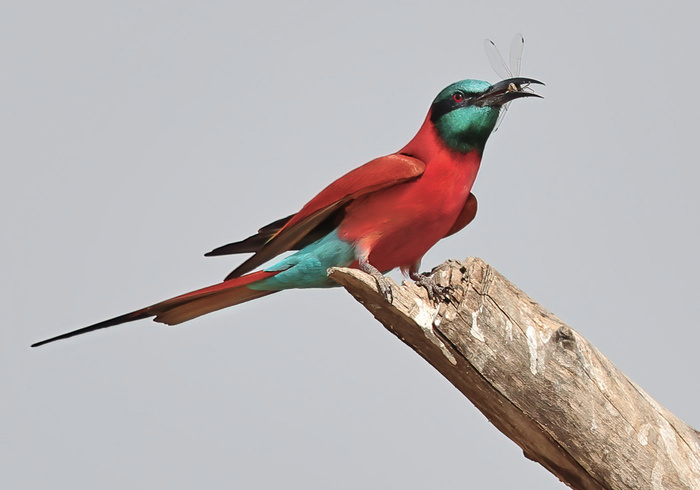
It was a bit distant but I was hopeful, Susan and I sat on an old fallen log under the shade of a small tree because it had now become quite hot. We were about fifteen yards from a short dead single tree stump and I set up in readiness. We couldn’t see to our left so it was a surprise when a single Carmine drifted past us, and then another and in total six birds appeared and started to hunt for food. What happened next was so fulfilling, a single bird perched right in front of us on the tree stump.
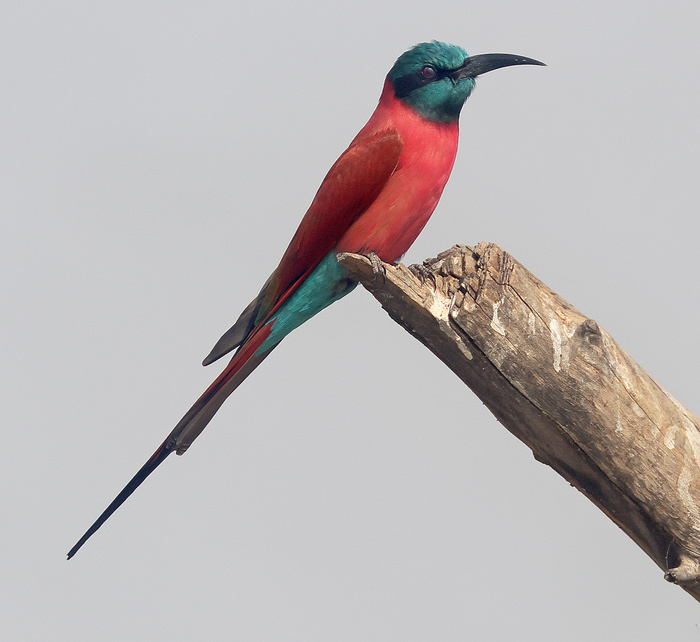
We were stunned, but it was no time for complacency, I shot it immediately and after looking at the camera screen I knew I had a good shot – What a feeling, I really can’t explain it.
It flew off but came back to the same perch time and again, we were enthralled and amazed because it was totally unfazed by our close proximity.
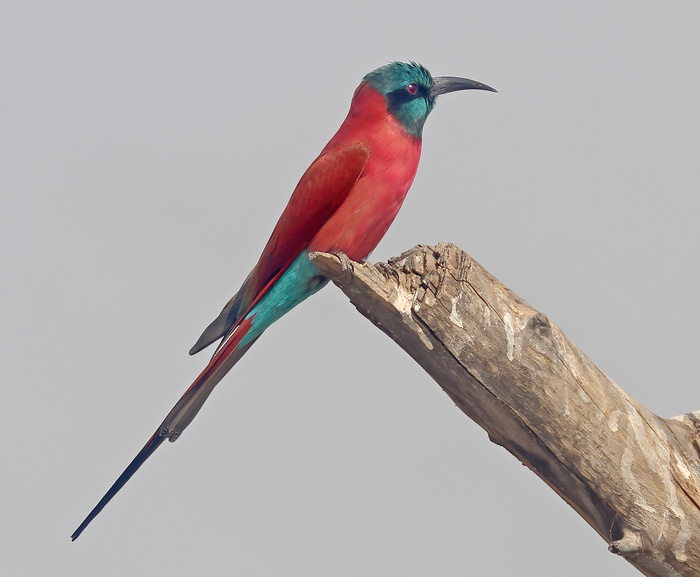
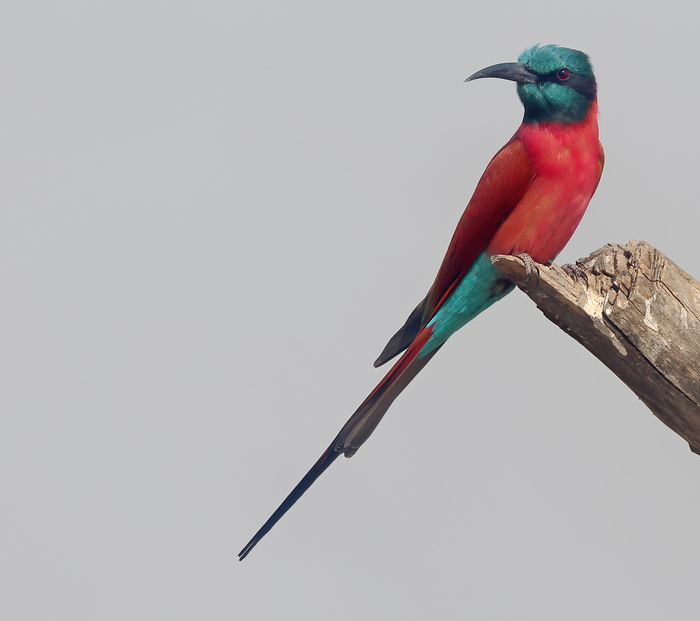
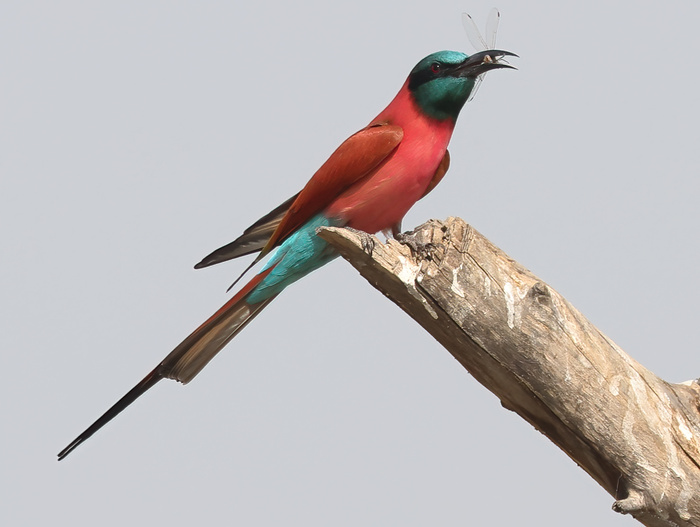
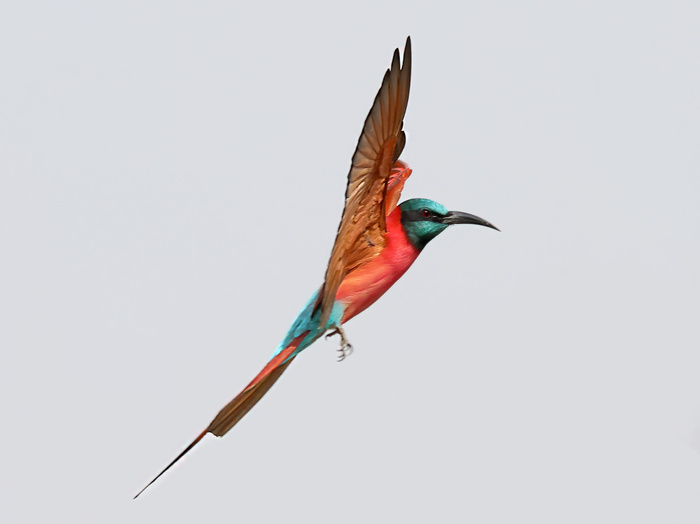
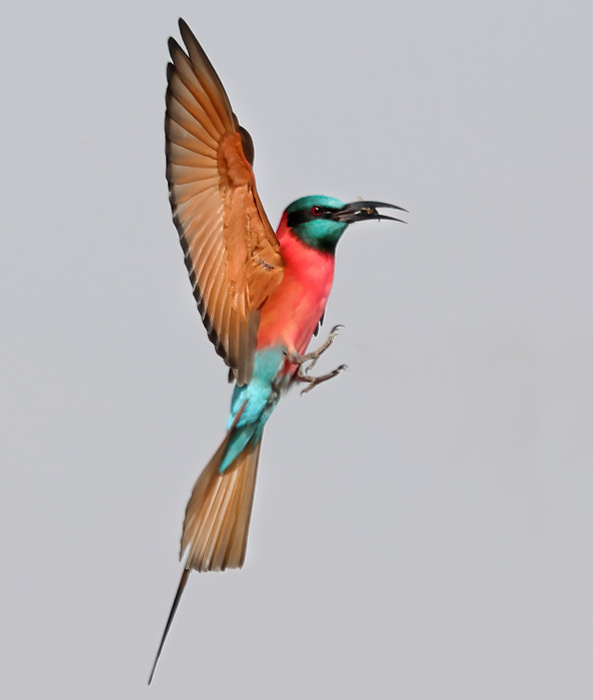
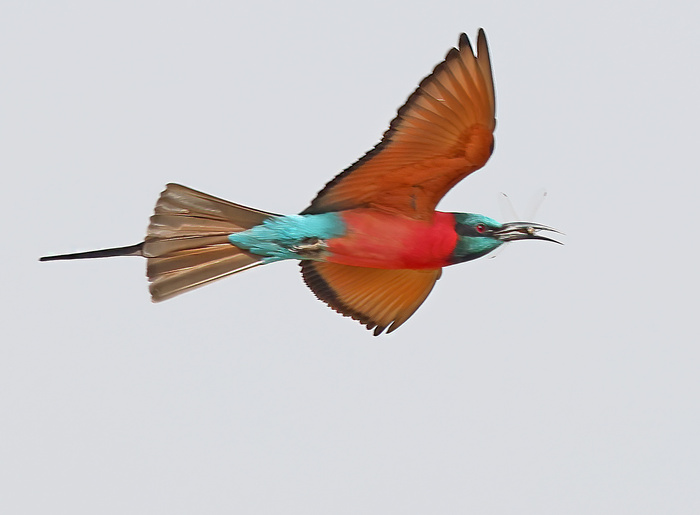
Because of the bird being faithful to this perch I decided to try and catch it in flight by focussing on the perch and then switching off the auto focus on the lens to avoid any hunting. I don’t carry a tripod in Africa because of the extra weight, so after the bird left the perch, I remained hand holding the camera and lens looking at the perch. Susan was watching the bird and when it was on its way back to the perch and about three yards away, she said ‘Now’ and I just held the shutter button down trying to capture it in flight on its approach. This worked after a fashion and I managed some flight shots as a bonus.
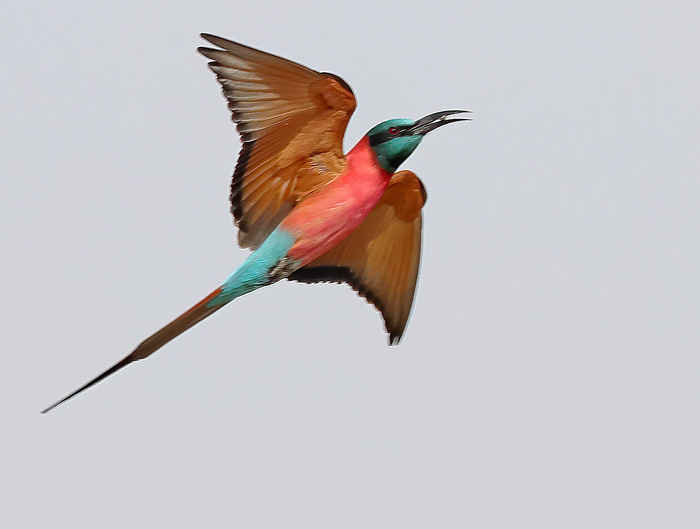
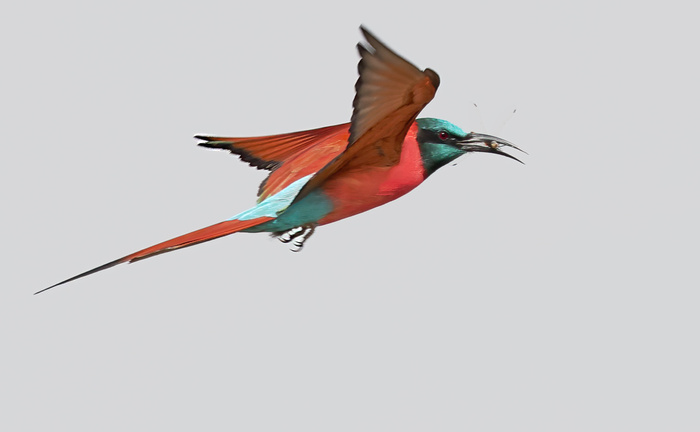
To say I was pleased would be a gross understatement.
It was a huge ambition finally achieved.
All shots taken with a Canon R5 Mk2 + Canon Rf 100-500 f7.1 lens - handheld.
I have been trying to locate these birds in The Gambia for five years but have always come up short. It’s been very frustrating. l have seen all the other species of Bee Eater in the country, but these birds have remained stubbornly elusive.
They are an intra African migrant and although fairly widespread can still be awkward to find. They can turn up almost anywhere but also be frustratingly absent the next day. On our last visit to The Gambia, we were due to travel ‘Up-river’ to Janjanbureh near Georgetown in an attempt to see them but we were delayed. To rub salt into the wounds they had been seen a few days earlier but were not there when we arrived, it was so disappointing!
Fast forward to just before Xmas last year when we had an email from the new owners of the lodges we always stay at, offering a special deal on accommodation, food and airport pick-up, which was very tempting indeed. By a remarkable coincidence a few days later while we were considering the offer I also received a WhatsApp message from our bird guide friend Dawda Barry, it read ‘Steve, do you still want the Carmine Bee Eaters’?
He told me he had found a site ‘Up-river’ where these birds were turning up every morning around the same time to feed on grasshoppers and dragonflies etc. This was the straw that broke the camel’s back, we booked up immediately and we told him to pick us up from the lodges the day after we arrived.
After a straightforward flight and journey to the lodges, arriving on a Friday, the new owners who are very nice people, were a little surprised after being told we would see them on Monday afternoon.
It was a smash and grab attempt for the Carmines.
The following morning after a quick breakfast and a packed lunch we were on the road in Dawda’s Mercedes. The journey was broken up into two stages because to attempt it in one isn’t realistic, it’s just too far. We stopped at Tendaba camp first and had a boat trip where we saw the Pel’s Fishing Owl, so a good start. Next morning we were on the road again, and after a few hours we arrived at our new accommodation, we went out for a bit of birding and didn’t see much really and I confess to being a little disappointed because Dawda said he had seen Carmines there previously. I was beginning to get those old feelings of Déjà Vu. However, Dawda assured me that tomorrow would be better. We had dinner and turned in.
The following morning, I was chomping at the bit to get going, but Dawda said there was no point in going too early and we would go somewhere else first. His confidence was not shared by me, but he was the professional guide and presumably knew what he was doing.
When we arrived at the site, a large wetland with literally thousands of Ducks, Geese, Herons and Egrets, it was quite a remarkable spectacle. We then navigated along a dirt track through the marshes and parked up. It was now 10.00 we walked along seeing many Blue Cheeked Bee Eaters but no Carmines. Dawda went walking and we stayed put and watched the area where we were, but still no luck.
I could see him coming back and he told us he had found a single bird and was confident more would come. We followed him to a group of dead trees and there on the top of one was a Northern Carmine Bee Eater – at last!
It was a bit distant but I was hopeful, Susan and I sat on an old fallen log under the shade of a small tree because it had now become quite hot. We were about fifteen yards from a short dead single tree stump and I set up in readiness. We couldn’t see to our left so it was a surprise when a single Carmine drifted past us, and then another and in total six birds appeared and started to hunt for food. What happened next was so fulfilling, a single bird perched right in front of us on the tree stump.
We were stunned, but it was no time for complacency, I shot it immediately and after looking at the camera screen I knew I had a good shot – What a feeling, I really can’t explain it.
It flew off but came back to the same perch time and again, we were enthralled and amazed because it was totally unfazed by our close proximity.
Because of the bird being faithful to this perch I decided to try and catch it in flight by focussing on the perch and then switching off the auto focus on the lens to avoid any hunting. I don’t carry a tripod in Africa because of the extra weight, so after the bird left the perch, I remained hand holding the camera and lens looking at the perch. Susan was watching the bird and when it was on its way back to the perch and about three yards away, she said ‘Now’ and I just held the shutter button down trying to capture it in flight on its approach. This worked after a fashion and I managed some flight shots as a bonus.
To say I was pleased would be a gross understatement.
It was a huge ambition finally achieved.
All shots taken with a Canon R5 Mk2 + Canon Rf 100-500 f7.1 lens - handheld.