A small wetland with nice birds.
08th February 2026
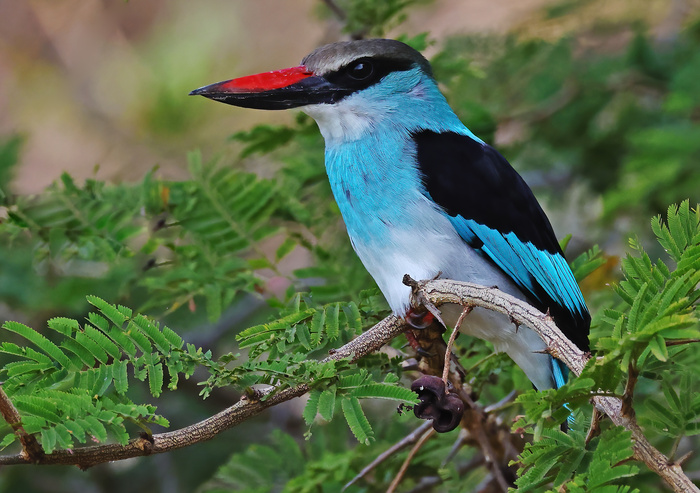
Driving along a quiet road early morning we stopped alongside a small seasonal wetland about half the size of a football pitch. After walking down to the water’s edge, I could immediately see a Blue Breasted Kingfisher perched in some bushes about fifty yards away. These birds are very brightly coloured with a bright blue breast and a large red beak and they are about a foot in length, so therefore quite conspicuous, but sometimes, however, reasonably tolerant.
They can usually be found in dense humid forested areas like mangroves and swamps across equatorial Africa in the dry season, having moved there from secondary forests, plantations, and savannah where they feed on insects etc.
Many African Kingfishers live in dry habitats feeding on insects e.g. Woodland, Pygmy, Striped, Grey Headed and the above birds. These birds all adapt their behaviour and habitats because they have to in order to survive. These birds, unlike our Common Kingfisher e.g. cannot rely on a year round supply of water, so they are all much more versatile and therefore different to what our perception of a Kingfisher should be.
I thought I’d try my luck and walk towards it, stopping every five yards to take a shot. Quite remarkably this lovely bird allowed me to approach to within ten yards at which point I stopped and took my last shot because I didn’t want to disturb it.
I was backtracking when Mass, our friend and Susan who had been watching me shouted ‘Steve, behind you’!
I turned around to see an Osprey swooping in to check out the water for fish, but it was far too shallow there to hold anything of a size that would interest it. It made a couple of passes and then flew off and disappeared, but not before I managed to take a few shots.
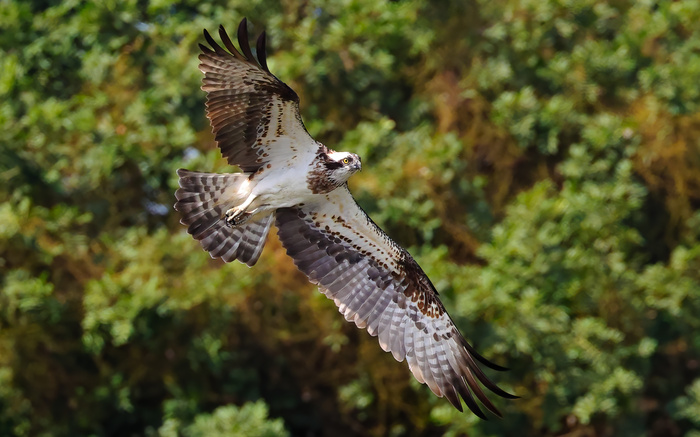
This is what I meant in my previous blog post about Ospreys turning up anywhere in The Gambia.
They can usually be found in dense humid forested areas like mangroves and swamps across equatorial Africa in the dry season, having moved there from secondary forests, plantations, and savannah where they feed on insects etc.
Many African Kingfishers live in dry habitats feeding on insects e.g. Woodland, Pygmy, Striped, Grey Headed and the above birds. These birds all adapt their behaviour and habitats because they have to in order to survive. These birds, unlike our Common Kingfisher e.g. cannot rely on a year round supply of water, so they are all much more versatile and therefore different to what our perception of a Kingfisher should be.
I thought I’d try my luck and walk towards it, stopping every five yards to take a shot. Quite remarkably this lovely bird allowed me to approach to within ten yards at which point I stopped and took my last shot because I didn’t want to disturb it.
I was backtracking when Mass, our friend and Susan who had been watching me shouted ‘Steve, behind you’!
I turned around to see an Osprey swooping in to check out the water for fish, but it was far too shallow there to hold anything of a size that would interest it. It made a couple of passes and then flew off and disappeared, but not before I managed to take a few shots.
This is what I meant in my previous blog post about Ospreys turning up anywhere in The Gambia.