Glossy Starling identification.
07th March 2026
Difficult at times, unless of course you are seeing them regularly.
Most of them are relatively easy but two are slightly more difficult.
The problems are with the iridescent nature of their plumage. Light plays a strange game with the identification of these birds sometimes.
Straightforward is the Long-tailed Glossy Starling - it has an obvious long tail and a conspicuous white eye.
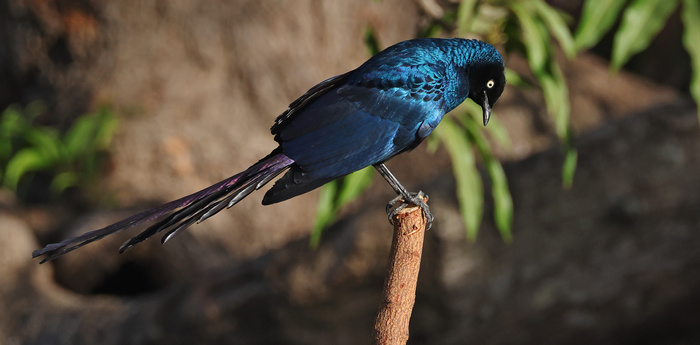
Purple Glossy Starling again is quite easy, it’s the biggest of the bunch and is overall a very glossy purple even around the head.
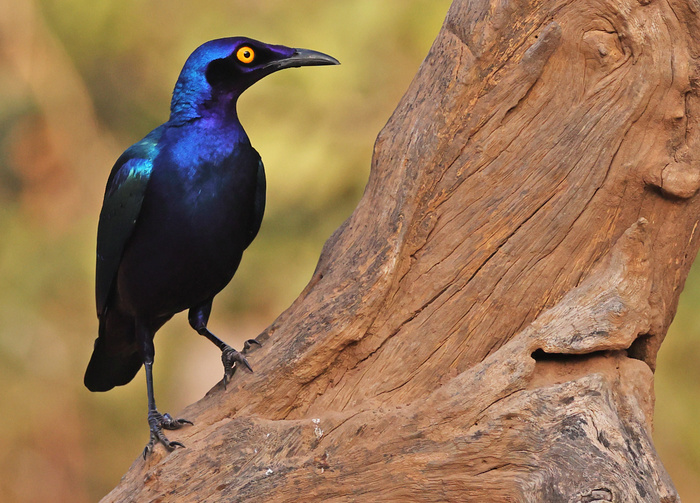
Bronze-tailed Glossy Starling has a very conspicuous red eye.
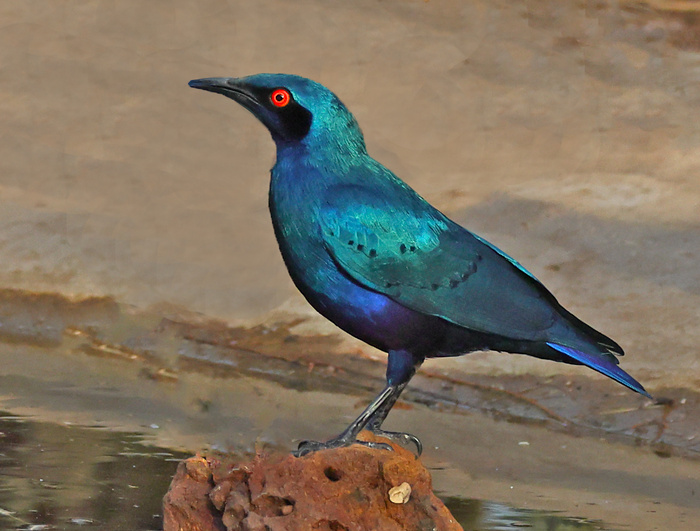
The two problematic birds are Greater-Blue eared Starling and Lesser-Blue eared Starling. The greater is the bigger bird but if you don’t have a comparison then it’s more awkward.
A main identification tool according to field guides is their voices, but if you don’t hear these nasal calls, you obviously can’t apply this method, and if the birds are in a flock, you don’t know what bird is making a particular call.
However, there are other differences, the Greater Blue-eared is listed as bigger, but only by about two centimetres and it also has a bigger beak.
Diagnostic differences plumage-wise are the head patterns, notably the ear coverts;
The Greater Blue-eared pictured below has quite poorly defined ear coverts which tend to blend in with its mask.
Beak does look quite large.
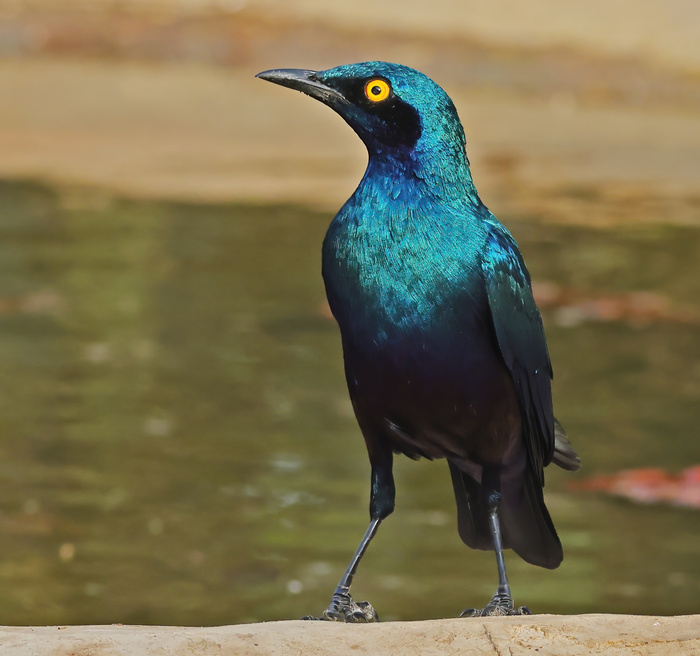
The Lesser Blue-eared pictured below has much more sharply defined ear coverts forming a much narrower and more contrasting mask.
Much smaller beak.
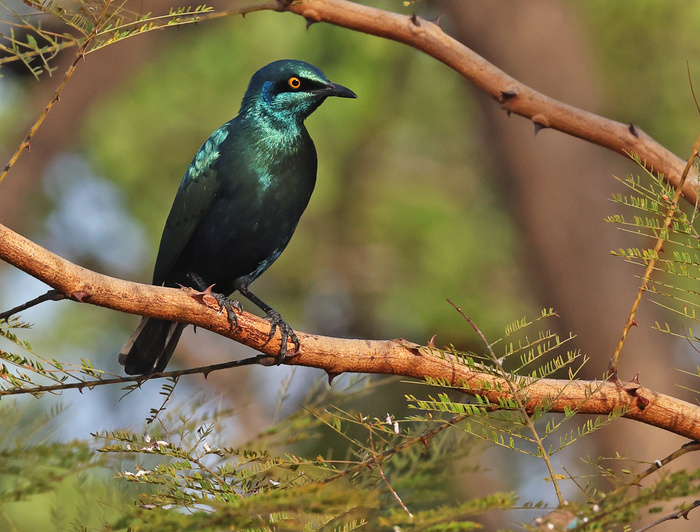
There is also Splendid Glossy Starling which I didn't see but has a conspicuous creamy white eye with a normal length tail so not confusable with the Long-tailed Glossy starling.
Also a Chestnut bellied Starling which is really obvious to identify.
Here is a group bathing.

Below is a comparison with what I see from left to right Lesser Blue-eared / Bronze Tailed / Purple Glossy.
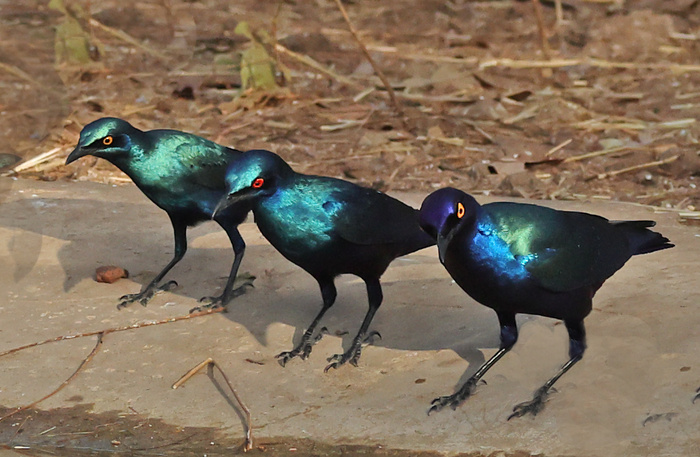
However, it isn’t always so straightforward and my analyses of these birds identification shown here may well be incorrect.
Most of them are relatively easy but two are slightly more difficult.
The problems are with the iridescent nature of their plumage. Light plays a strange game with the identification of these birds sometimes.
Straightforward is the Long-tailed Glossy Starling - it has an obvious long tail and a conspicuous white eye.
Purple Glossy Starling again is quite easy, it’s the biggest of the bunch and is overall a very glossy purple even around the head.
Bronze-tailed Glossy Starling has a very conspicuous red eye.
The two problematic birds are Greater-Blue eared Starling and Lesser-Blue eared Starling. The greater is the bigger bird but if you don’t have a comparison then it’s more awkward.
A main identification tool according to field guides is their voices, but if you don’t hear these nasal calls, you obviously can’t apply this method, and if the birds are in a flock, you don’t know what bird is making a particular call.
However, there are other differences, the Greater Blue-eared is listed as bigger, but only by about two centimetres and it also has a bigger beak.
Diagnostic differences plumage-wise are the head patterns, notably the ear coverts;
The Greater Blue-eared pictured below has quite poorly defined ear coverts which tend to blend in with its mask.
Beak does look quite large.
The Lesser Blue-eared pictured below has much more sharply defined ear coverts forming a much narrower and more contrasting mask.
Much smaller beak.
There is also Splendid Glossy Starling which I didn't see but has a conspicuous creamy white eye with a normal length tail so not confusable with the Long-tailed Glossy starling.
Also a Chestnut bellied Starling which is really obvious to identify.
Here is a group bathing.
Below is a comparison with what I see from left to right Lesser Blue-eared / Bronze Tailed / Purple Glossy.
However, it isn’t always so straightforward and my analyses of these birds identification shown here may well be incorrect.