News
"Dancing On Ice" at Llangors Lake.
12th January 2018
12th January 2018
It was still dark when I dragged myself out of a cosy warm bed this morning and there was another cold and frosty morning in the hide at Llangors Lake waiting for me. I must admit it didn’t seem a very nice prospect but the early bird catches the worm – so they say.
I left my car defrosting while I made some breakfast and filled my small flask with coffee, both very necessary in this cold weather. I’m lucky I can leave my car running because I have no near neighbours to disturb with my sometimes very early morning activities.
When I reached the bird hide at the lake it was surrounded by frost and the shallow water all around was frozen with a light covering of ice. A Grey Heron took flight as I approached, it had seen and heard me long before I had seen it, they are so wary, like all Herons. I quickly got inside the hide and settled down as the light got brighter, I had a few more windows open this time because there was no cold wind, unlike my last visit. Suddenly from under the hide a Kingfisher burst out into the morning light but it took one look at the frozen lake margins and quickly bid a retreat back into the flooded woods - It must be struggling to fish at the moment.
After a short time a few Wrens became active and ventured out onto the ice, they looked comical as they appeared unsure of their footing.
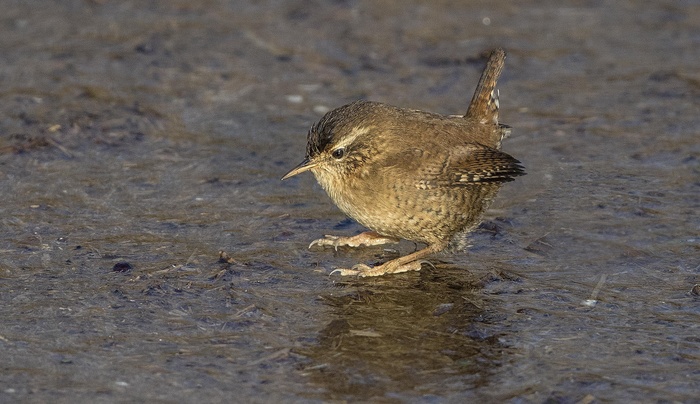
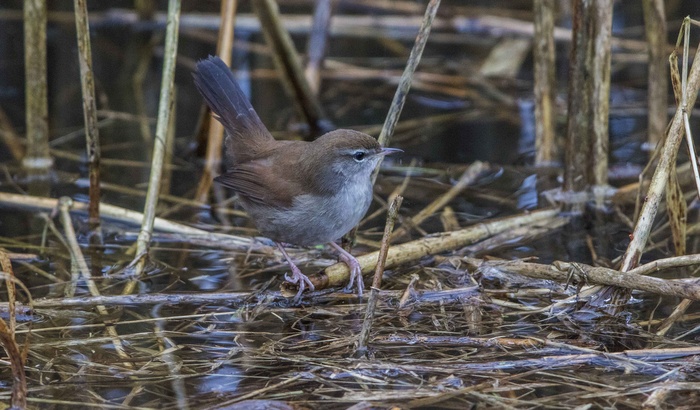
Then I could see movement in the reeds and surprisingly a Cetti’s Warbler also came out onto the ice it also looking unsure of its footing. I watched it quizzically peering down through the ice looking at what was underneath but unable to do anything about it.

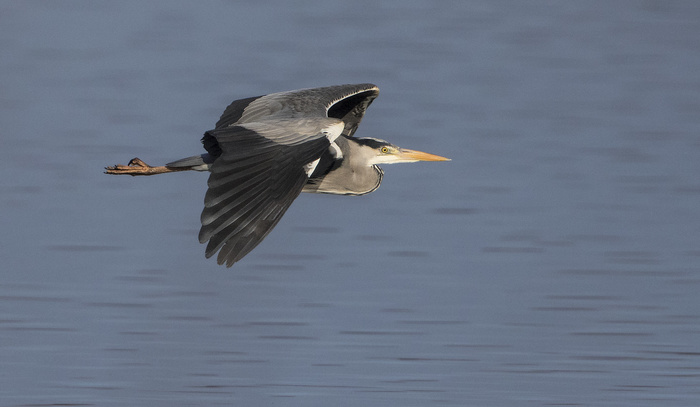
I took a few shots of this comical situation and when I was pouring a cup of coffee, out of nowhere the earlier Grey Heron was flying past the hide and I quickly fired off a few frames in an attempt to catch it in flight.
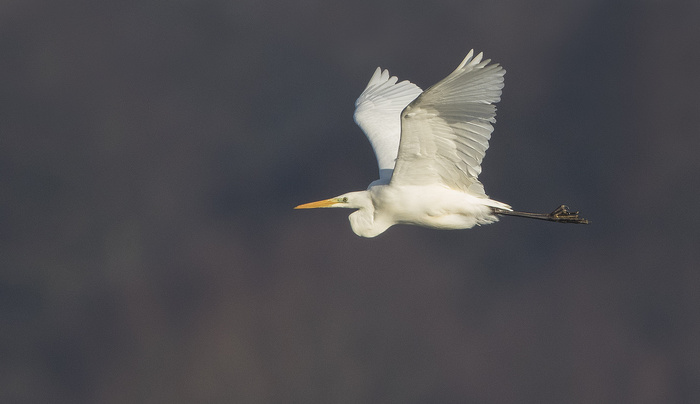
I was checking the back of my camera to see the images and I casually looked up and unbelievably a Great White Egret was now flying past the hide, once again I had to quickly fire off a few shots before it drifted away.
I was becoming reluctant to look away in case anything else flew by and now I could hear a Water Rail squealing very close by, however, I didn’t pay too much attention to this because you can hear them all the time, but I should have because it came scurrying across the ice disappearing before I could do anything about it. I remember seeing them running quickly across the same small area of ice the last time I was in the hide so I thought ‘right I’ll try and catch one crossing’ because they are not as fast on ice as they are on water, (they have less traction). I waited and waited until I could hear the same squeal close by and sure enough one came out onto the ice and it ran across a bit slower this time, looking in my direction obviously unsure after its last crossing.
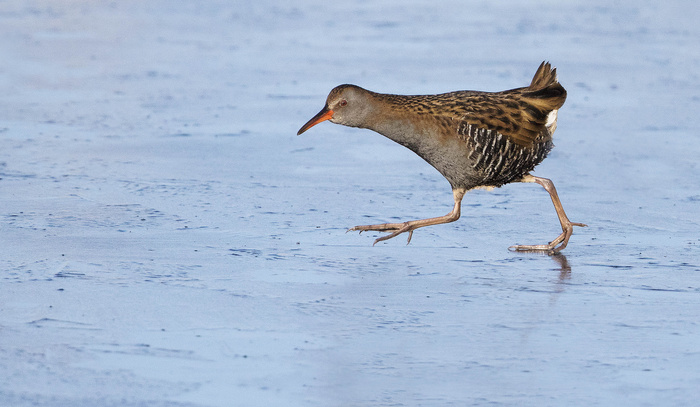
This didn’t mean I had much time, still only about five seconds, I immediately fired a load of shots as it crossed and disappeared into the sanctuary of the reeds.
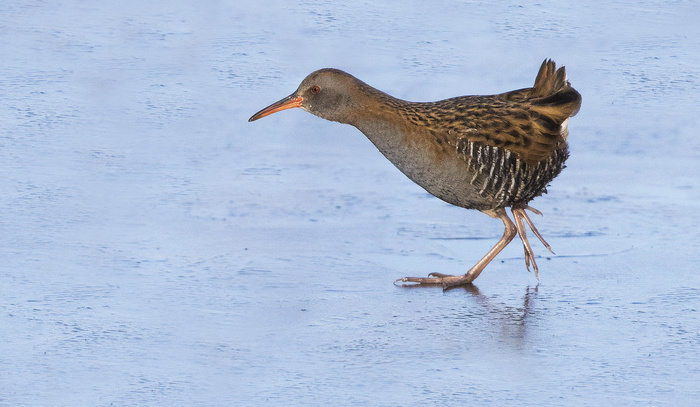
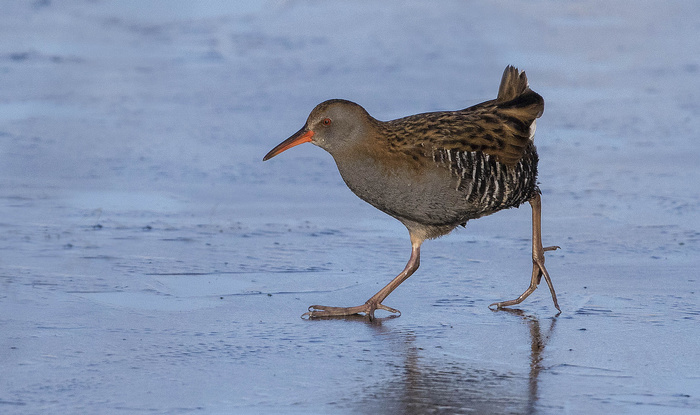
It was quite an entertaining period but as the morning went on it became quiet and as I was getting cold I packed up and made my way home quite satisfied that I'd at least got a few shots - worth the effort of getting up early.
I left my car defrosting while I made some breakfast and filled my small flask with coffee, both very necessary in this cold weather. I’m lucky I can leave my car running because I have no near neighbours to disturb with my sometimes very early morning activities.
When I reached the bird hide at the lake it was surrounded by frost and the shallow water all around was frozen with a light covering of ice. A Grey Heron took flight as I approached, it had seen and heard me long before I had seen it, they are so wary, like all Herons. I quickly got inside the hide and settled down as the light got brighter, I had a few more windows open this time because there was no cold wind, unlike my last visit. Suddenly from under the hide a Kingfisher burst out into the morning light but it took one look at the frozen lake margins and quickly bid a retreat back into the flooded woods - It must be struggling to fish at the moment.
After a short time a few Wrens became active and ventured out onto the ice, they looked comical as they appeared unsure of their footing.
Then I could see movement in the reeds and surprisingly a Cetti’s Warbler also came out onto the ice it also looking unsure of its footing. I watched it quizzically peering down through the ice looking at what was underneath but unable to do anything about it.
I took a few shots of this comical situation and when I was pouring a cup of coffee, out of nowhere the earlier Grey Heron was flying past the hide and I quickly fired off a few frames in an attempt to catch it in flight.
I was checking the back of my camera to see the images and I casually looked up and unbelievably a Great White Egret was now flying past the hide, once again I had to quickly fire off a few shots before it drifted away.
I was becoming reluctant to look away in case anything else flew by and now I could hear a Water Rail squealing very close by, however, I didn’t pay too much attention to this because you can hear them all the time, but I should have because it came scurrying across the ice disappearing before I could do anything about it. I remember seeing them running quickly across the same small area of ice the last time I was in the hide so I thought ‘right I’ll try and catch one crossing’ because they are not as fast on ice as they are on water, (they have less traction). I waited and waited until I could hear the same squeal close by and sure enough one came out onto the ice and it ran across a bit slower this time, looking in my direction obviously unsure after its last crossing.
This didn’t mean I had much time, still only about five seconds, I immediately fired a load of shots as it crossed and disappeared into the sanctuary of the reeds.
It was quite an entertaining period but as the morning went on it became quiet and as I was getting cold I packed up and made my way home quite satisfied that I'd at least got a few shots - worth the effort of getting up early.
A cold morning at Llangors Lake.
06th January 2018
06th January 2018
I was out just after first light this morning after being confined to barracks during this appalling weather we have had to endure lately. I made my way over to the ‘New’ hide at Llangors Lake and set up in the one corner. I only had a couple of shutters open in the hide because the wind was bitterly cold. It had also started to rain quite heavily and with dull grey skies overhead it was not a pleasant morning at all. I had a small flask of coffee with me and I have to say I was glad of it as the morning went on because I was freezing. There was not much bird life and I began to question myself what I was doing there. Then suddenly I could hear a Kingfisher ‘Peeping’ from in the woods adjacent to the hide, this caught my attention and then I saw her perch on a horizontal branch about forty yards away, she dived into the shallows then immediately flew off and I didn’t see her again. She is probably fishing in the flooded woods to avoid the choppy and partly frozen lake margins. The River Usk has difficult fishing conditions because of the heavy rain that has fallen lately and these are tough times for Kingfishers. This is the best time to see these lovely birds fishing on lakes and canals trying to survive the flooding. I could also see several Wrens foraging down low amongst the reeds and I had seen a Water Rail a couple of times scurrying across a small area of open water, they usually dash from one area of reeds to another when they are in secretive mode, which is more often than not!
I could hear a Cetti's Warbler calling from the reeds, their call is far less distinctive than their explosive song, but with practise it is easy to recognize. I didn’t get excited because this doesn’t mean these awkward skulking birds are going to show, they can be infuriating for a birder because most of the time they just give a fleeting glimpse before they disappear into the base of a reed bed to hide. I now had to huddle down because the temperature had fallen to another chill level and I was forced to close the shutter directly facing the lake as a bitter wind scoured across the reed beds. Then I could see a small bird moving about in the bottom of the reeds and I could see the reeds moving slightly, I thought it was one of the Wrens but as I checked, (you have to check), I could now see it was a Cetti's Warbler. I positioned my lens where I thought the bird might appear, (if you do this then you don’t have to react and search and if you have guessed correctly you might get an extra shot or two). I waited patiently, focussed on a gap in the reeds and then I was rewarded as the Cetti's came out into the open. I fired off a few shots and then it was gone again. These were not great shots, high iso and low shutter speeds because of the dreadful light, but at least I had pinned a Cetti's down, no mean achievement! I waited for another ten minutes or so but it had gone very quiet and I decided to pack up because I was very cold. When I arrived home Susan asked me if I would like some homemade, cream of Butternut Squash and Red Pepper soup with warm buttered toast, this was a rhetorical question after the freezing temperatures I had endured in the bird hide!
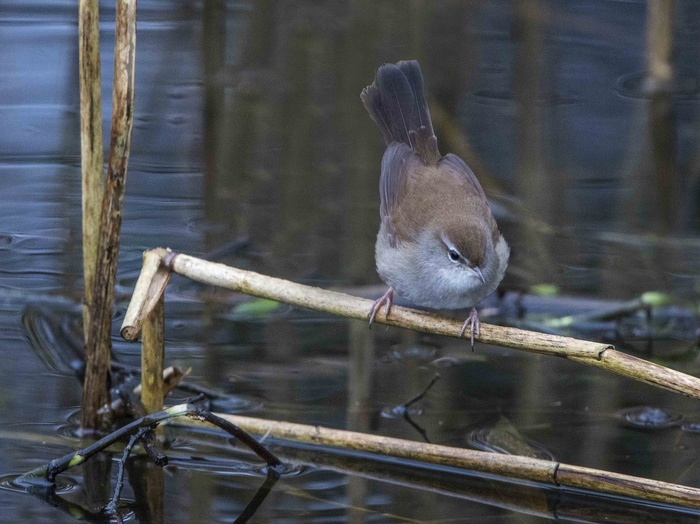
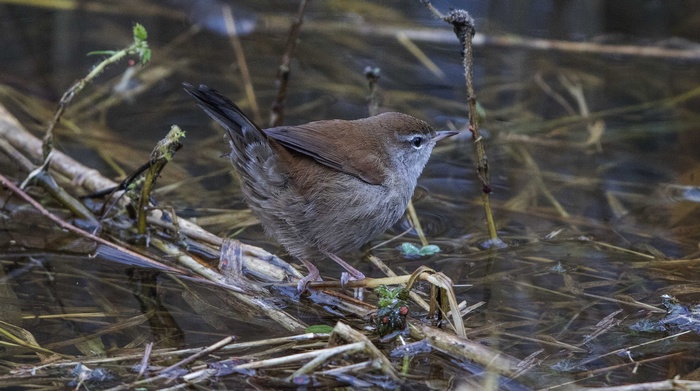
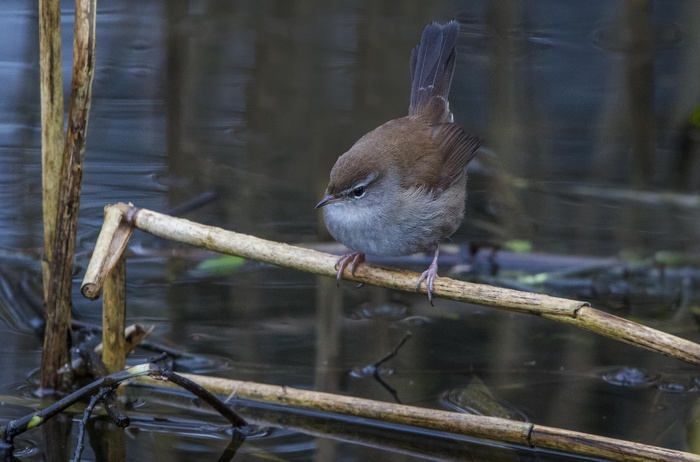
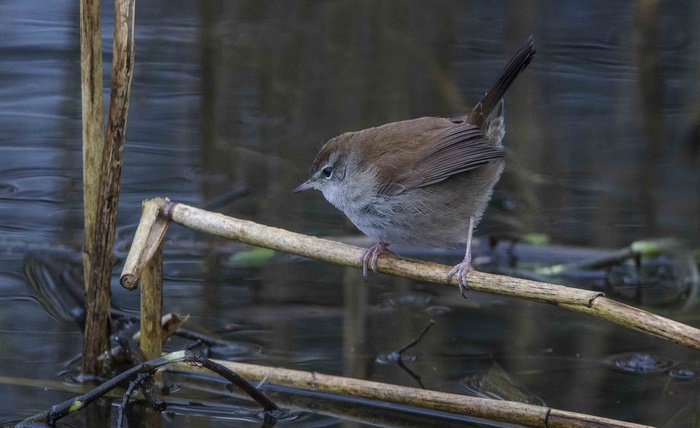
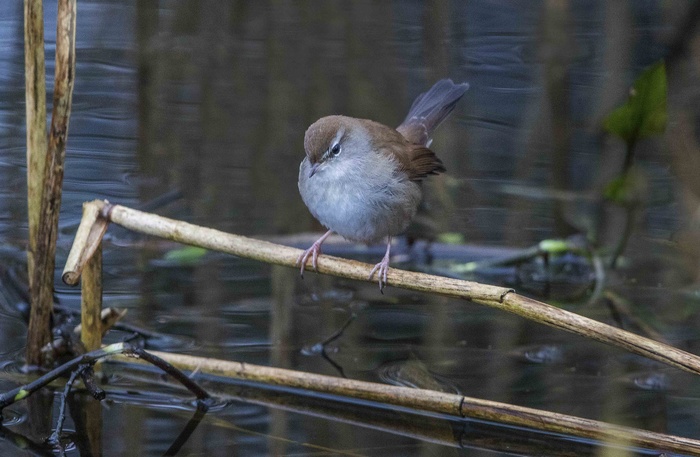
I could hear a Cetti's Warbler calling from the reeds, their call is far less distinctive than their explosive song, but with practise it is easy to recognize. I didn’t get excited because this doesn’t mean these awkward skulking birds are going to show, they can be infuriating for a birder because most of the time they just give a fleeting glimpse before they disappear into the base of a reed bed to hide. I now had to huddle down because the temperature had fallen to another chill level and I was forced to close the shutter directly facing the lake as a bitter wind scoured across the reed beds. Then I could see a small bird moving about in the bottom of the reeds and I could see the reeds moving slightly, I thought it was one of the Wrens but as I checked, (you have to check), I could now see it was a Cetti's Warbler. I positioned my lens where I thought the bird might appear, (if you do this then you don’t have to react and search and if you have guessed correctly you might get an extra shot or two). I waited patiently, focussed on a gap in the reeds and then I was rewarded as the Cetti's came out into the open. I fired off a few shots and then it was gone again. These were not great shots, high iso and low shutter speeds because of the dreadful light, but at least I had pinned a Cetti's down, no mean achievement! I waited for another ten minutes or so but it had gone very quiet and I decided to pack up because I was very cold. When I arrived home Susan asked me if I would like some homemade, cream of Butternut Squash and Red Pepper soup with warm buttered toast, this was a rhetorical question after the freezing temperatures I had endured in the bird hide!
Happy Xmas
24th December 2017
24th December 2017
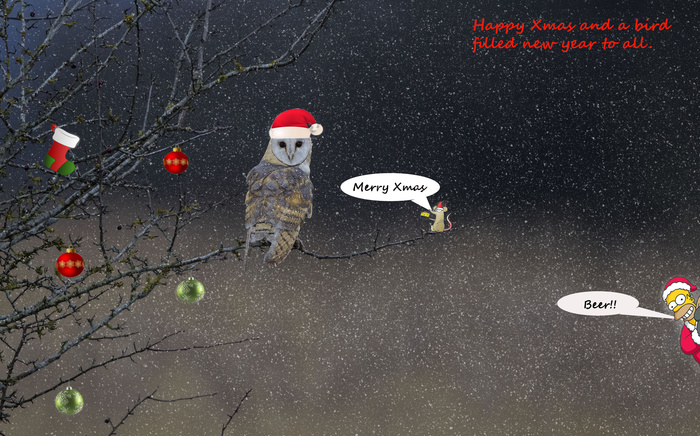
Another year is rapidly drawing to a close, I don't know if it's me but they seem to pass more quickly these days. This site has now received over 1.6 million hits with visitors from over forty countries, it still amazes me when I see those figures, so I'd like to wish everybody who visits and hopefully enjoys this website a Happy, Healthy and Peaceful Xmas and a bird-filled new year.
Long may we all continue!
Steve.
Long may we all continue!
Steve.
Male Brambling in my garden, it's been a long wait!!
19th November 2017
19th November 2017
There has been a large movement of Bramblings into the UK over the last week or so. Every winter the UK has wintering Bramblings, some years have big numbers where flocks of hundreds can be seen. However, we very rarely see those big numbers in the Brecon Beacons, where a good flock is perhaps ten or so. Bramblings are basically ground feeders and they have a liking for fallen Beech Mast which can carpet a woodland floor in good years. This year Susan and I have walked in a few deciduous woodlands and there is definitely a lack of Beech Mast, whereas last year it was in abundance. We have lived in our present home for over twenty years and we have only seen one female Brambling in the garden in all that time. This year I’m pleased to say that has changed because there are some stubble fields where crops have been harvested near to where we live and there is currently a mixed Finch flock flying around and feeding in these fields. With this in mind I have been putting extra sunflower seeds out, more than normal, in an effort to attract a Brambling to our garden. I’m pleased to say this has been successful and Susan called me a few days ago to come and see two male Bramblings feeding on the grass outside the house. Success! – But I wanted to create a photographic situation, not just a shot of birds feeding in the grass. I removed one of the old logs I keep in a pile at the bottom of the garden and set it up outside one of my garden sheds and then scattered some seeds around. It took two days but yesterday a male Brambling was feeding around the log. I waited for them to fly away as they often do and I hid in the shed with the door wedged open and behind some ‘Camo Netting’.
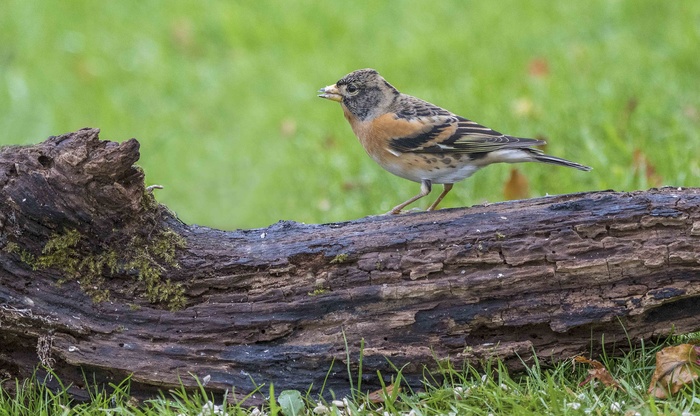
I have seen some people have difficulty and misidentify Brambling and Chaffinch. I can’t see why people have this difficulty because Brambling are so distinctive with their burnt orange and black spotted plumage and their grey / black heads. In addition if you see a flock of birds rise up off a woodland floor in winter and you see white rump patches then they will almost certainly be Brambling. They are such lovely birds and as a result people want to see and photograph them if possible.
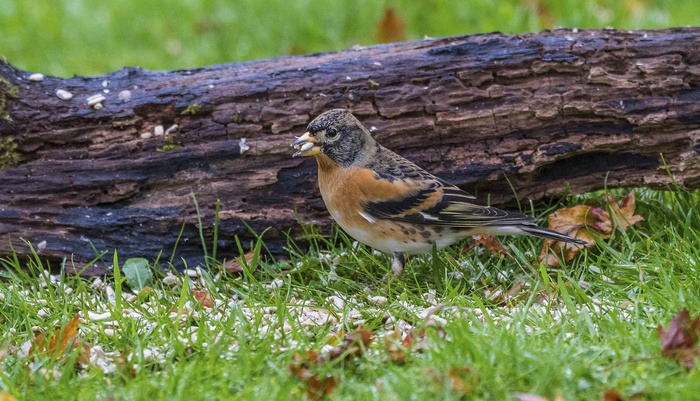
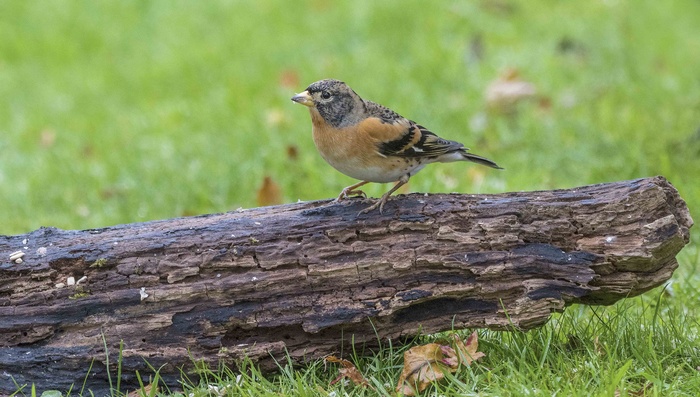
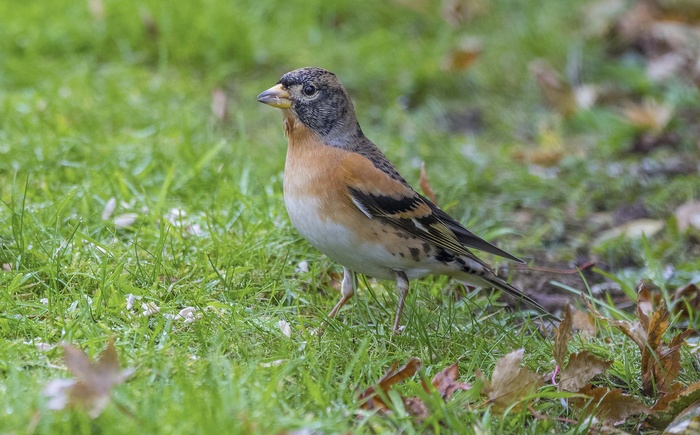
I have seen some people have difficulty and misidentify Brambling and Chaffinch. I can’t see why people have this difficulty because Brambling are so distinctive with their burnt orange and black spotted plumage and their grey / black heads. In addition if you see a flock of birds rise up off a woodland floor in winter and you see white rump patches then they will almost certainly be Brambling. They are such lovely birds and as a result people want to see and photograph them if possible.
Always look behind you!!
12th November 2017
12th November 2017
I was out last week in the late afternoon at Llangors Lake in the Brecon Beacons hoping to see the Starling murmurations that have been taking place there. I arrived at about 16.00 ready for the Starlings to come in at about 16.30. It was a glorious Autumn afternoon and I just stood there with my trusty Canon 17-40 f4 lens on my Canon 7D Mkii. At about 16.30 tens of thousands of Starlings came pouring in to the reedbeds, swirling around before dropping in to roost and luckily I was able to shoot some half decent video footage. While I was waiting to see if they had finished arriving I just casually looked back over my shoulder and I nearly fell over when I did because there was an amazing sunset unfolding behind me. Thankfully I was able to quickly attach a circular polarizer and a 1 stop ND grad filter to the lens and take a few shots. I crouched down and deliberately shot up through the foliage to try and get a better effect.
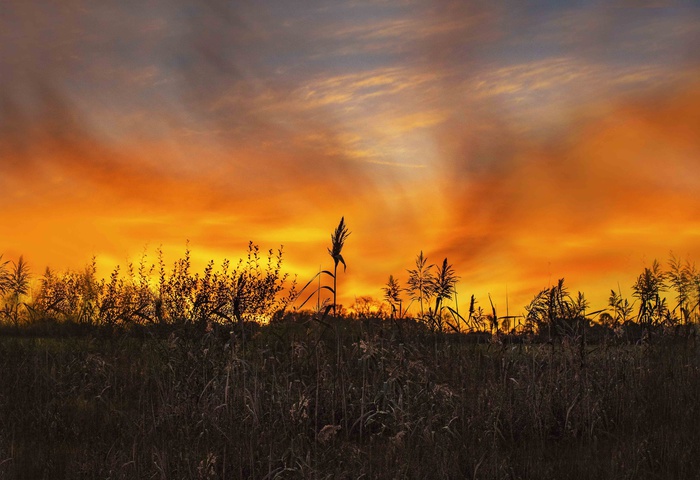
Moral of the story - it's in the title.
Moral of the story - it's in the title.
Waterfall Country.
26th October 2017
26th October 2017
It was a lovely day yesterday so Susan and I went walking in what is known locally as 'Waterfall Country'. We were out early and started our walk from Pont Nedd Fechan and we walked for about a mile up to the first main waterfall, Sgwd Gwladus. There was no one else around and we watched Salmon leaping over one of the smaller falls during the walk up. We had superb close views of several Dippers, this is a great habitat for them! It was a lovely peaceful walk in beautiful surroundings and a total contrast from the views up on the Beacons.
I took a few shots as a record of the walk.
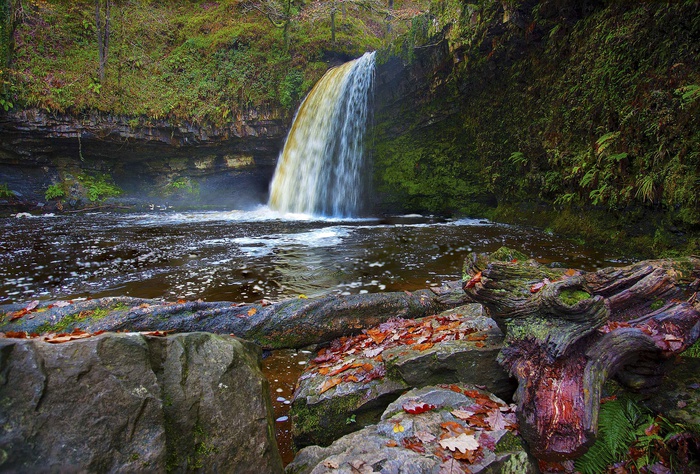
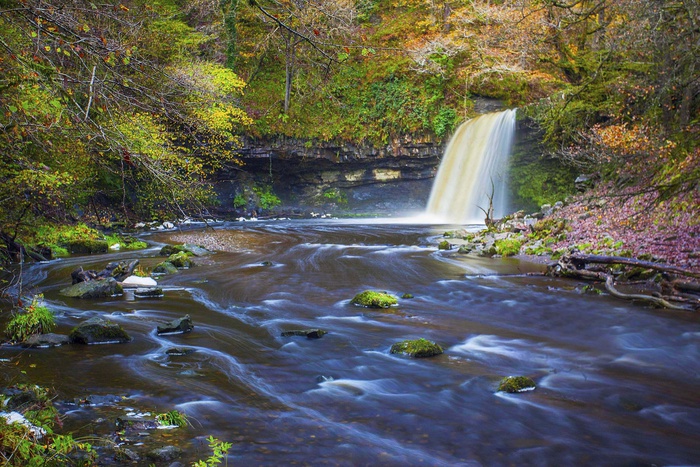
Both Images taken with my usual set-up.
Canon 1D MK 2
Canon 17-40 f4
Manfrotto 055 CX3 Tripod
Manfrotto MH XPRO three way tilt and pan head.
Canon remote cable release
Also:
A circular Polarizer to remove glare.
An ND 200 Filter to slow the water up.
Also used was a technique called focus stacking;
This involves setting up your composition then locking everything down on your tripod.
These shots are best taken from a low position, as indeed are many.
Switch your lens to manual focus and take a series of shots begining from as close as you can, then 1 metre ; 2 metres ; etc etc up to infinity, maybe four or five shots, taking care not to move your tripod.
Process one shot, eg sharpness, contrast, colour etc then open up all the images and blend them all together in photoshop.
(If it sounds complicated, don't worry it's not)!
This technique overcomes the blurring in areas of your image caused by depth of field.
Using typically the image with the rocks in the foreground:
If the rocks were sharp then the waterfall would be blurred and conversely the same.
Stopping down your lens can help to reduce shallow depth of field but cannot overcome all the blurring.
So to use focus stacking;
Focus manually on the very near rock, then the red leaves on the next rock, then the curly log, then the water and then the waterfall itself, five images. The photoshop programme will correctly align all the images chosen so they sit perfectly on top of each other. It will also blend the images by content and this is the clever thing, the programme will select all the sharp areas from all the images and blend them into one seamless image. Thereby producing one image that is sharp from front to back. A lot of macro photographers use this technique where it is particularly effective, as depth of field causes them even more problems with close up images.
I took a few shots as a record of the walk.
Both Images taken with my usual set-up.
Canon 1D MK 2
Canon 17-40 f4
Manfrotto 055 CX3 Tripod
Manfrotto MH XPRO three way tilt and pan head.
Canon remote cable release
Also:
A circular Polarizer to remove glare.
An ND 200 Filter to slow the water up.
Also used was a technique called focus stacking;
This involves setting up your composition then locking everything down on your tripod.
These shots are best taken from a low position, as indeed are many.
Switch your lens to manual focus and take a series of shots begining from as close as you can, then 1 metre ; 2 metres ; etc etc up to infinity, maybe four or five shots, taking care not to move your tripod.
Process one shot, eg sharpness, contrast, colour etc then open up all the images and blend them all together in photoshop.
(If it sounds complicated, don't worry it's not)!
This technique overcomes the blurring in areas of your image caused by depth of field.
Using typically the image with the rocks in the foreground:
If the rocks were sharp then the waterfall would be blurred and conversely the same.
Stopping down your lens can help to reduce shallow depth of field but cannot overcome all the blurring.
So to use focus stacking;
Focus manually on the very near rock, then the red leaves on the next rock, then the curly log, then the water and then the waterfall itself, five images. The photoshop programme will correctly align all the images chosen so they sit perfectly on top of each other. It will also blend the images by content and this is the clever thing, the programme will select all the sharp areas from all the images and blend them into one seamless image. Thereby producing one image that is sharp from front to back. A lot of macro photographers use this technique where it is particularly effective, as depth of field causes them even more problems with close up images.
Rock Thrush, (Don't feed it meal worms!!).
23rd October 2017
23rd October 2017
I was hoping this unfortunate little bird would have flown away before now because then it would not have been subjected to the appalling behaviour of some so-called photographers. These people make me so angry, they haven't got the first clue about how to behave. As soon as it becomes apparent that a rare bird is likely to stay for some time they descend like vultures and anything goes in their quest for a photograph just to inflate their already bloated egos. When Susan and I saw the bird a week last Saturday everyone was well behaved once the bird was found. We all kept our distance and just watched this lovely bird go about its business of feeding naturally and all the sensible birders and photographers took whatever views and shots that were on offer and left contented. That's the way it should be, but no, that's not enough for these people, they want more, so in order to get closer shots they bait the areas the bird frequents until the poor thing becomes dependent on them for its food. The ground where this bird is feeding is carpeted with meal worms thrown down by these people and this behaviour is encouraging the bird to become static and dependant on a single food, thereby destroying its feeding habits and diet.
Inevitably this bird will be either predated because of its reluctance to move from being over fed or die from the parasites that some of these low quality meal worms contain. It was the same scenario with a Bluethroat and a Red Footed Falcon in recent times. I despair at the behaviour of these people, but it doesn't matter to them because when this bird is dead they will just move onto the next rare bird that comes along. I hope this lovely bird survives but I fear the only way that will happen is if it leaves......
Inevitably this bird will be either predated because of its reluctance to move from being over fed or die from the parasites that some of these low quality meal worms contain. It was the same scenario with a Bluethroat and a Red Footed Falcon in recent times. I despair at the behaviour of these people, but it doesn't matter to them because when this bird is dead they will just move onto the next rare bird that comes along. I hope this lovely bird survives but I fear the only way that will happen is if it leaves......
Rock Thrush.
14th October 2017
14th October 2017
On Thursday this week a local birder from the Blaenavon area found a 1st winter male Rock Thrush in an isolated quarry on the Blorenge Mountain, near Abergavenny. These birds are a major rarity in the UK and are on many birders list of priorities. Rock Thrushes normally inhabit high altitude rocky areas, much higher than the Blue Rock Thrush and they are also quite shy and therefore difficult to see. Susan and I went over to the quarry yesterday in awful weather but we managed to see the bird in spite of the dire visibility. The weather forecast predicted an improving weather picture for today so we decided to have another go at seeing it. When we arrived at 08.30 there were a line of cars already parked right up the roadside and we only just managed to squeeze into a parking space. We walked the kilometre to the quarry and when we arrived we were greeted by what looked like a scene from the film Zulu. Birders lined the ridge above the quarry where they thought the bird might be, however, this was not the area where the bird was seen yesterday, so we walked on hoping for some peace and quiet away from the melee. When we reached the spot of the previous days sighting there was one birder/twitcher up on top of the escarpment talking loudly on his mobile phone. How these people expect to see a shy bird like a Rock Thrush when they behave like that I don’t know! I motioned him to get down and use some common sense and field craft and he disappeared from view to where I don’t know – frustrating behaviour!! I stopped and set up my gear and Susan walked on down the path and then I could see her waving to me and I ran over as best as I could while carrying my kit. She had just seen the bird in front of her and it had dropped down amongst some loose rocks – great spotting I must say! The bird was obviously avoiding the crowds. Two birders came walking past and I told them about Susan’s sighting, together we kept checking the area until one man shouted he could see it. The weather was still windy and drizzly with grey skies but I managed to get some half decent shots of what is a very elusive bird. We have seen two previously in Spain up in the Gredos Mountains but never in the UK and most people we spoke to were saying that it was a UK tick or even a ‘Lifer’ for them also. Yesterday I spoke to a man who had driven up from Penzance as far as Bristol and as there were no reports of the bird he turned back to go home, and he had reached Truro when the bird was reported, he then turned around and drove all the way up to Blaenavon and after seeing the bird he returned to Penzance. A round trip in the region of seven hundred miles, now that’s dedication!!! Such is the rarity factor of this bird there were around two hundred birders at the site by 08.30 this morning. I must admit I still enjoy a little twitch but not too often and only when it ends well!
Please see Latest Images, Rock Thrush.
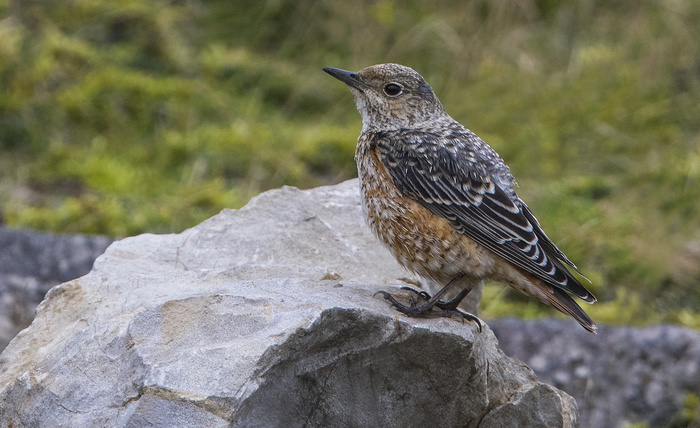
Please see Latest Images, Rock Thrush.
Allt yr Esgair views.
02nd October 2017
02nd October 2017
Allt yr Esgair is a wooded hill near to where I live and the views from the top are panoramic. Two of the best views are looking north west up the Usk Valley towards the Brecon Beacons and north east to Llangors Lake. When you look north west the River Usk can be seen gently meandering through verdant farmland with the Brecon Beacons in the distance, and when looking north east the whole expanse of Llangors Lake is viewed with Mynydd Troed in the background.
Like any landscapes, both these views are light and therefore weather dependant. Blue sky with white clouds I find is the best combination for these two images. Unfortunately grey has been the dominant colour of the skies lately. However, three days ago there was a break in the weather and I took the opportunity to walk up to the top. It takes me roughly forty five minutes to get to the top carrying my photographic kit. On reaching the summit I was alone, it was just me and the view, just the way I like it!
I set up quickly and took a few shots before anyone else arrived because when people get there they tend to stand in the best spot and you can’t shoot any images, after all it’s there for everybody!
Here is the first view looking north west.
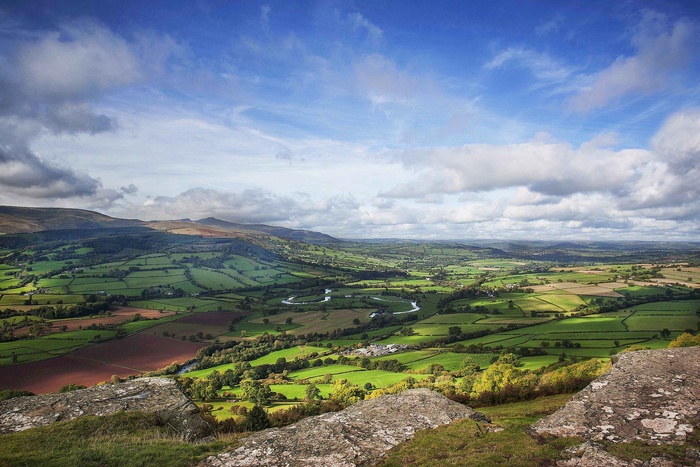
Secondly looking north east.
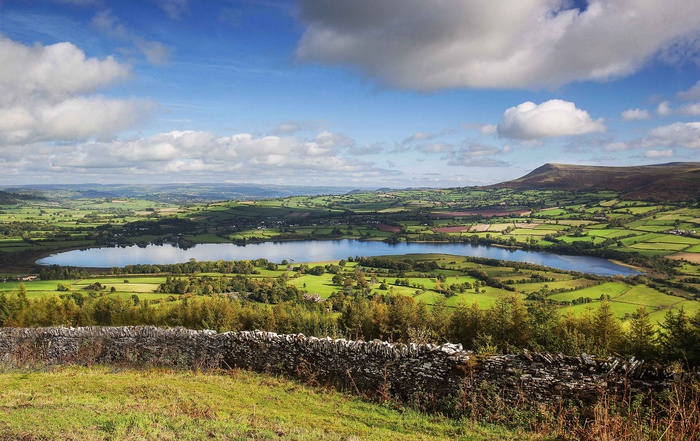
Both these images were obtained using a Circular Polarizer. (the most important filter in anybody's bag when shooting landscapes). These filters cut down reflective glare on water and other surfaces and and also generally enrich a scene. Also used was an ND graduated filter which balances out the exposure between sky and land. Using these two filters you can capture and enhance almost any scenes like these. The only other filters I use are ND filters for slowing down water and accentuating cloud movement.
Don't forget RAW is best!
The image of me on the home page looking out from the top of Allt yr Esgair was taken with the same filters. I positioned my camera and lens looking up the valley, focussing on the rocks and not the background scene, I switched off the Lens's auto focus to prevent 'focus hunting' and then stood on the rocks and shot the image using an IR remote trigger.
Capturing these images is easy, anyone can do it, the only thing that's required is to get out and walk.
Like any landscapes, both these views are light and therefore weather dependant. Blue sky with white clouds I find is the best combination for these two images. Unfortunately grey has been the dominant colour of the skies lately. However, three days ago there was a break in the weather and I took the opportunity to walk up to the top. It takes me roughly forty five minutes to get to the top carrying my photographic kit. On reaching the summit I was alone, it was just me and the view, just the way I like it!
I set up quickly and took a few shots before anyone else arrived because when people get there they tend to stand in the best spot and you can’t shoot any images, after all it’s there for everybody!
Here is the first view looking north west.
Secondly looking north east.
Both these images were obtained using a Circular Polarizer. (the most important filter in anybody's bag when shooting landscapes). These filters cut down reflective glare on water and other surfaces and and also generally enrich a scene. Also used was an ND graduated filter which balances out the exposure between sky and land. Using these two filters you can capture and enhance almost any scenes like these. The only other filters I use are ND filters for slowing down water and accentuating cloud movement.
Don't forget RAW is best!
The image of me on the home page looking out from the top of Allt yr Esgair was taken with the same filters. I positioned my camera and lens looking up the valley, focussing on the rocks and not the background scene, I switched off the Lens's auto focus to prevent 'focus hunting' and then stood on the rocks and shot the image using an IR remote trigger.
Capturing these images is easy, anyone can do it, the only thing that's required is to get out and walk.
Woodpecker for breakfast.
23rd September 2017
23rd September 2017
Yesterday morning as I was standing in my kitchen eating a slice of toast for breakfast I looked out of the back window and couldn’t believe my eyes when I saw a Green Woodpecker looking back at me. We have seen them in the garden from time to time digging for ants (their favourite food), but they are very wary birds. There is a seasonal stream in my garden that starts running after heavy rain, usually in December and the banking of this little stream can be soft and this is where these Woodpeckers like to dig and probe for ants and grubs. I immediately put my toast down and got a lens out of my equipment storage cupboard, I rested it on the window sill and took a few shots, more in hope than expectation. Photographing through double glazing while trying to eat a slice of toast at the same time isn’t a recommended method for getting sharp shots. However, it was a good record of a very nice but somewhat elusive bird. There are a number of ant-hills further up this stream bed and I’ll be prepared to bet that these birds spend some time up there looking for ants. I will be keeping an eye open over the autumn to see if I’m correct.
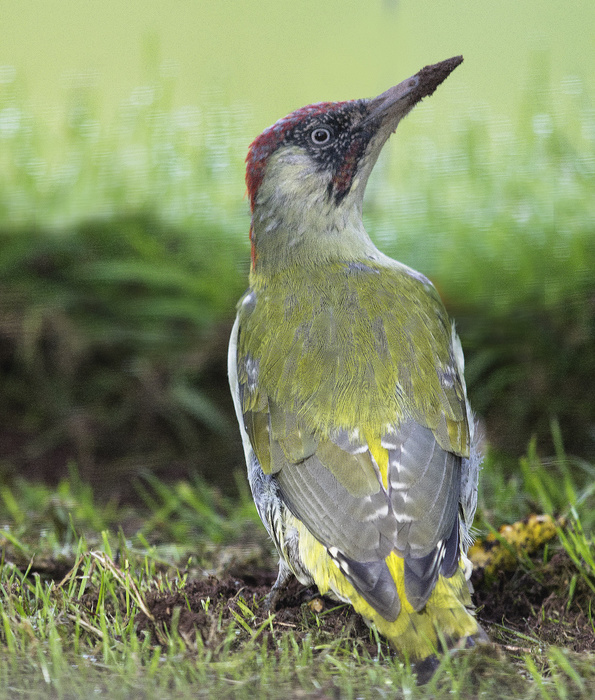
A visit to Dunraven Bay.
18th September 2017
18th September 2017
Susan and I felt like a trip to the coast this week and Sunday was forecasted to be a nice day and indeed the weather forecast proved to be correct and we drove down to Dunraven Bay in South Glamorgan. This bay and beach is part of the ‘Glamorgan Heritage Coast’ and we enjoyed a lovely few hours walking on the cliffs in the fresh sea air. Dunraven bay is in a very picturesque setting indeed, and actually there are two bays one being an SSSI site which can only be reached down some steep steps and is therefore little visited. Both these bays have dramatic and vertiginous cliffs and the views are spectacular to say the least. We enjoyed a picnic lunch while taking in these dramatic views and it was a very pleasant and most enjoyable few hours.
Some of the views below;
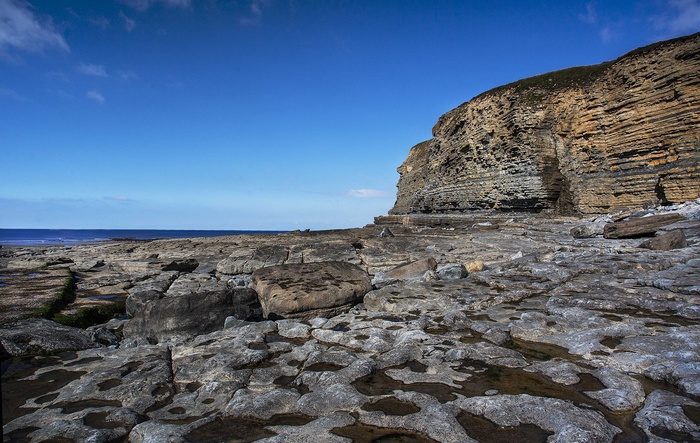
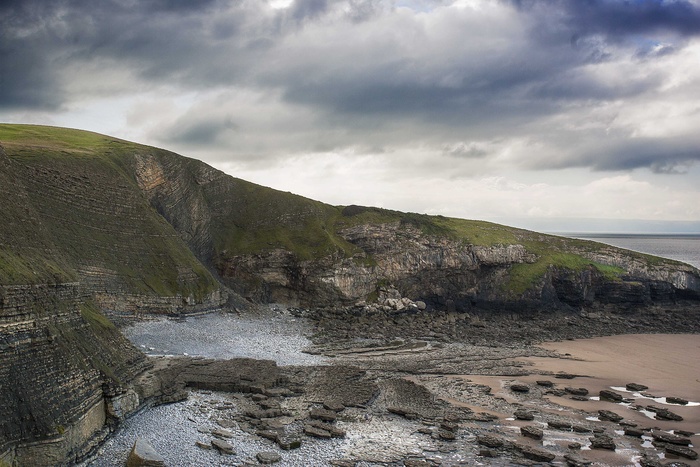
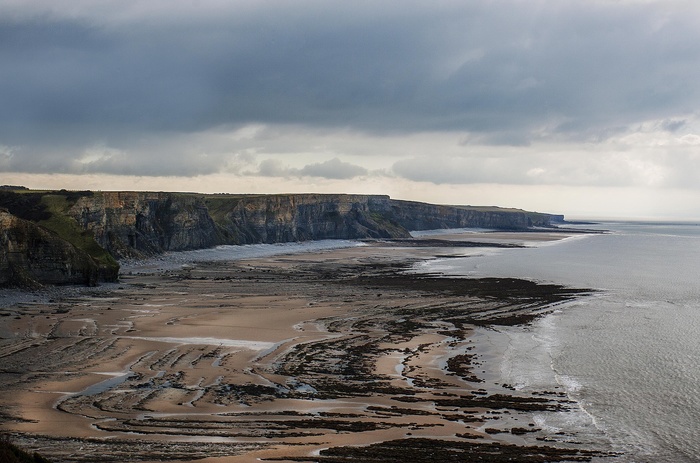
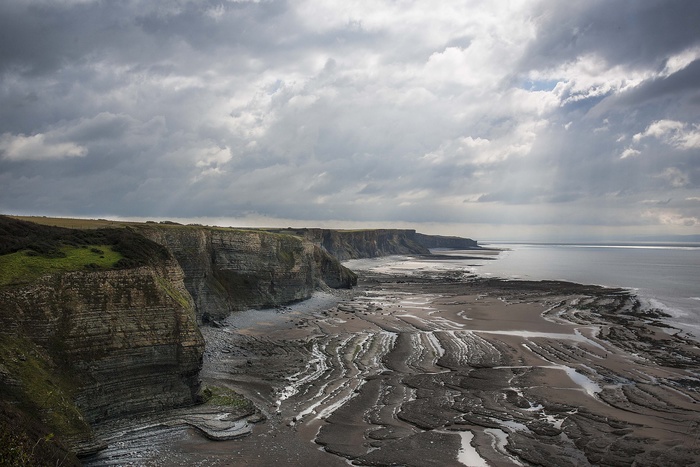
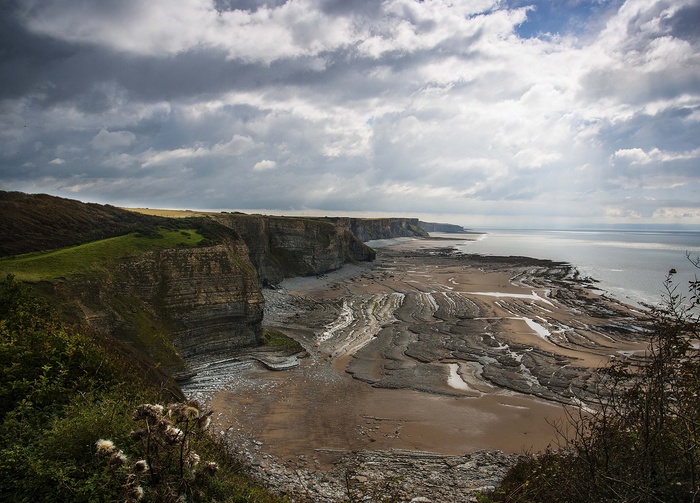
All images taken with;
Canon ID Mk 2
Canon 17-40 f4 lens
Manfrotto 055 CX3 Tripod
Manfrotto MH XPRO Tilt and Pan head
Canon remote cable release
Hoya circular polarizing filter
Hitech Format system filter holder
Hitech 0.3 (1-Stop), soft edged ND Graduated filter.
Some of the views below;
All images taken with;
Canon ID Mk 2
Canon 17-40 f4 lens
Manfrotto 055 CX3 Tripod
Manfrotto MH XPRO Tilt and Pan head
Canon remote cable release
Hoya circular polarizing filter
Hitech Format system filter holder
Hitech 0.3 (1-Stop), soft edged ND Graduated filter.
Llyn Brianne, the most viewed image.
18th September 2017
18th September 2017
The most viewed photograph on this website is a view of Llyn Brianne reservoir in Mid-Wales. It is streets ahead of anything else and for whatever reasons I can’t imagine why. I didn’t and still don’t think it’s a particularly eye catching image, in fact I think it’s quite subdued and that’s fine because I just stopped the car when we were travelling through the area in 2007 and just took the shot. It was taken with a Canon 350D, their first digital DSLR on the market and just a wide angled kit lens, no polarizing filter etc.
Here is the image which was shot in Jpeg format.
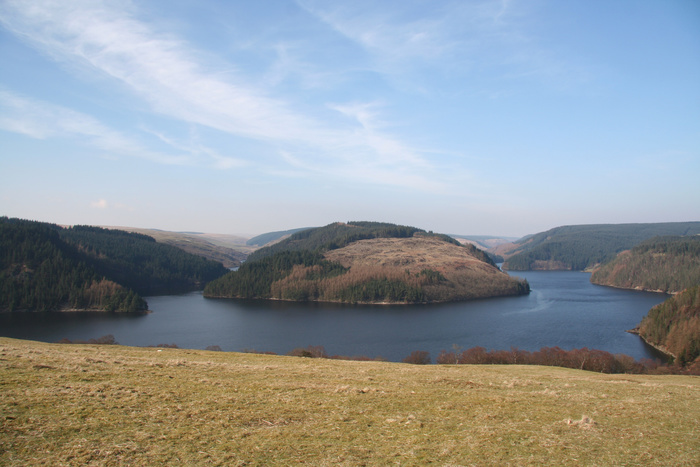
Ten years later, (last Saturday), we drove up to that same spot, it’s in the back end of nowhere on a bleak mountain road that skirts the reservoir. However, I wanted to see what I could do with the same view, but using some thought, technique and a filter or two, because basically it has hardly changed except for the extra tree growth etc.
Here is the new image which was shot in RAW format.
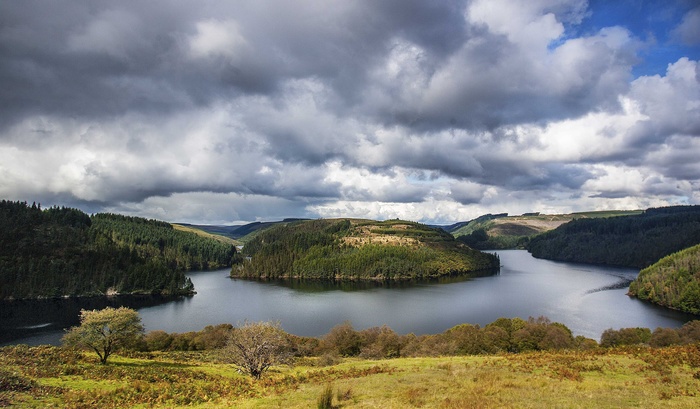
It has been processed from Raw to Tiff allowing much more detail to be saved, I recommend always shooting in RAW!
I used a Hoya circular polariser to remove any reflective glare off the water and also a 3 stop (0.9) soft edged ND Graduated filter made by Hitech Format, a company here in Wales. The “ND Grad” was used because the sky was much lighter than the surrounding land. This evens out the exposure and prevents either the sky from “Blowing” or the land from being too dark. It was a lot cloudier this time and this also gave the image a more dramatic look.
Info;
Canon 1D MK 2
Canon 17-40 f4
Manfrotto 055 CX3 Tripod
Manfrotto MH XPRO three way tilt and pan head.
Canon remote cable release
Hoya Circular Polarizer
Hitech Format filter system holder
Hitech Format 0.9 (3-stop), soft edged ND Graduated filter
Here is a view of the overflow - same set-up.
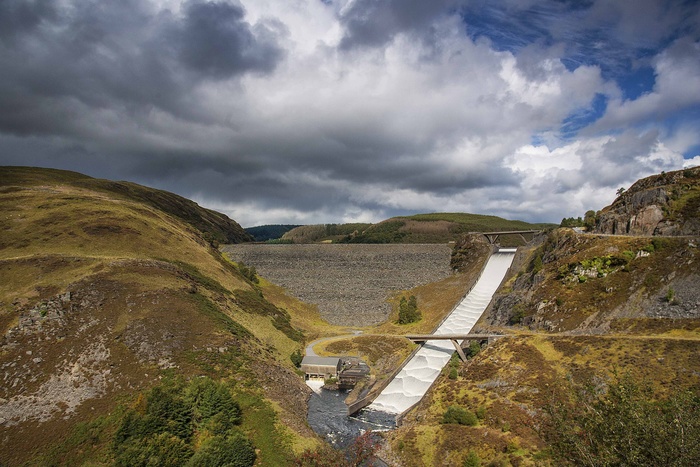
A Pano of the Reservoir, (Two image stitch).
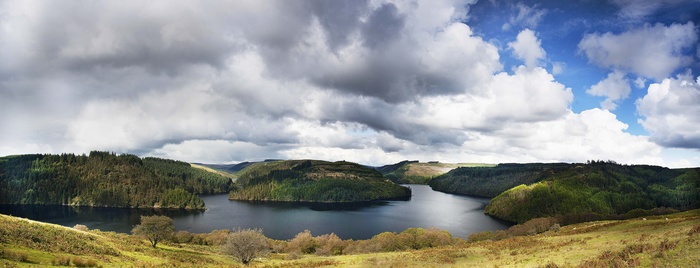
Here is the image which was shot in Jpeg format.
Ten years later, (last Saturday), we drove up to that same spot, it’s in the back end of nowhere on a bleak mountain road that skirts the reservoir. However, I wanted to see what I could do with the same view, but using some thought, technique and a filter or two, because basically it has hardly changed except for the extra tree growth etc.
Here is the new image which was shot in RAW format.
It has been processed from Raw to Tiff allowing much more detail to be saved, I recommend always shooting in RAW!
I used a Hoya circular polariser to remove any reflective glare off the water and also a 3 stop (0.9) soft edged ND Graduated filter made by Hitech Format, a company here in Wales. The “ND Grad” was used because the sky was much lighter than the surrounding land. This evens out the exposure and prevents either the sky from “Blowing” or the land from being too dark. It was a lot cloudier this time and this also gave the image a more dramatic look.
Info;
Canon 1D MK 2
Canon 17-40 f4
Manfrotto 055 CX3 Tripod
Manfrotto MH XPRO three way tilt and pan head.
Canon remote cable release
Hoya Circular Polarizer
Hitech Format filter system holder
Hitech Format 0.9 (3-stop), soft edged ND Graduated filter
Here is a view of the overflow - same set-up.
A Pano of the Reservoir, (Two image stitch).
A flooded River Usk.
15th September 2017
15th September 2017
I have decided to pull the plug on my Kingfisher site on the River Usk for this year, the weather since mid-July has been dreadful. The river is swollen continually and the usual secluded section of the river where these birds fish and also sometimes breed is flooded right out. They along with the Dippers, whose rocky areas are completely submerged, are really struggling through this period of horrendous weather. They are both having to find backwaters that are a little calmer and these are few and far between. I went down to the river early yesterday morning to retrieve my flower pots filled with concrete, (see previous blog, photographing Kingfishers), and my perches that I have hidden away. I was carrying my Canon 600 and a tripod just in case there was anything about in the distance. I put them down on the river bank safely away from the flood and waded into the river to the hidden place where I hide my perches etc, but to my surprise and dismay I couldn’t get near them although I was wearing wellingtons, I was ten feet from them and the river level was at the top of my wellies. This was a problem because I didn’t want to leave them there over the winter because I’m sure they would be swept away. There was only one alternative, I came back out of the river and took my wellies and socks off, rolled my trousers right up as far as I could and waded barefoot into the river. It is surprising how cold the water is, even in September, I also took two small fallen branches in with me to act as balancing aides because the current was so strong. I can say with confidence that I would have over-balanced without those branches to counteract the flow of water. With great difficulty I retrieved my paraphernalia and made my way back to the sanctuary of the river bank and I have to admit I was quite relieved to be back on dry land!
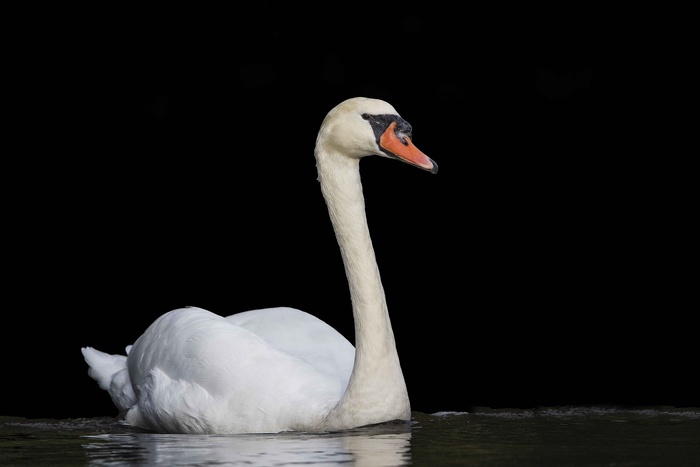
I dried my legs and feet with some kitchen roll that I always keep in my bag and got my wellies back on, it’s very comforting to have your footwear reinstated, somehow you feel vulnerable in bare feet. I sat down on a log under some willows to drink a cup of coffee and to just see if anything came along. After about ten minutes I heard very large wing beats above me and to my surprise a Mute Swan flew low overhead and then landed about a hundred yards up river. I knew it would have to come back down river because of the strength of the current and sure enough it drifted towards me. There was a small recess of calm water under an overhanging canopy just slightly up-river on the opposite bank to me. The Swan gratefully made for this calm and just floated around in there away from the current. However, it is quite dark under there but the sun was shining strongly on the bird. I have had this scenario with Kingfishers in the past and it allows a photographer to deliberately under-expose the scene. This has the effect of correctly exposing the Swan (in this example) and really darkening the already darkish background. This can be very effective because you then have a white bird like a Swan contrasting against an almost black background.
I made two trips to my car to load my kit, perches etc and left the river until next spring.
I dried my legs and feet with some kitchen roll that I always keep in my bag and got my wellies back on, it’s very comforting to have your footwear reinstated, somehow you feel vulnerable in bare feet. I sat down on a log under some willows to drink a cup of coffee and to just see if anything came along. After about ten minutes I heard very large wing beats above me and to my surprise a Mute Swan flew low overhead and then landed about a hundred yards up river. I knew it would have to come back down river because of the strength of the current and sure enough it drifted towards me. There was a small recess of calm water under an overhanging canopy just slightly up-river on the opposite bank to me. The Swan gratefully made for this calm and just floated around in there away from the current. However, it is quite dark under there but the sun was shining strongly on the bird. I have had this scenario with Kingfishers in the past and it allows a photographer to deliberately under-expose the scene. This has the effect of correctly exposing the Swan (in this example) and really darkening the already darkish background. This can be very effective because you then have a white bird like a Swan contrasting against an almost black background.
I made two trips to my car to load my kit, perches etc and left the river until next spring.
Changing of the Seasons.
08th September 2017
08th September 2017
The weather is definitely changing, you can feel a slight chill in the air in the mornings lately, this is not a bad thing from an ornithological point of view. Birds sense this changing of the seasons and it encourages them to move, migrating to more suitable climates. The Wryneck passage has already started with a good number of birds sighted on the south coast of the UK. These enigmatic birds also move down the west coast of the UK in September and sometimes if there is a big westerly ‘blow’ they can be seen in-land seeking shelter.
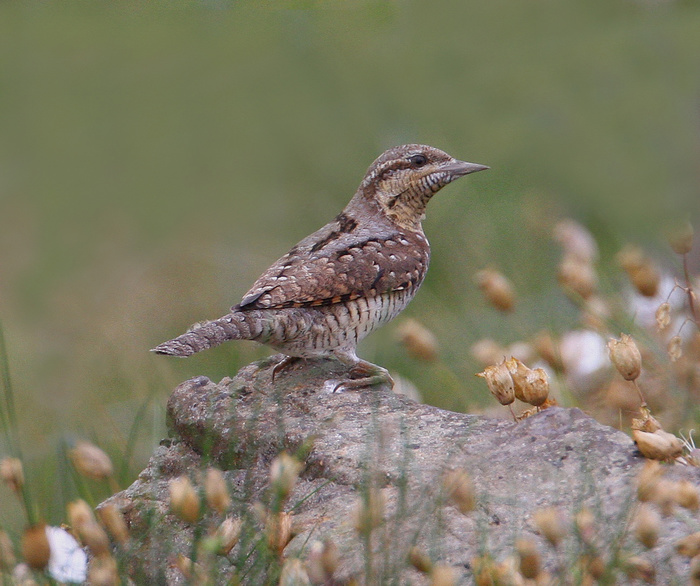
We hardly ever see them in the Beacons though and that is a shame because they are one of my favourite birds. Also at this time of year Dotterel, another favourite of mine are heading back south after breeding up north and they can turn up on the Beacons at this time of year.
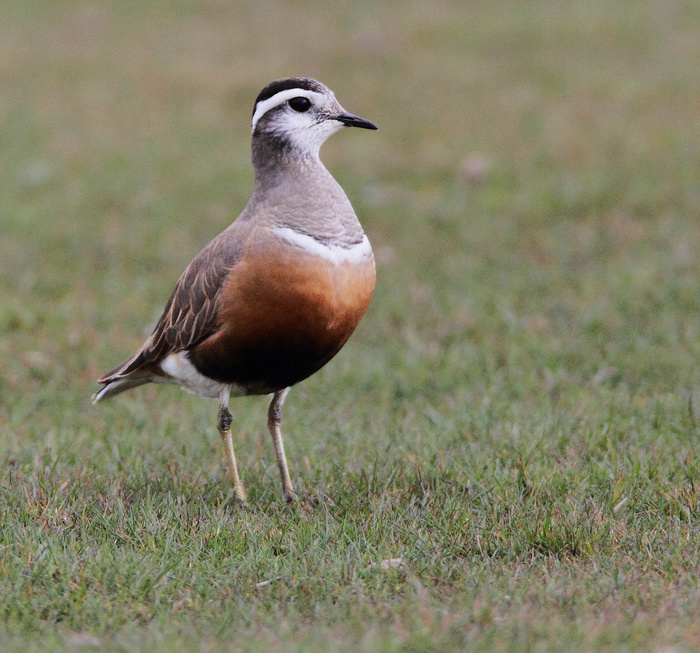
We always have a few Willow Warblers and Chiffchaffs in our front garden this time of year and this year has been no exception. I don’t know why this happens but I’m not complaining. Bullfinches and Redstarts again bred in the garden but the two young Redstarts that were around the house have now disappeared, I hope they have a safe journey.
However, my thoughts always turn to Norfolk at this time of year because it can be a very exciting time birding there if the winds blow from the north east, in these wind conditions anything can turn up and I have had many memorable birding days there in the autumn over the last thirty years-
Long Eared Owls,
Short Eared Owls
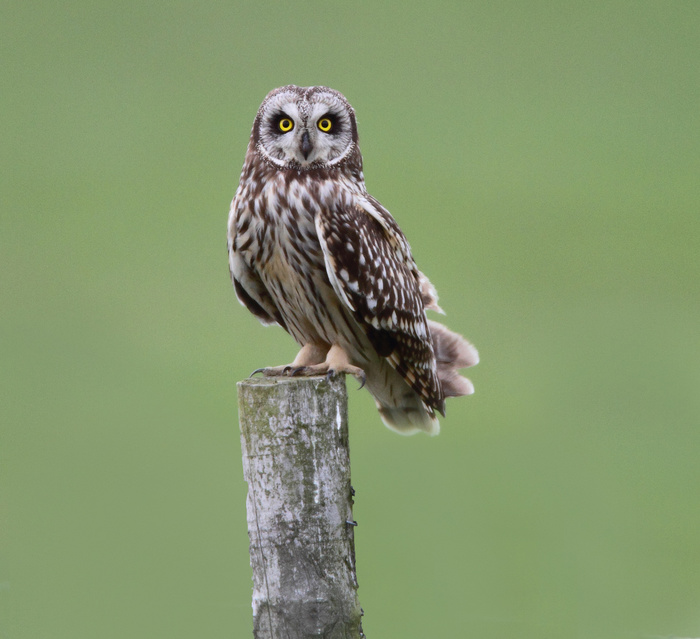
and Hen Harriers all coming in off the sea. Two thousand Goldcrests landed on the north coast one weekend, totally exhausted feeding on grass seed along the beaches. Warblers dripping off the trees, Pallas's, Dusky, Raddes, Barred, Yellow Browed, Humes, Artic, Greenish etc etc. Unfortunately though this year I can’t make my autumn pilgrimage there because I have other plans of which I am quite excited about.
This summer in the UK, birding has had a distinctly Mediterranean feel about it, with Little Bitterns,
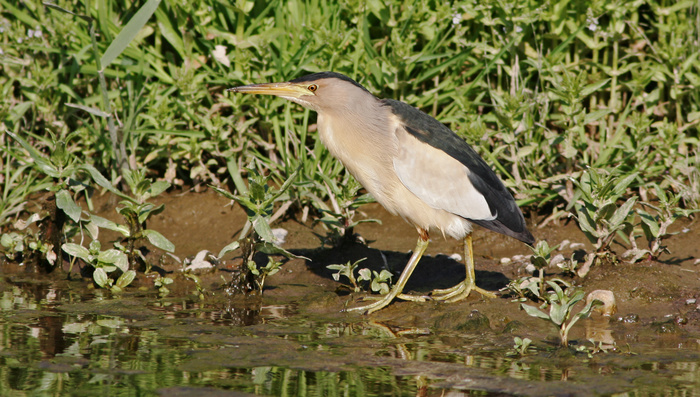
Cattle Egrets, Squacco Herons,
Bee Eaters,
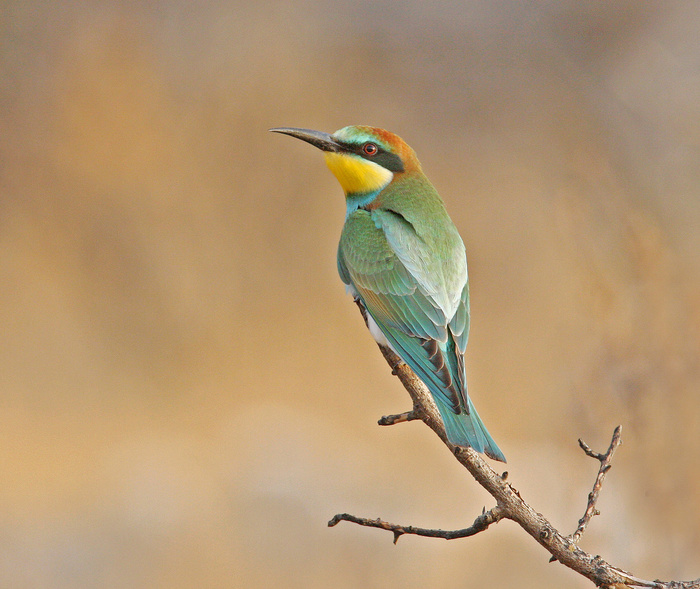
Red Footed Falcons
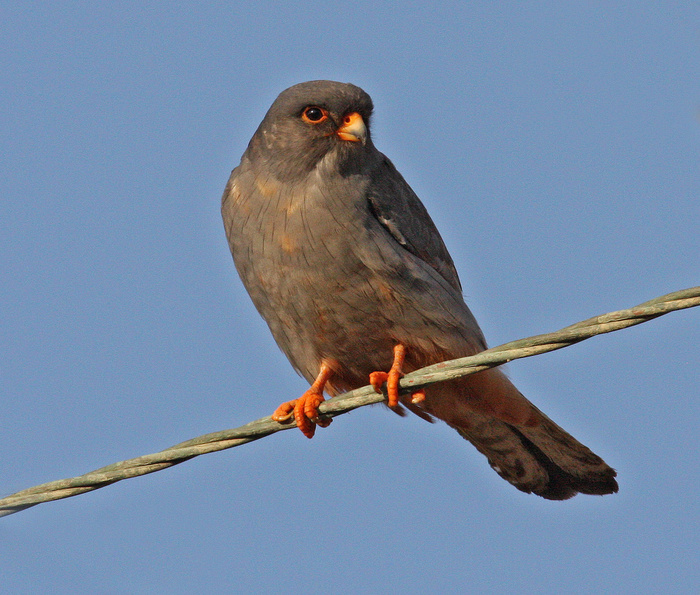
and the now ‘common place’ Great White Egret, how quickly we become blasé about birds that were not so long ago a ‘Twitch’. These birds exemplify a visible shift northwards of many species as our climate grows milder and wetter.
Conversely will birds like Ring Ouzel start breeding further north?
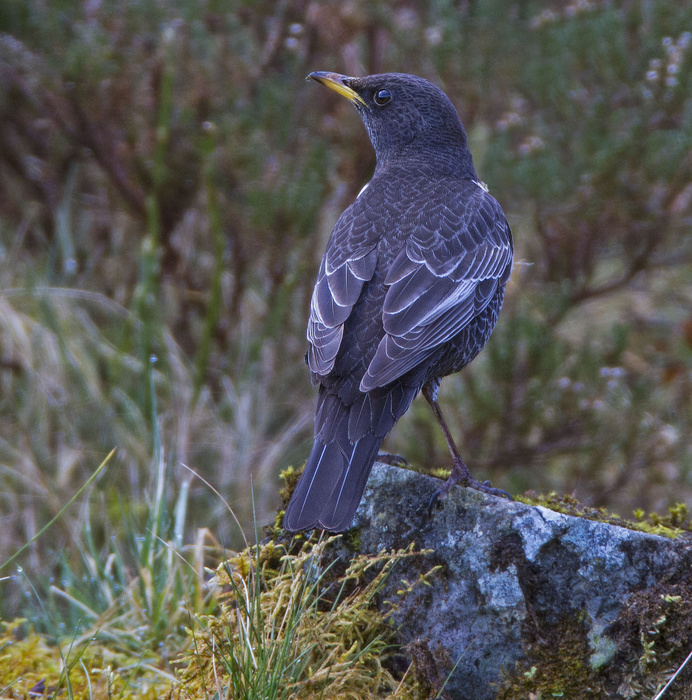
Will birds like Brambling, Fieldfare and Redwing come as far south as in previous years? These are changing times for many species and it will be interesting to see how they adapt.
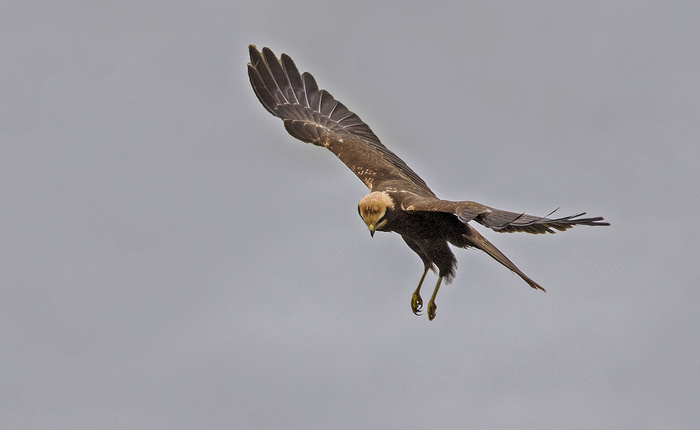
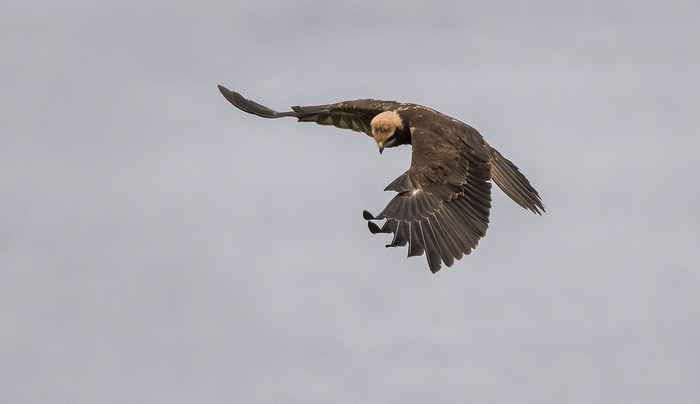
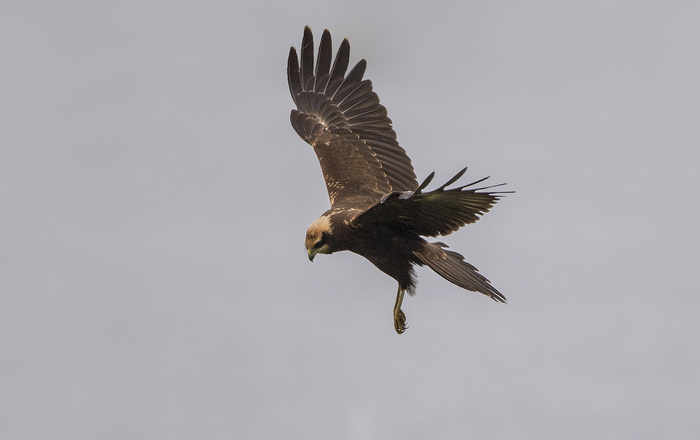
Locally it has been the usual quiet late summer for birds and my interests have turned to insects, Butterflies and Dragonflies in particular and they are very fascinating but now autumn is virtually upon us and hopefully there will be more birds around. There was a report of a Juvenile Marsh Harrier with green wing tags around a local reed bed this week, (Llangors Lake) and yesterday morning I went out early to try and see it because they don’t come around here too often. I had been waiting for over two hours with nothing much seen except two fly-by Hobbies and I was on the brink of leaving when suddenly it appeared, as usual from nowhere. Luckily I had my little Sigma contemporary lens waiting on a bean-bag and I was able to get a few quick record shots before it disappeared from view. This bird, however, was a different bird, no wing tags and another Juvenile, so we now have two Marsh Harriers locally which is very good for this area. Let’s hope they over-winter and give some more photographic opportunities.
We hardly ever see them in the Beacons though and that is a shame because they are one of my favourite birds. Also at this time of year Dotterel, another favourite of mine are heading back south after breeding up north and they can turn up on the Beacons at this time of year.
We always have a few Willow Warblers and Chiffchaffs in our front garden this time of year and this year has been no exception. I don’t know why this happens but I’m not complaining. Bullfinches and Redstarts again bred in the garden but the two young Redstarts that were around the house have now disappeared, I hope they have a safe journey.
However, my thoughts always turn to Norfolk at this time of year because it can be a very exciting time birding there if the winds blow from the north east, in these wind conditions anything can turn up and I have had many memorable birding days there in the autumn over the last thirty years-
Long Eared Owls,
Short Eared Owls
and Hen Harriers all coming in off the sea. Two thousand Goldcrests landed on the north coast one weekend, totally exhausted feeding on grass seed along the beaches. Warblers dripping off the trees, Pallas's, Dusky, Raddes, Barred, Yellow Browed, Humes, Artic, Greenish etc etc. Unfortunately though this year I can’t make my autumn pilgrimage there because I have other plans of which I am quite excited about.
This summer in the UK, birding has had a distinctly Mediterranean feel about it, with Little Bitterns,
Cattle Egrets, Squacco Herons,
Bee Eaters,
Red Footed Falcons
and the now ‘common place’ Great White Egret, how quickly we become blasé about birds that were not so long ago a ‘Twitch’. These birds exemplify a visible shift northwards of many species as our climate grows milder and wetter.
Conversely will birds like Ring Ouzel start breeding further north?
Will birds like Brambling, Fieldfare and Redwing come as far south as in previous years? These are changing times for many species and it will be interesting to see how they adapt.
Locally it has been the usual quiet late summer for birds and my interests have turned to insects, Butterflies and Dragonflies in particular and they are very fascinating but now autumn is virtually upon us and hopefully there will be more birds around. There was a report of a Juvenile Marsh Harrier with green wing tags around a local reed bed this week, (Llangors Lake) and yesterday morning I went out early to try and see it because they don’t come around here too often. I had been waiting for over two hours with nothing much seen except two fly-by Hobbies and I was on the brink of leaving when suddenly it appeared, as usual from nowhere. Luckily I had my little Sigma contemporary lens waiting on a bean-bag and I was able to get a few quick record shots before it disappeared from view. This bird, however, was a different bird, no wing tags and another Juvenile, so we now have two Marsh Harriers locally which is very good for this area. Let’s hope they over-winter and give some more photographic opportunities.
The versatility of the Sigma 150-600 C lens.
09th August 2017
09th August 2017
I am now using the Sigma 150 – 600 F5.6 – 6.3 Contemporary lens as my walk around lens, (see equipment reviews), it superceded my Canon ef 300 f4 lens for this purpose, the Canon was a great lens but it was just too short on focal length. Despite its focal length this Sigma lens can be just hung over your shoulder or put on a lightweight monopod when walking and is ready for action at short notice. It is better in many ways than a big and sometimes heavy prime lens because of its convenience. The primes will ultimately produce better image quality but by the time you have removed the prime lens from a bag and put it on a tripod the moment has usually passed.
I cannot praise this Sigma lens highly enough, I am genuinely impressed with its performance and for such a small lightweight and quite inexpensive lens to produce such good images is a great credit to Sigma. Yesterday I was out walking on one of the rare fine days we have had this summer and butterflies were starting to fly in the relatively warm sunshine. I was able to move around quickly to get the best angles because butterflies rarely pitch where you want them to and this allowed me to get many images that wouldn’t have been possible with a heavier and more cumbersome prime. This lens autofocuses at 2.88 metres so you can stand back from insects like butterflies and not disturb them while zooming in to 600mm to get the shot.
It is no surprise to me that this lens and its heavier cousin the 150-600 Sports version are big sellers. If you want to obtain quality images on a very reasonable budget then this is the lens for you.
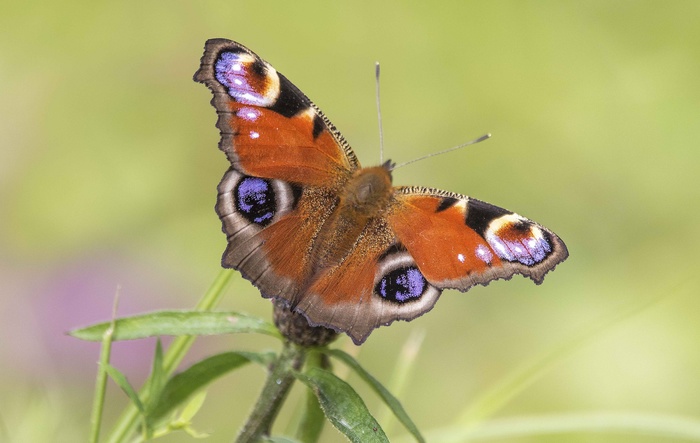
This Peacock butterfly taken with ; Canon 7D ii with Sigma 150-600 Contemporary lens @ 600mm @F6.3 - 320/sec. (Hand held)!
I cannot praise this Sigma lens highly enough, I am genuinely impressed with its performance and for such a small lightweight and quite inexpensive lens to produce such good images is a great credit to Sigma. Yesterday I was out walking on one of the rare fine days we have had this summer and butterflies were starting to fly in the relatively warm sunshine. I was able to move around quickly to get the best angles because butterflies rarely pitch where you want them to and this allowed me to get many images that wouldn’t have been possible with a heavier and more cumbersome prime. This lens autofocuses at 2.88 metres so you can stand back from insects like butterflies and not disturb them while zooming in to 600mm to get the shot.
It is no surprise to me that this lens and its heavier cousin the 150-600 Sports version are big sellers. If you want to obtain quality images on a very reasonable budget then this is the lens for you.
This Peacock butterfly taken with ; Canon 7D ii with Sigma 150-600 Contemporary lens @ 600mm @F6.3 - 320/sec. (Hand held)!
Demoiselles on the River Arrow.
06th August 2017
06th August 2017
Yesterday Susan and I were driving in Herefordshire and on our journey back home we thought we’d stop off at the very picturesque village of Eardisland. This is a very nice village with some lovely quaint old cottages leaning at odd angles and the village is part of what is called the ‘Black and White’ trail. Named so because of the design and decoration of the old black and white cottages that can be found in these villages. This is a very nice part of the country and driving the above ‘Trail’ is a most pleasant day out.
The beautiful River Arrow meanders slowly through this area and in Eardisland it can be viewed from a bridge at the end of the village where it gently flows under Weeping Willows in a very attractive setting. Standing on this bridge for half an hour you will probably see a Kingfisher, because this stretch of river is prime habitat for these beautiful birds with foliage overhanging slow moving water teeming with small fish.
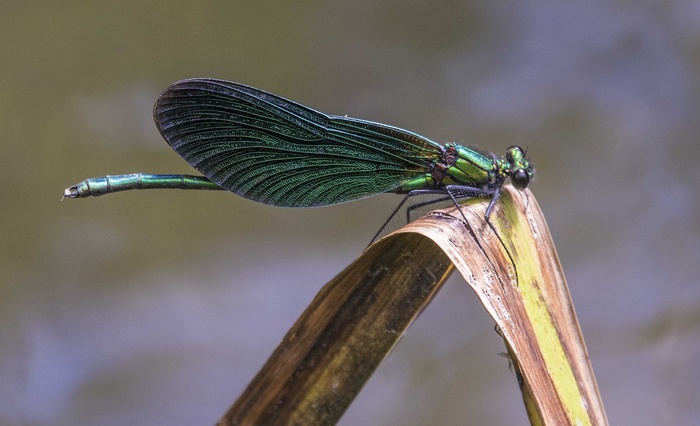
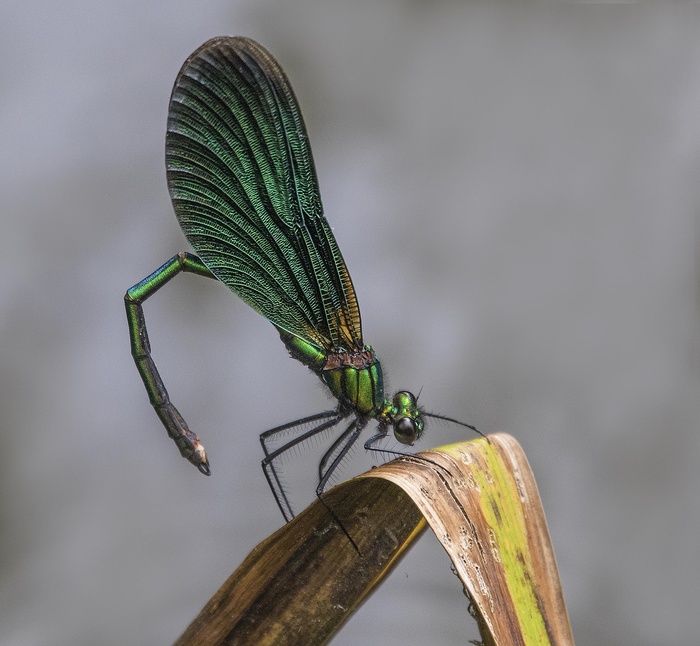
However, the main reason for our visit to Eardisland was to see the Odonata, and near the aforementioned Weeping Willows on the Arrow is a favourite haunt of principally the Beautiful and sometimes the Banded Demoiselle. The weather was grey and overcast when we arrived and these insects like sunshine so we went for a cup of coffee until the clouds lifted. After about half an hour the sun came out and shortly after, right on cue, the Demoiselles appeared.
First on the wing were the Beautiful Demoiselles;
These insects fly from late April until early September and they favour streams and rivers with gravelled edges with dappled shade.
Then we spotted a pair of Banded Demoiselles;
These near relatives of the Beautiful Demoiselles favour slower moving streams and rivers with a muddy sediment and they are often found in meadows near open banksides.
Both these insects are almost 50mm in length with the Hind wings about 35mm and are the UK's largest Demoiselles.
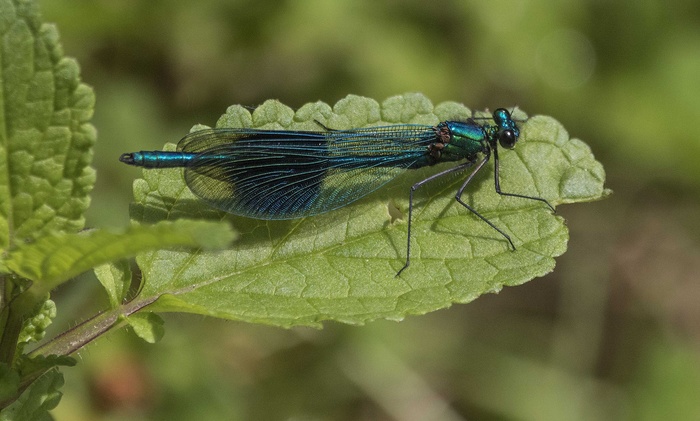
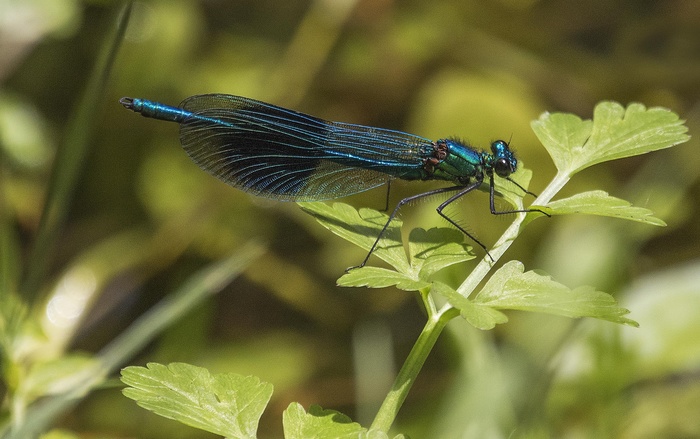
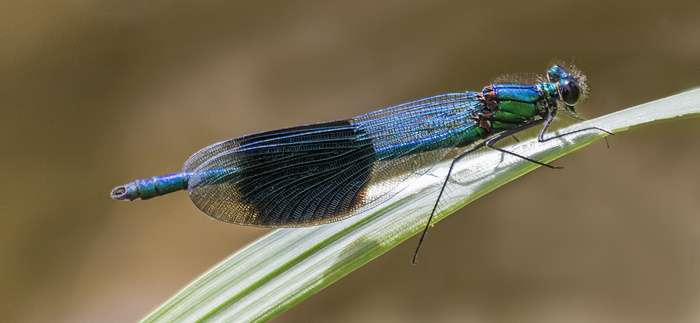
Both these superb insects looked stunning in the dappled sunlight and we enjoyed watching them flitting back and fore along the river bank.
There was also the added bonus of a Blue Tailed Damselfly.
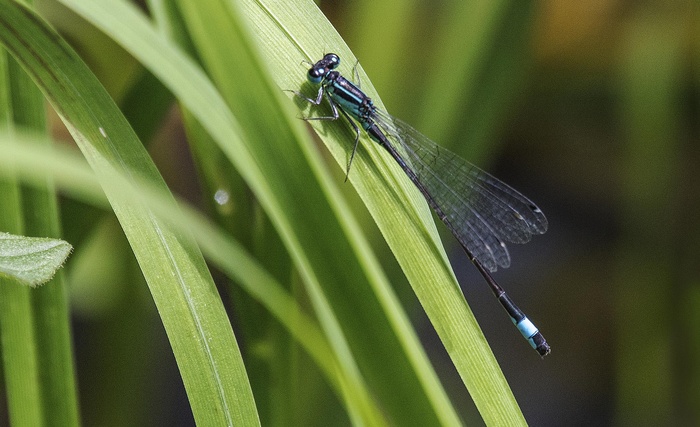
This insect is so small and delicate it was barely visible as it flew from leaf to leaf. It was a very pleasant couple of hours spent in lovely surroundings and is well worth a visit.
All images taken with a Sigma 150-600 Contemporary lens.
The beautiful River Arrow meanders slowly through this area and in Eardisland it can be viewed from a bridge at the end of the village where it gently flows under Weeping Willows in a very attractive setting. Standing on this bridge for half an hour you will probably see a Kingfisher, because this stretch of river is prime habitat for these beautiful birds with foliage overhanging slow moving water teeming with small fish.
However, the main reason for our visit to Eardisland was to see the Odonata, and near the aforementioned Weeping Willows on the Arrow is a favourite haunt of principally the Beautiful and sometimes the Banded Demoiselle. The weather was grey and overcast when we arrived and these insects like sunshine so we went for a cup of coffee until the clouds lifted. After about half an hour the sun came out and shortly after, right on cue, the Demoiselles appeared.
First on the wing were the Beautiful Demoiselles;
These insects fly from late April until early September and they favour streams and rivers with gravelled edges with dappled shade.
Then we spotted a pair of Banded Demoiselles;
These near relatives of the Beautiful Demoiselles favour slower moving streams and rivers with a muddy sediment and they are often found in meadows near open banksides.
Both these insects are almost 50mm in length with the Hind wings about 35mm and are the UK's largest Demoiselles.
Both these superb insects looked stunning in the dappled sunlight and we enjoyed watching them flitting back and fore along the river bank.
There was also the added bonus of a Blue Tailed Damselfly.
This insect is so small and delicate it was barely visible as it flew from leaf to leaf. It was a very pleasant couple of hours spent in lovely surroundings and is well worth a visit.
All images taken with a Sigma 150-600 Contemporary lens.
Black Mountains under threatening skies.
29th July 2017
29th July 2017
The Black Mountains are nowhere near as popular as the Brecon Beacons for walkers, however they still attract many people to their easily accessible tops. Susan and I took a drive from Crickhowell, up past Llanbedr on to Fforest Coal Pit, through the Llanthony valley taking in Cwmyoy Church, Llanthony Priory, Capel y Ffin Church and finally up and over the Gospel Pass to Hay on Wye. Many people still travel to see these sights and rightly so because the Black Mountains are different to the Beacons, there is more history there, in particular from a religious point of view. Many ecclesiastical establishments were built throughout this valley, some taking advantage of its solitude for no doubt periods of quiet reflection, Llanthony Priory being a prime example. The monks brewed their beer here and transported it up what is known as the ‘Beer Track’ to the town of Hay on Wye. I’m sure they must have enjoyed a ‘Swift Half’ of an evening when the abbot wasn’t looking!
It is a gentler landscape here, dotted with small hamlets and farms which is quite pleasing on the eye. The area around Hay Bluff is still very popular and we stopped there to take in the superb panorama that that can be viewed basically from the car park. The skies remain grey and threatening this week but that is not all bad for a photograph as it makes an image busier than a plain blue sky. We travelled back and had some lunch on the way in the Bridge End pub in the village of Boughrood pronounced Bochrood. The food was very nice for a pub and made a pleasant change on a Saturday afternoon.
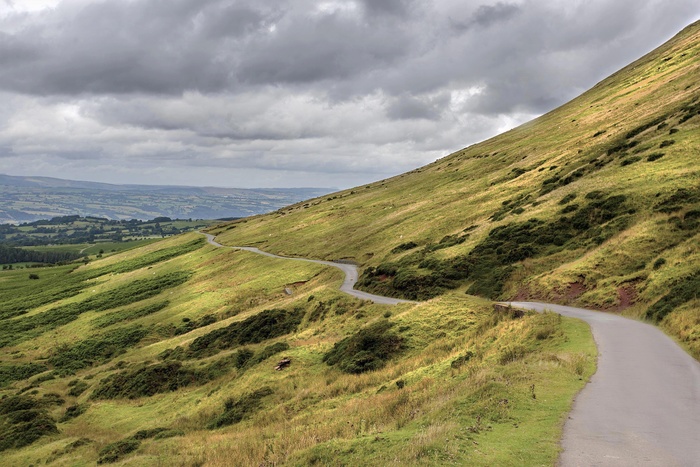
The Gospel Pass leading down into Hay on Wye, this road featured for a long time on the Antiques Road Show.
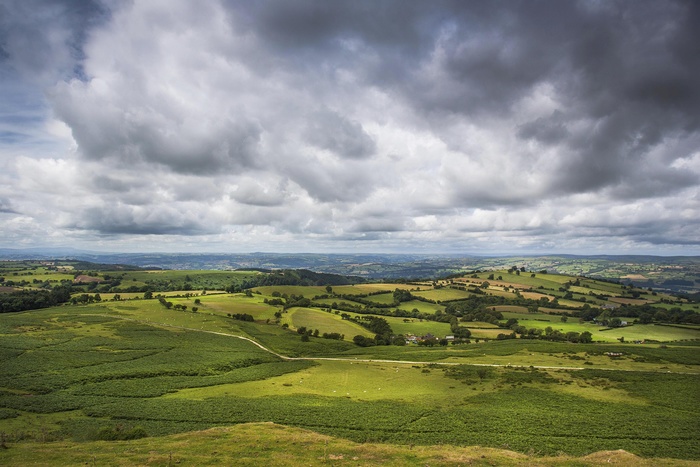
Dramatic skies from Hay Bluff.
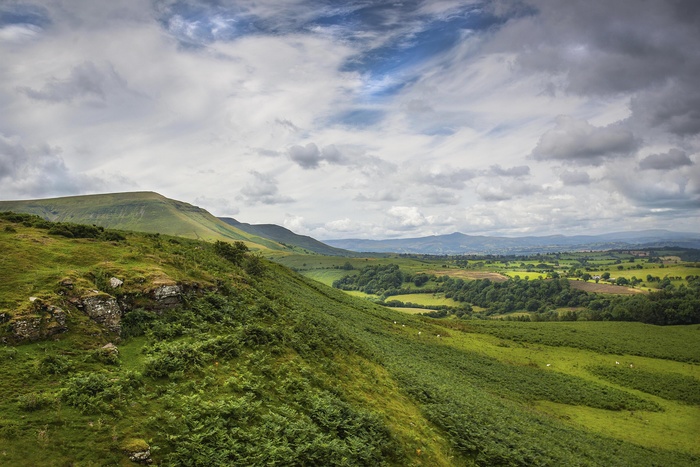
Black Mountaim tops on the left and the Beacons in the distance.
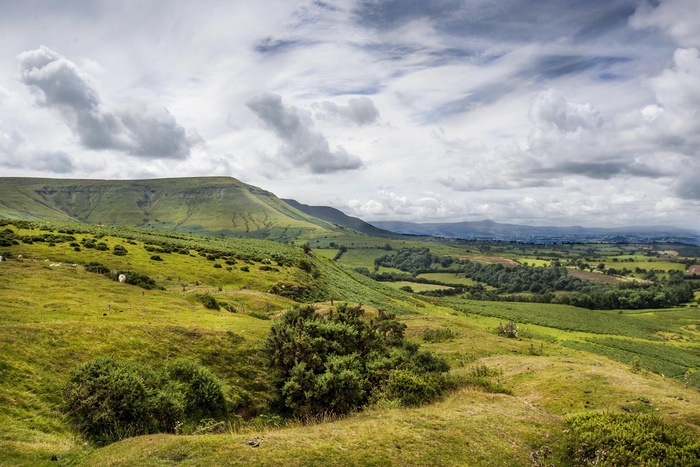
Black Mountaim tops on the left and the Beacons in the distance.
All taken with;
Canon 1D Mk 2
Canon 17-40L F4 lens
Manfrotto 055 Tripod
Manfrotto MHX PRO 3 Way Tilt and Pan Head
Canon remote shutter release
Hoya circular polarizing filter
Format Hitech - 0.9 ; (3 Stop) ; Soft edged graduated ND Filter
It is a gentler landscape here, dotted with small hamlets and farms which is quite pleasing on the eye. The area around Hay Bluff is still very popular and we stopped there to take in the superb panorama that that can be viewed basically from the car park. The skies remain grey and threatening this week but that is not all bad for a photograph as it makes an image busier than a plain blue sky. We travelled back and had some lunch on the way in the Bridge End pub in the village of Boughrood pronounced Bochrood. The food was very nice for a pub and made a pleasant change on a Saturday afternoon.
The Gospel Pass leading down into Hay on Wye, this road featured for a long time on the Antiques Road Show.
Dramatic skies from Hay Bluff.
Black Mountaim tops on the left and the Beacons in the distance.
Black Mountaim tops on the left and the Beacons in the distance.
All taken with;
Canon 1D Mk 2
Canon 17-40L F4 lens
Manfrotto 055 Tripod
Manfrotto MHX PRO 3 Way Tilt and Pan Head
Canon remote shutter release
Hoya circular polarizing filter
Format Hitech - 0.9 ; (3 Stop) ; Soft edged graduated ND Filter
Allt yr Esgair on a stormy day.
16th July 2017
16th July 2017
Known locally as the ‘Allt’, Allt yr Esgair is a hill roughly about 390 metres high. It is easily found on the outskirts of the village of Bwlch, seven miles south of Brecon. Translated into English as something like ‘The Wooded Ridge’ it has become popular with walkers and unfortunately mountain bikers, (who I think shouldn’t be allowed up there). The path leading up and across to the summit reaches a Roman hill fort and is part of an old Roman way between the towns of Abergavenny and Brecon and the views from the top are quite panoramic overlooking two separate valleys. Yesterday Susan and I walked up to the top, we live nearby and it only takes about forty five minutes to reach the summit. We walked up the path under leaden skies and at the summit the wind was quite blustery and a few squally rain showers swept through albeit briefly. I carried my landscape kit in a photographic rucksack just in case there was an opportunity for a few shots, however, I was not hopeful. On reaching the top we had to shelter briefly as one of these squalls whipped through but afterwards the weather was reasonable and we were able to enjoy some nice view of the Usk valley and Llangors Lake. We didn’t see many people and had the summit to ourselves for some time which is always nice. This is a rare thing these days in the Brecon Beacons where outdoor pursuits has exploded and areas like Pen y Fan are to be avoided at all costs. I often think back and remember a pioneering mountain man who lived in Merthyr Tydfil his name was Hadyn Thomas and he introduced me to mountain walking forty years ago when it was considered very unfashionable, unlike today. If Hadyn was alive today he would be a hundred but sadly he passed away some time ago. He was a proper walker he didn’t drive his car to a convenient parking place and then walk the mountains, he always walked from home, saying if you’re walking you’re walking - no car! I can’t imagine what he would have thought about the amount of people walking the Beacons today.
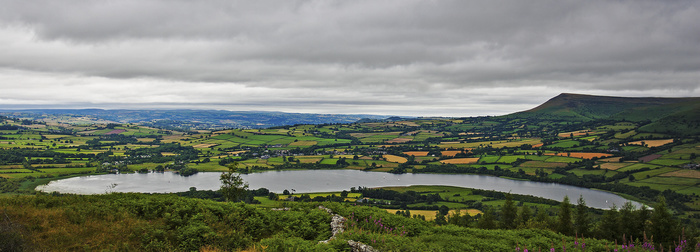
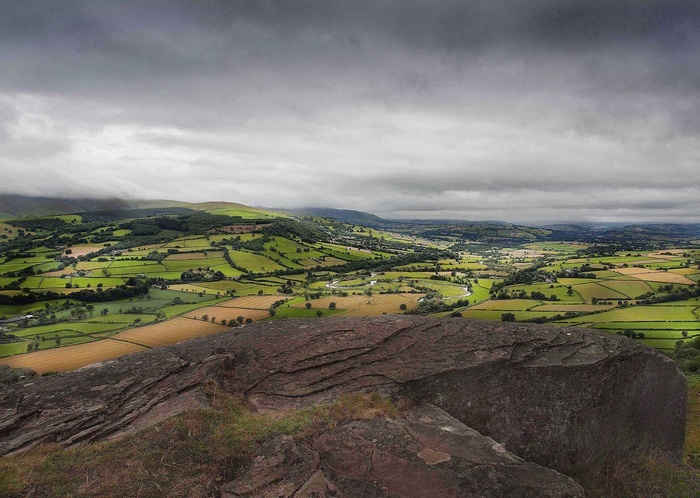
A view of Llangors Lake, the largest natural lake in South Wales.Taken from Allt yr Esgair. Mynydd Troed in the background.
The River Usk meandering beneath storm clouds near the village of Scethrog. Taken from the rocks near the summit of Allt yr Esgair.
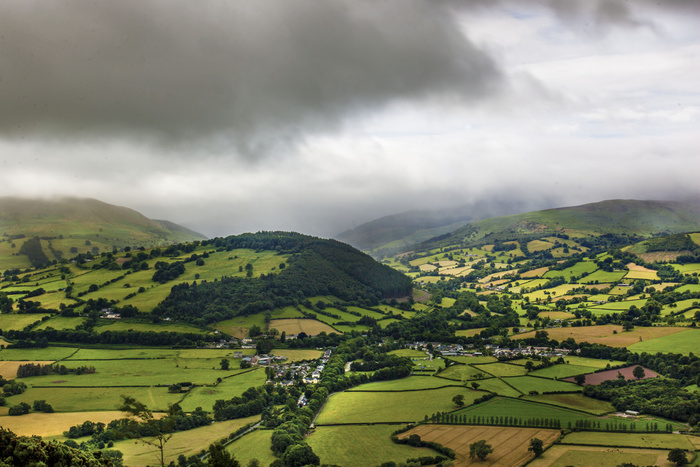
Storm clouds over Craig Dan y Wenallt near the popular village of Talybont on Usk. It’s easy to get caught out by these fast moving storms and many ill - prepared people are these days.
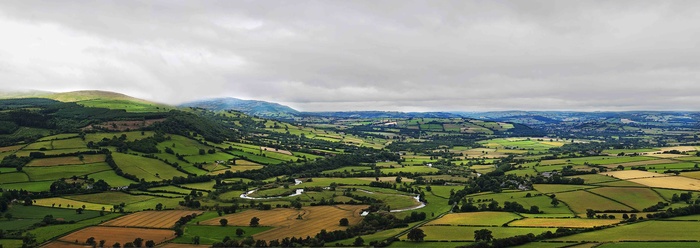
Usk Valley panorama taken fron Allt yr Esgair.
A view of Llangors Lake, the largest natural lake in South Wales.Taken from Allt yr Esgair. Mynydd Troed in the background.
The River Usk meandering beneath storm clouds near the village of Scethrog. Taken from the rocks near the summit of Allt yr Esgair.
Storm clouds over Craig Dan y Wenallt near the popular village of Talybont on Usk. It’s easy to get caught out by these fast moving storms and many ill - prepared people are these days.
Usk Valley panorama taken fron Allt yr Esgair.
Early morning on the River Usk.
14th July 2017
14th July 2017
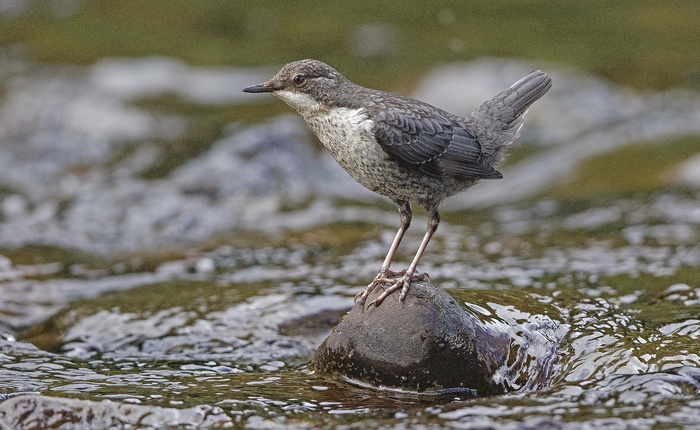
It’s been a disappointing spring and early summer for the Kingfishers at a site I monitor down on my local River, the Usk. There has only been one male bird there all throughout this period and that is unusual because this particular stretch of river is a prime habitat for them consisting of slow moving water and plenty of overhanging trees like Willows, which Kingfishers have a likeing for. Earlier this week I was out very early on the river just to see what was around and sitting in my portable hide I could see the same male Kingfisher flying up and down the river about every twenty minutes or so, normal behaviour for him this year. After two hours with very little happening a juvenile dipper arrived and began feeding on a shingle spit on the opposite side of the river to me but too far for me to photograph it. Suddenly the birds began to alarm call and the Dipper flew across to my side of the river and I took a few shots.
However, I was more concerned about the birds alarm calling. This behaviour usually signals the presence of a predator like a Mink but the undergrowth parted slightly and this cheeky Fox poked his head out.
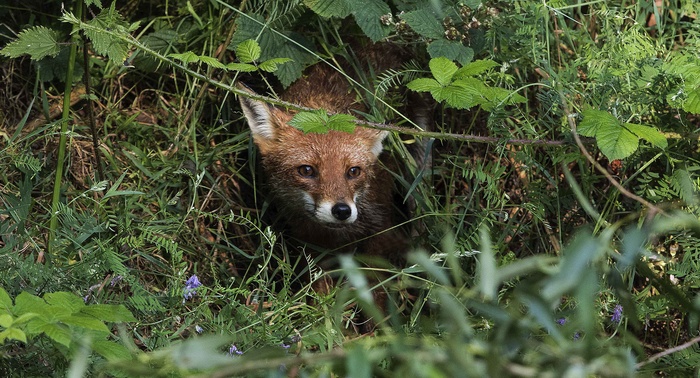
I have seen it many times on this stretch of the river, an equally deadly predator, but at least one that is part of the UK food chain! It didn’t see me I’m sure, nevertheless it didn’t stay long and disappeared back under cover. I waited a little longer but there was no further activity until the male Kingfisher sped past again but almost immediately he was followed by another Kingfisher also flying past calling. I decided to wait a little longer and I could now hear the tell-tale call again, the second bird flew towards me and landed in a small Ash sapling near to my hide.
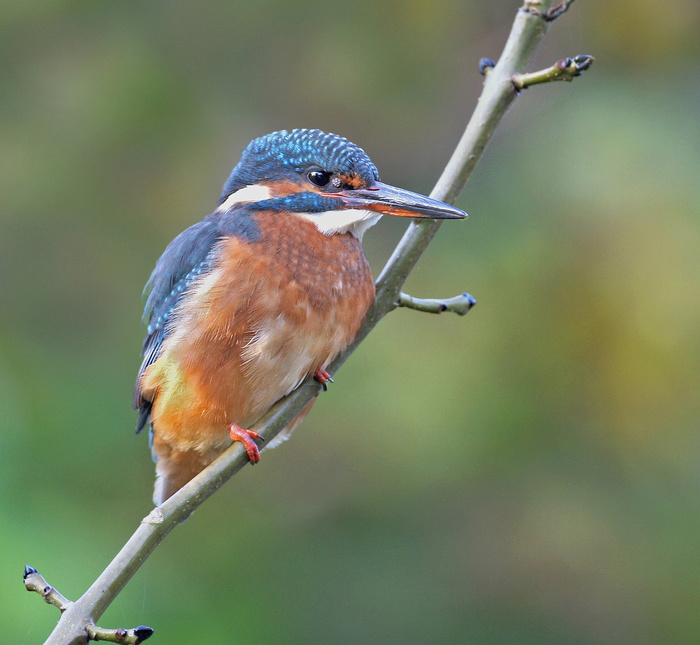
I looked through my binoculars and to my delight I could see it was a female, then the male flew past again and she took off after him. I hope this means that they are a pair, I left full of hope and will return sometime in August hopefully to see some youngsters!
However, I was more concerned about the birds alarm calling. This behaviour usually signals the presence of a predator like a Mink but the undergrowth parted slightly and this cheeky Fox poked his head out.
I have seen it many times on this stretch of the river, an equally deadly predator, but at least one that is part of the UK food chain! It didn’t see me I’m sure, nevertheless it didn’t stay long and disappeared back under cover. I waited a little longer but there was no further activity until the male Kingfisher sped past again but almost immediately he was followed by another Kingfisher also flying past calling. I decided to wait a little longer and I could now hear the tell-tale call again, the second bird flew towards me and landed in a small Ash sapling near to my hide.
I looked through my binoculars and to my delight I could see it was a female, then the male flew past again and she took off after him. I hope this means that they are a pair, I left full of hope and will return sometime in August hopefully to see some youngsters!
Photographing landscape panoramas.
27th June 2017
27th June 2017
When stitching photographs together in Photoshop, or indeed any other post processing software, in order to achieve decent panoramas you will have a much higher percentage of success if you pay strict attention to detail when you are taking the shots. This may seem like I’m stating the obvious, but very simple mistakes at this stage will cause the photographer huge and sometimes insurmountable problems at the processing stage.
The first thing to consider is whether the scene or panorama you are looking at is possible to stitch together, don’t forget the human eye is far superior to any camera lens and what you are seeing could be very difficult to recapture on camera.
Secondly pay critical attention to exposure because having two or even three images with different exposures will look false when they are stitched together.
Thirdly always make sure that all the images to be stitched together are level, check your tripod after each exposure because ‘panning’ your tripod head can change the level.
If the above points are not adhered to, then you will have at best, large areas of the stitched image missing at the corners, with parts of the image much darker or lighter than the others and at worst a message saying that the images are not compatible.
There are limits to what software can achieve!
Keeping these factors in mind it is nevertheless a fairly straight forward process to create an impressive panorama. People create these panoramas because they have not got a wide enough lens to capture the scene in one shot and once you go below about 14mm then you are in Fish-eye lens territory and although some photographers like the images produced using these lenses, the images are curved and for me are not realistic, but you pays your money and you takes your chances!
So on to taking the shots:
After setting up your kit looking at the scene to be stitched, establish your aperture, shutter speed, ISO and focal length.
Typically shoot between 30 - 40mm, at f8 / f11 and try and keep your shutter speed down and use if possible a low ISO setting e.g. 100. You can do all this manually, (if you can’t achieve these combinations then just use what you can get away with).
After these settings have been established and the scene is in focus switch the lens to manual focus.
Check that your camera is level and take your first shot, I always pan from left to right, it just feels better for me. Overlap each exposure by about 30% or at a particularly salient point in the scene. Check the camera for level before each exposure!!
Take the exposures as quickly as possible to avoid drastic light changes or even typically someone coming and standing in the scene, it happens!!
Check the histograms on the camera rear screen for reasonably close uniformity.
If you are happy then proceed to the processing stage.
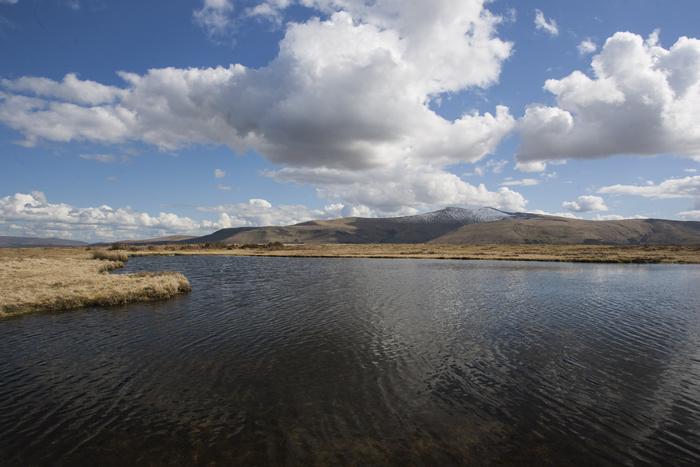
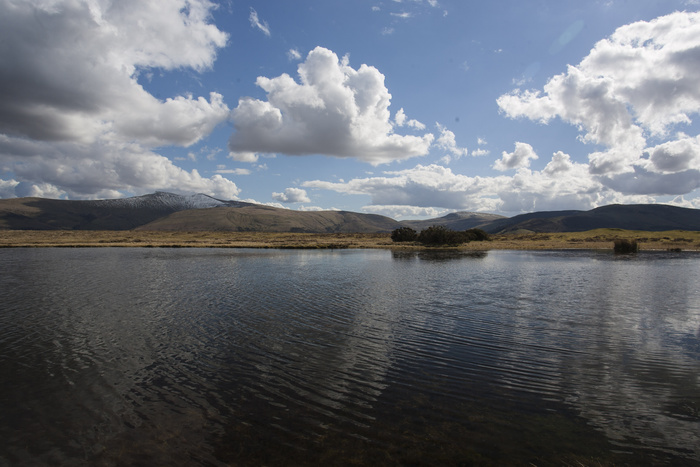
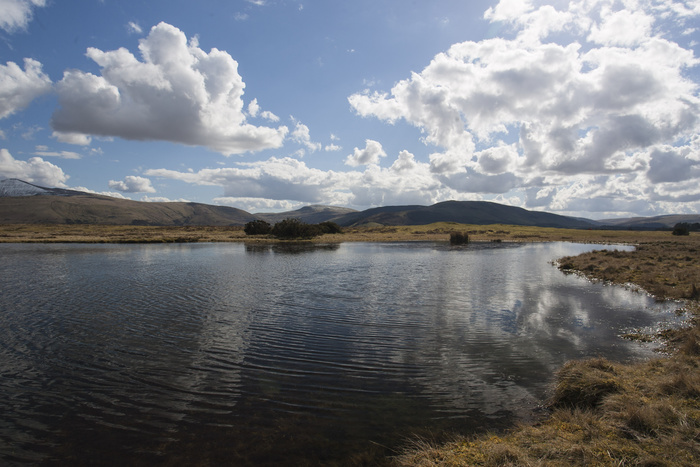
These are three images taken left to right and as you can see they are overlapping by about 30%
In Photoshop CS6;
Go to file / Automate / Photomerge.
Keep the mode on Auto.
Browse the files to be stitched.
Select all the files a click open.
The images will be automatically merged by the programme.
The corners of the image will be missing and will be replaced by chequered shading, this is normal. This is where your previous lack of attention to detail will come back to haunt you. If you have followed the strict guidelines then the missing corners will be small if not they will be huge and will render the image useless.
You can try to adjust the image by clicking custom function and also adjust the image distortion if any but if again you have adhered to detail in the beginning this shouldn’t be necessary.
Click on the crop tool symbol in the tools palette and in the two available boxes type in the ratio which most suits the image, typically 3:1, but do try other combos and you will see that the bigger the difference e.g. 5:1 the more your image will look like it is viewed through a letter box.
Crop the image after choosing the best combo ratio.
Firstly save the image as a PSD (photo shop document).
Then save the image as a copy only, (untick the layers box to do this).
I always save images as TIFF’s because I shoot in RAW.
If you are a Jpeg shooter then Jpeg is the only option.
When you do this you will still retain the stitched image and you can replace one or more sections if necessary.
You are now free to work on the copy image Tiff or Jpeg.
Any blemishes in typically the sky can best be removed using the spot healing brush.
Fill in the corners using the clone stamp tool, again the smaller the areas to clone the easier it is, (attention to detail in the beginning).
Process the image as you would normally.
This is the finished Panorama, it is inevitable that the finished image will be reduced in area, there is no alternative to this. You can choose to crop as little as you like, I felt this 3:1 crop suited the scene.
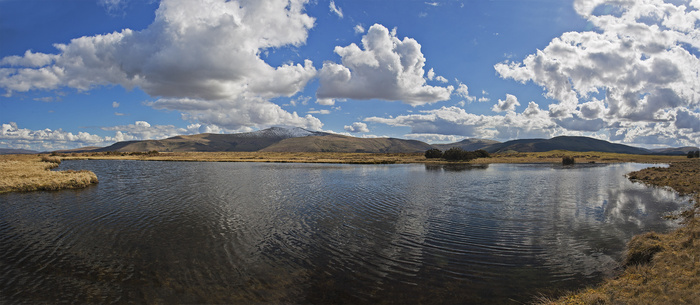
Obviously this image will be a lot bigger on a full screen.
The first thing to consider is whether the scene or panorama you are looking at is possible to stitch together, don’t forget the human eye is far superior to any camera lens and what you are seeing could be very difficult to recapture on camera.
Secondly pay critical attention to exposure because having two or even three images with different exposures will look false when they are stitched together.
Thirdly always make sure that all the images to be stitched together are level, check your tripod after each exposure because ‘panning’ your tripod head can change the level.
If the above points are not adhered to, then you will have at best, large areas of the stitched image missing at the corners, with parts of the image much darker or lighter than the others and at worst a message saying that the images are not compatible.
There are limits to what software can achieve!
Keeping these factors in mind it is nevertheless a fairly straight forward process to create an impressive panorama. People create these panoramas because they have not got a wide enough lens to capture the scene in one shot and once you go below about 14mm then you are in Fish-eye lens territory and although some photographers like the images produced using these lenses, the images are curved and for me are not realistic, but you pays your money and you takes your chances!
So on to taking the shots:
After setting up your kit looking at the scene to be stitched, establish your aperture, shutter speed, ISO and focal length.
Typically shoot between 30 - 40mm, at f8 / f11 and try and keep your shutter speed down and use if possible a low ISO setting e.g. 100. You can do all this manually, (if you can’t achieve these combinations then just use what you can get away with).
After these settings have been established and the scene is in focus switch the lens to manual focus.
Check that your camera is level and take your first shot, I always pan from left to right, it just feels better for me. Overlap each exposure by about 30% or at a particularly salient point in the scene. Check the camera for level before each exposure!!
Take the exposures as quickly as possible to avoid drastic light changes or even typically someone coming and standing in the scene, it happens!!
Check the histograms on the camera rear screen for reasonably close uniformity.
If you are happy then proceed to the processing stage.
These are three images taken left to right and as you can see they are overlapping by about 30%
In Photoshop CS6;
Go to file / Automate / Photomerge.
Keep the mode on Auto.
Browse the files to be stitched.
Select all the files a click open.
The images will be automatically merged by the programme.
The corners of the image will be missing and will be replaced by chequered shading, this is normal. This is where your previous lack of attention to detail will come back to haunt you. If you have followed the strict guidelines then the missing corners will be small if not they will be huge and will render the image useless.
You can try to adjust the image by clicking custom function and also adjust the image distortion if any but if again you have adhered to detail in the beginning this shouldn’t be necessary.
Click on the crop tool symbol in the tools palette and in the two available boxes type in the ratio which most suits the image, typically 3:1, but do try other combos and you will see that the bigger the difference e.g. 5:1 the more your image will look like it is viewed through a letter box.
Crop the image after choosing the best combo ratio.
Firstly save the image as a PSD (photo shop document).
Then save the image as a copy only, (untick the layers box to do this).
I always save images as TIFF’s because I shoot in RAW.
If you are a Jpeg shooter then Jpeg is the only option.
When you do this you will still retain the stitched image and you can replace one or more sections if necessary.
You are now free to work on the copy image Tiff or Jpeg.
Any blemishes in typically the sky can best be removed using the spot healing brush.
Fill in the corners using the clone stamp tool, again the smaller the areas to clone the easier it is, (attention to detail in the beginning).
Process the image as you would normally.
This is the finished Panorama, it is inevitable that the finished image will be reduced in area, there is no alternative to this. You can choose to crop as little as you like, I felt this 3:1 crop suited the scene.
Obviously this image will be a lot bigger on a full screen.