News
The Gambia 2018.
20th May 2018
20th May 2018
A portfolio of some of the birds we saw on a three week trip to The Gambia in 2018 is now in Latest Images, The Gambia 2018.
All images taken handheld with a Sigma 150 - 600 contemporary lens.
All images taken handheld with a Sigma 150 - 600 contemporary lens.
Mas's Magic in The Gambia.
11th May 2018
11th May 2018
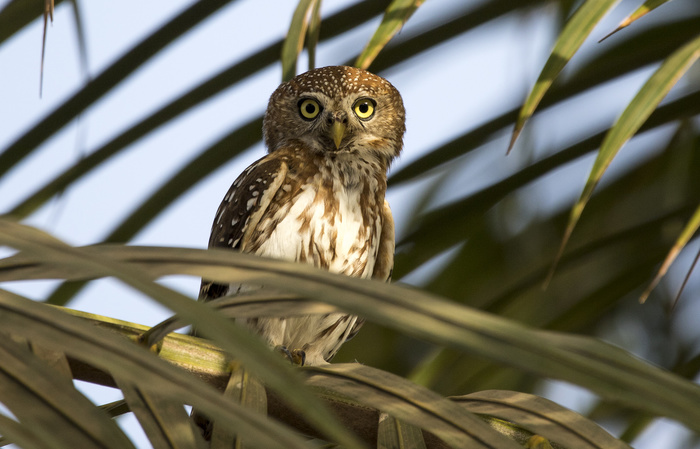
Driving down the track from our accommodation with ‘Mas’ (our very special bird guide), we pulled up alongside some palm trees. We had learned not to question his motives so we just strolled along with him. Then he started his bird mimicry and straight away, (he never failed to amaze us), a Pearl Spotted Owlet suddenly popped into view.
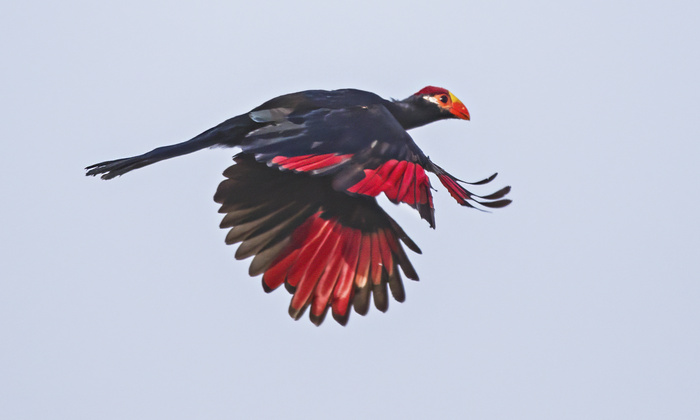
I was in the process of taking some shots when Mas shouts ‘Quick, Steve’, I looked around and a Violet Turaco was flying across the field in front of us. I managed to get a record shot as Mas exclaimed ‘You never see them in flight’.
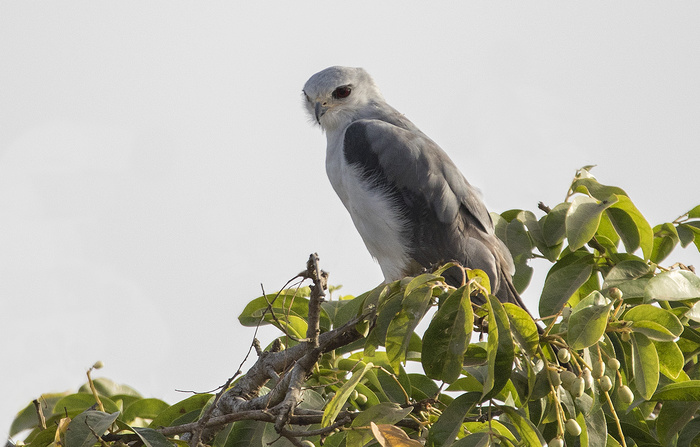
What a stroke of luck it must have been Mas’s mimicry that attracted the birds attention, then again he says ‘Steve, turn around slowly’ and as I do so I can now see a Black Shouldered Kite in a tree behind us. (The ghost of the Savannah).
This was dreamland, one of our favourite Raptors of all time. We climbed back into the vehicle and as we were driving down the track I was thinking ‘We haven’t even reached the main road yet’. This really was top draw birding for us.
I was in the process of taking some shots when Mas shouts ‘Quick, Steve’, I looked around and a Violet Turaco was flying across the field in front of us. I managed to get a record shot as Mas exclaimed ‘You never see them in flight’.
What a stroke of luck it must have been Mas’s mimicry that attracted the birds attention, then again he says ‘Steve, turn around slowly’ and as I do so I can now see a Black Shouldered Kite in a tree behind us. (The ghost of the Savannah).
This was dreamland, one of our favourite Raptors of all time. We climbed back into the vehicle and as we were driving down the track I was thinking ‘We haven’t even reached the main road yet’. This really was top draw birding for us.
Sunbirds of The Gambian Savannah.
11th May 2018
11th May 2018
The general Savannah in the Gambia consists of large open areas of low to medium scrub interspersed with stands of trees. This can then be interrupted by dense forests of magnificent older trees, these Savannahs become very hot, dry and dusty out of the rainy season. Nevertheless they provide a seemingly endless habitat for birds. You cannot, unlike birding in the UK, go more than a hundred yards without seeing something very nice. Some of the most colourful birds to see in these Savannahs and indeed in everybody’s garden, are the Sunbirds, these beautiful little birds are not shy and will come quite close to a human. They are typically very busy little birds and will be seen hovering around flowers looking for food. They will also come to drink wherever they can find water.
Below are a few photos of these lovely little jewels.
Variable Sunbird.
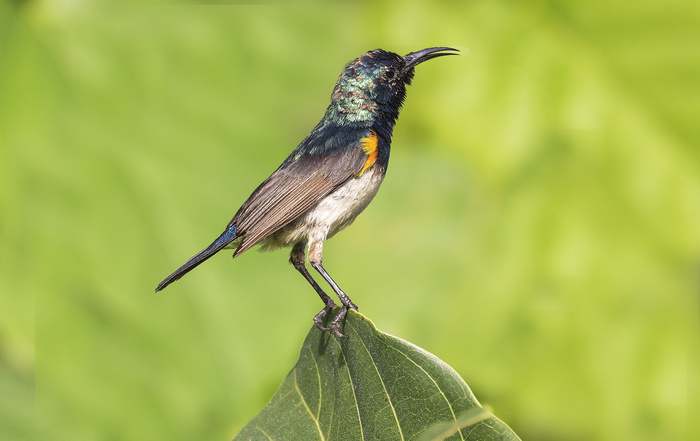
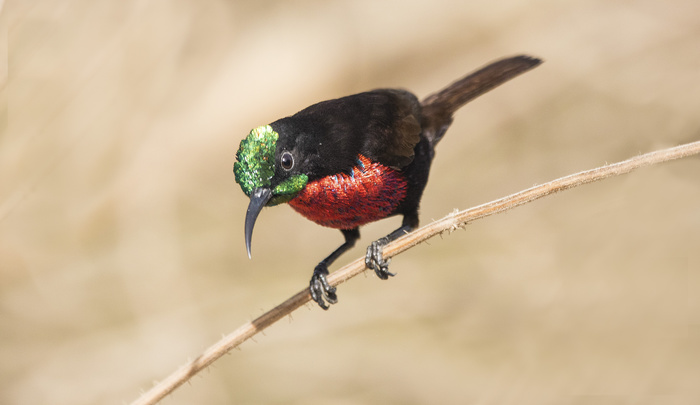
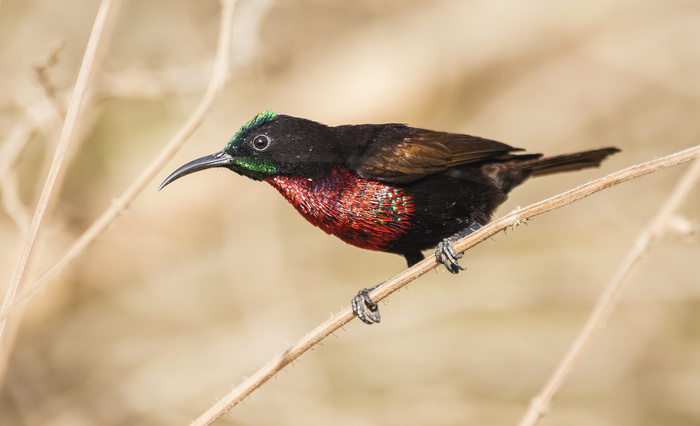
Scarlet - chested Sunbird.
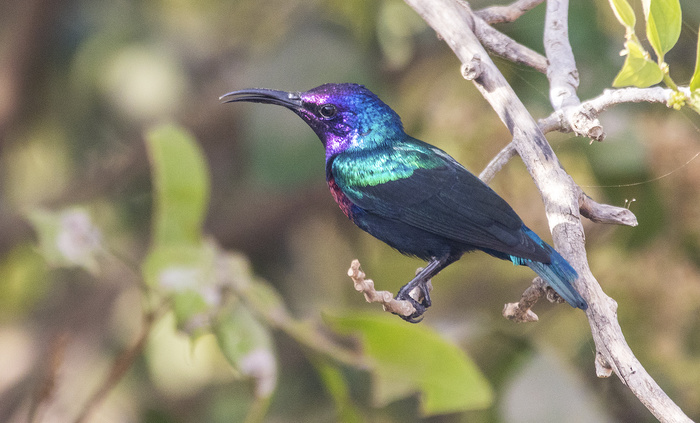
Splendid Sunbird.
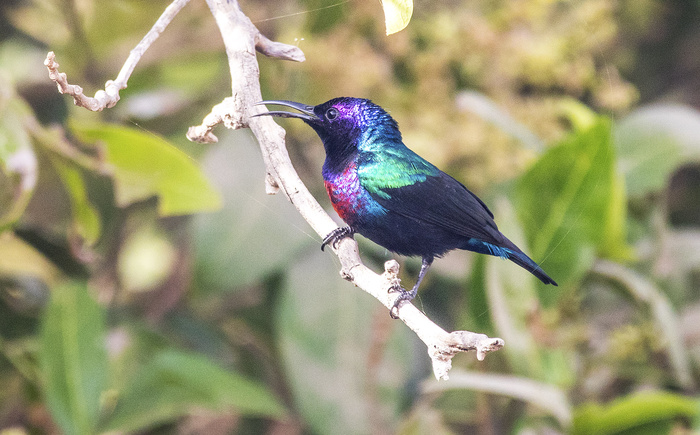
Beautiful Sunbird.
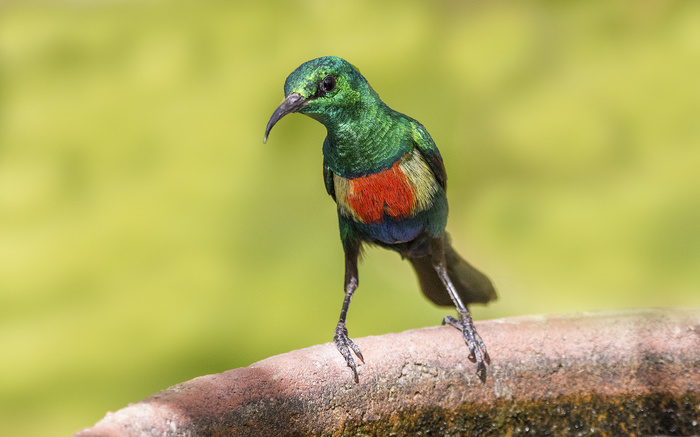
Below are a few photos of these lovely little jewels.
Variable Sunbird.
Scarlet - chested Sunbird.
Splendid Sunbird.
Beautiful Sunbird.
Verreaux's Eagle Owl in The Gambia.
11th May 2018
11th May 2018
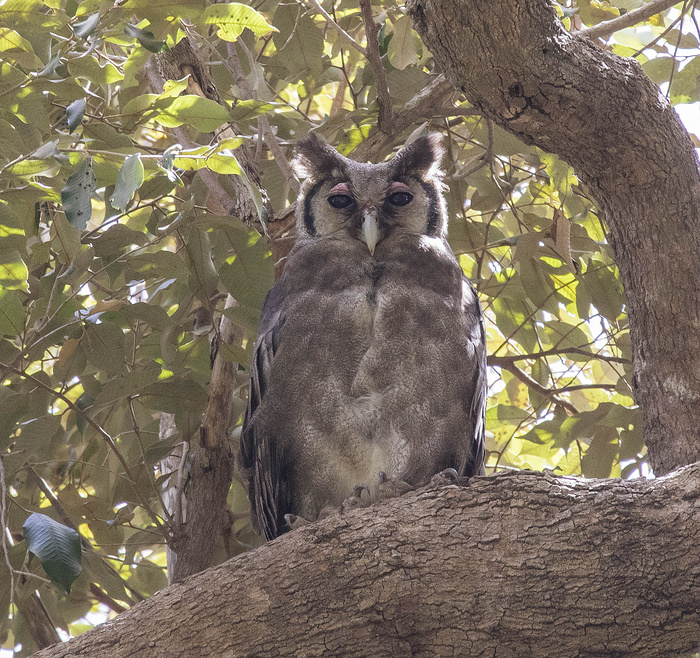
Today we were on the track of a special bird of the forest, we had the services of a local warden who Mas, our guide, knew well. We had walked for about an hour in dense forest and seen some very nice birds on our way. However, our main quarry was the Verreaux’s Eagle Owl, a huge bird found in the Gambian woodlands. We stopped at a stand of very large and obviously old trees and the guide searched these trees for about a minute and then pointed an Owl out to us. We would never have found it ourselves, you have to employ the services of these guides because they know where the bird’s favourite trees are. What impressive birds these Owls are, standing about two feet tall! They have, comically, pink eyelids which stand out from their overall grey plumage. Well worth the walk through he woods.
A Bluebell Morning.
09th May 2018
09th May 2018
The Bluebells are late coming out in our local woods. Last week there were hardly any showing, principally because of a cold and gloomy late April and when I visited a local woodland it was very disappointing. However, I thought that the sunny spell of weather over the bank holiday weekend must have brought them out. It only takes a few warm sunny days to encourage wildflowers to bloom.
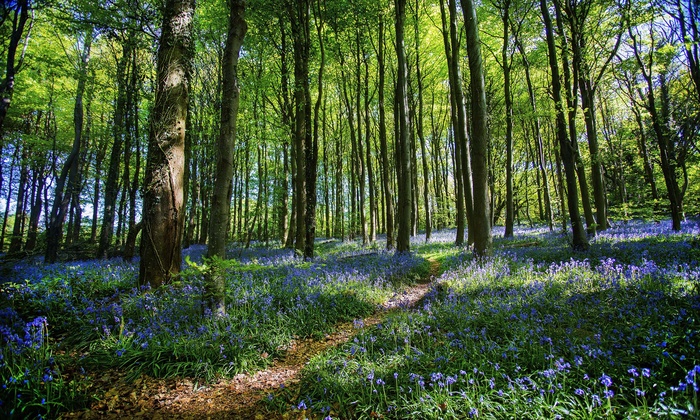
I was out early again yesterday, full of hope on another spectacular morning, and I headed straight to the same Bluebell woodland. I was not disappointed, there had been a total transformation and the woodland floor was carpeted with a spectacular showing of flowers.
It really lifts your spirits, (not that my spirits need lifting on these glorious spring mornings), to see such a wonderful natural spectacle and I would recommend anybody to just go for a walk in one of these woods now and embrace the natural world.
I walked around the woods encountering superb vistas at every turn, what a glorious scene was laid out before me. I was stopping every fifty yards just to gaze in awe at the beauty of these simple little flowers.
A few images of the woods.
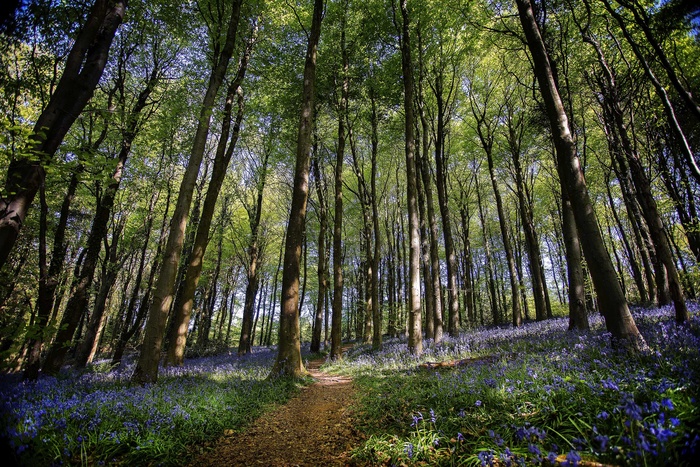
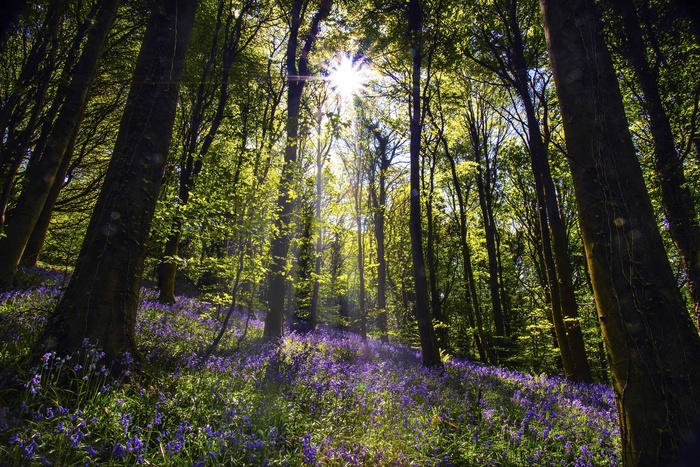
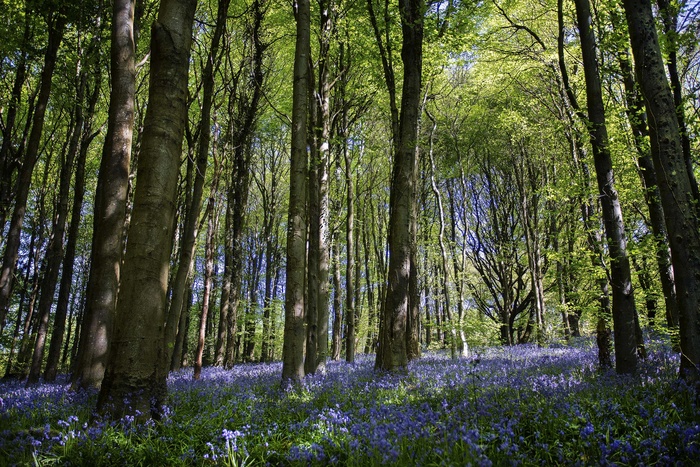
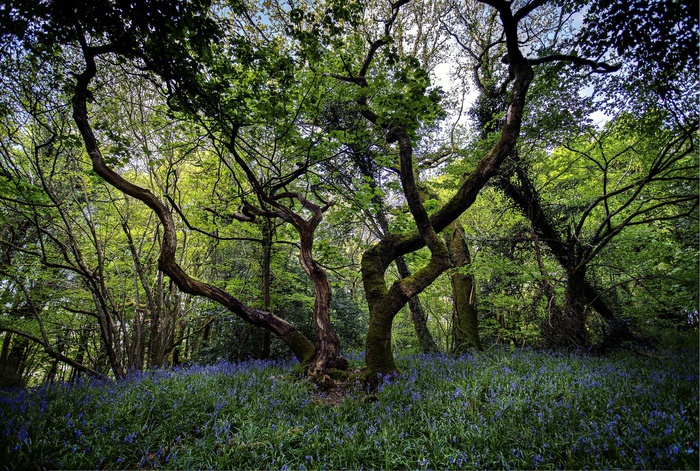
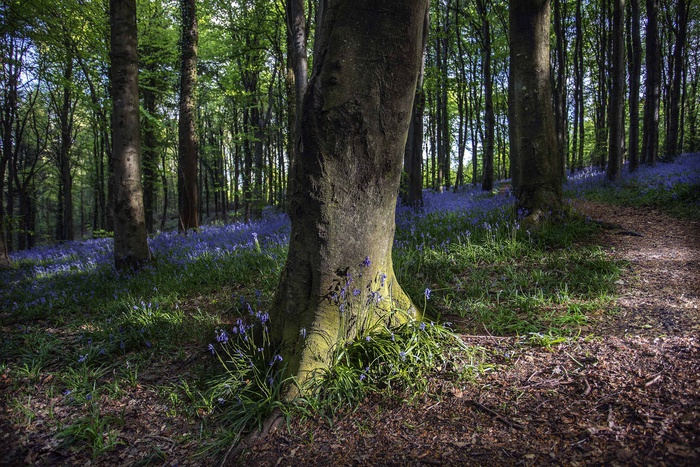
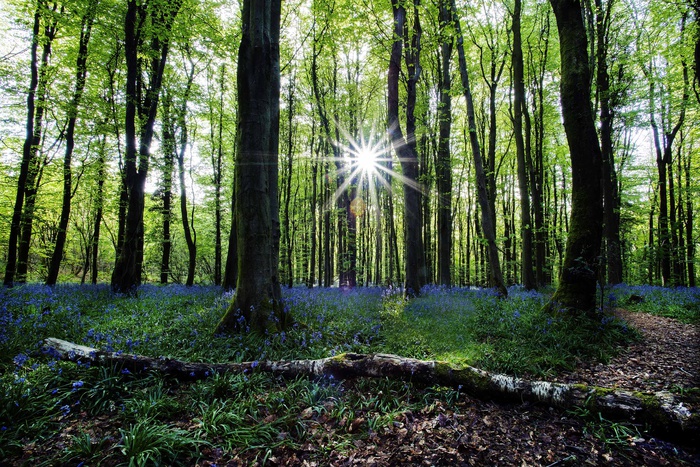
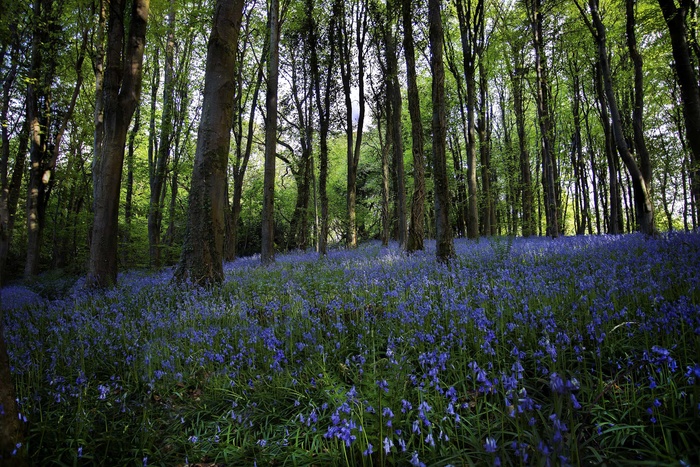
I was out early again yesterday, full of hope on another spectacular morning, and I headed straight to the same Bluebell woodland. I was not disappointed, there had been a total transformation and the woodland floor was carpeted with a spectacular showing of flowers.
It really lifts your spirits, (not that my spirits need lifting on these glorious spring mornings), to see such a wonderful natural spectacle and I would recommend anybody to just go for a walk in one of these woods now and embrace the natural world.
I walked around the woods encountering superb vistas at every turn, what a glorious scene was laid out before me. I was stopping every fifty yards just to gaze in awe at the beauty of these simple little flowers.
A few images of the woods.
Cuckoos on a beautiful Spring Morning.
07th May 2018
07th May 2018
Yesterday I decided to take advantage of this glorious weather and go out walking this morning up on the local hills. The alarm went off at 05.00 and I awoke to a stunningly beautiful morning. It was already light and there was birdsong all around my garden. I had arranged my kit last night to save time, I had a quick cup of tea and a slice of toast and I was out and gone. At 05.45 I was walking on a local hillside, Willow Warblers were displaying, Wood Warblers were singing their ‘spinning coin’ song and Tree Pipits were parachuting out of the sky singing as they dropped down into the tops of the trees. It was an absolute pleasure to be out and I felt so privileged to be walking on these hills that are right on my doorstep. However, my quarry was a female Cuckoo that I had been watching for a few days, it wouldn’t be easy, it never is, but if you do your homework you are in with a chance.
My mantra;
Do your homework. Get up early. Wear muted colours. Be quiet. Be patient. If you can’t adhere to these criteria then forget photographing birds like Cuckoos. They are so sharp, and once they see you then you won’t get near them.
I knew the area she was frequenting and I made my way there straight away and got underneath some Hawthorn trees. After about half an hour I could hear a male Cuckoo distantly, but no sign of the female. I would happily photograph the male but it would be nice to get the female because almost all Cuckoo photos you see are male. They must outnumber the females, it looks that way anyway.
The male came nearer and I managed to shoot him on the top of a Hawthorn bush with a Hairy Caterpillar in his beak, which was a good start!
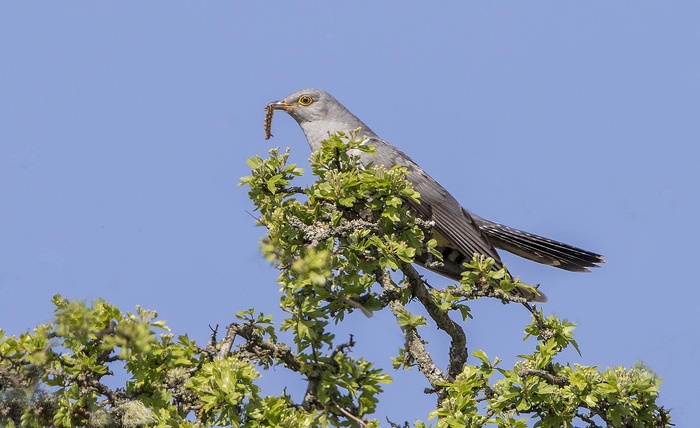
Then some time later I could hear the female’s soft bubbling song and I could see her flying around the Hawthorns looking to land on a suitable perch, these birds always have their preferred vantage points and they inevitably use them at some time. I got myself ready, pointing my lens at one of the favoured bushes and predictably she came in and perched out in the bright sunshine, facing in my direction about twenty yards away.
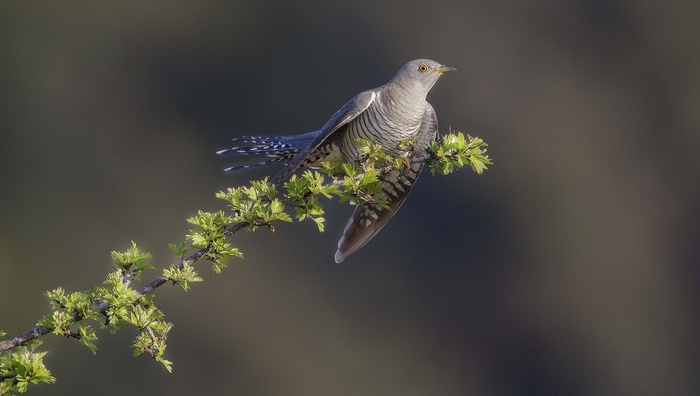
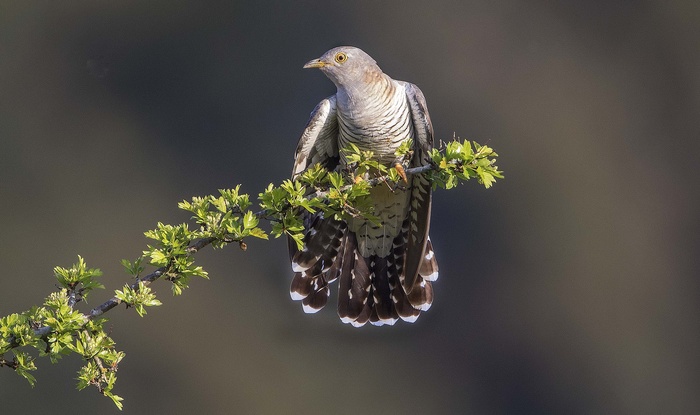
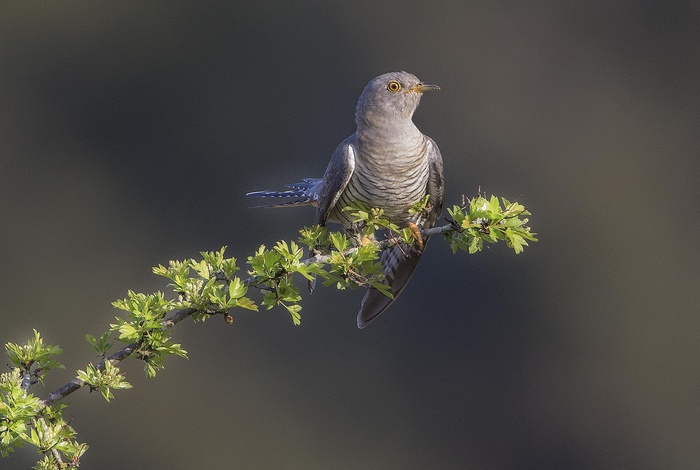
I shot her straight away, it’s great when planning comes to fruition! However, she was being mobbed by Meadow Pipits.
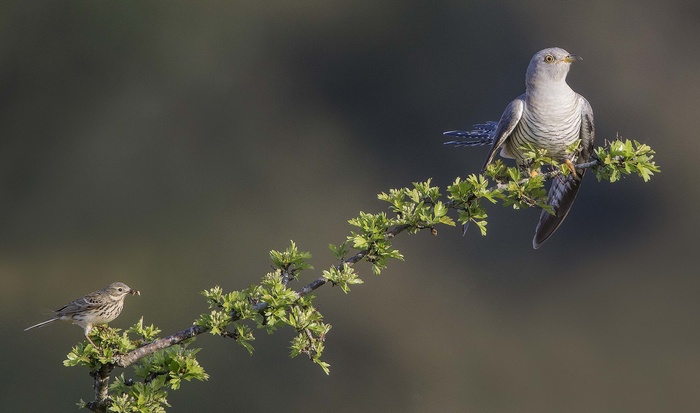
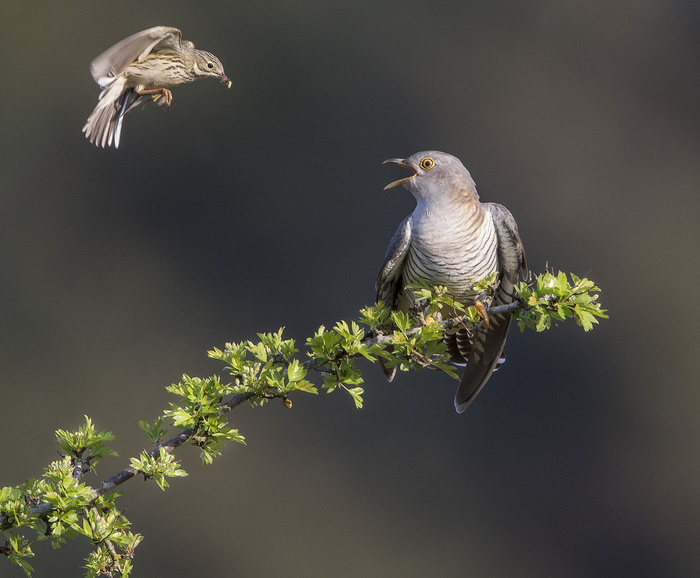
I knew she wouldn't stay long but then the male came steaming in anyway and landed on the same bush and they were both off and flying away, interacting as they disappeared into the distance. Sometimes you only get one chance and you have to be prepared, but she was ‘In the Can’ to use motion picture parlance and I happily continued on my walk enjoying a stunning morning. It’s worth getting up anyway these mornings but if you get some success then it’s even better!
My mantra;
Do your homework. Get up early. Wear muted colours. Be quiet. Be patient. If you can’t adhere to these criteria then forget photographing birds like Cuckoos. They are so sharp, and once they see you then you won’t get near them.
I knew the area she was frequenting and I made my way there straight away and got underneath some Hawthorn trees. After about half an hour I could hear a male Cuckoo distantly, but no sign of the female. I would happily photograph the male but it would be nice to get the female because almost all Cuckoo photos you see are male. They must outnumber the females, it looks that way anyway.
The male came nearer and I managed to shoot him on the top of a Hawthorn bush with a Hairy Caterpillar in his beak, which was a good start!
Then some time later I could hear the female’s soft bubbling song and I could see her flying around the Hawthorns looking to land on a suitable perch, these birds always have their preferred vantage points and they inevitably use them at some time. I got myself ready, pointing my lens at one of the favoured bushes and predictably she came in and perched out in the bright sunshine, facing in my direction about twenty yards away.
I shot her straight away, it’s great when planning comes to fruition! However, she was being mobbed by Meadow Pipits.
I knew she wouldn't stay long but then the male came steaming in anyway and landed on the same bush and they were both off and flying away, interacting as they disappeared into the distance. Sometimes you only get one chance and you have to be prepared, but she was ‘In the Can’ to use motion picture parlance and I happily continued on my walk enjoying a stunning morning. It’s worth getting up anyway these mornings but if you get some success then it’s even better!
Cuckoos in the Beacons, spring is here.
04th May 2018
04th May 2018
At long last after an appallingly bad April in terms of weather, where rain fell on an almost daily basis, skies were grey and temperatures remained low, there now appears to be light at the end of the tunnel with favourable weather forecasts in evidence. The land is still draining down and the little stream in my garden that only usually runs in winter has finally dried up. This little stream is a good weather barometer as it is very reactive to rain falling up on the mountain above my house. Let’s hope that this is the end of the bad weather because if it had carried on it would have had a negative effect on the birds breeding programme.
I was walking earlier on this week in a local deciduous woodland hoping to see some Bluebells but I was very disappointed to see the lack of flowers in bloom, they should be out in profusion now. However, the forecasted sunshine and warm temperatures will bring them out next week and I will try and get some photographs of what is one of nature’s most glorious spectacles.
Susan and I took advantage of the nice weather yesterday and went walking up on a local hillside, we could hear a few Tree Pipits singing and could then see them parachuting down into the tops of trees. We always like to see them doing this, it is quite comical. We walked on a good bit further and then we could hear an unmistakable call, the one we have been waiting for… Cuckoo, Cuckoo, at last our favourite spring bird! We could see one flying in the distance and then surprisingly another and then another, three in total. Two were flying around disputing territory, great to see them doing this, they were rocketing through the trees, chasing each other relentlessly. Then suddenly there was a gentle ‘Bubbling’ call, a female Cuckoo, things went up a notch then with all three males flying around calling for the female. One landed in a tree and I was able to shoot it quickly.
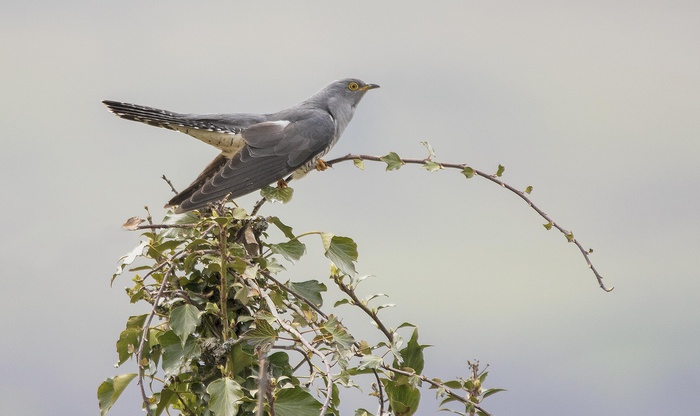
Hand-held with my Sigma Contemporary lens, very useful in these situations. Others were flying around and I managed a few shots as they whizzed by.
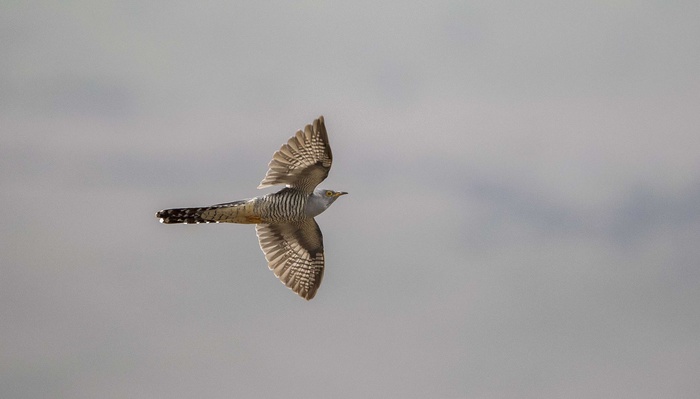
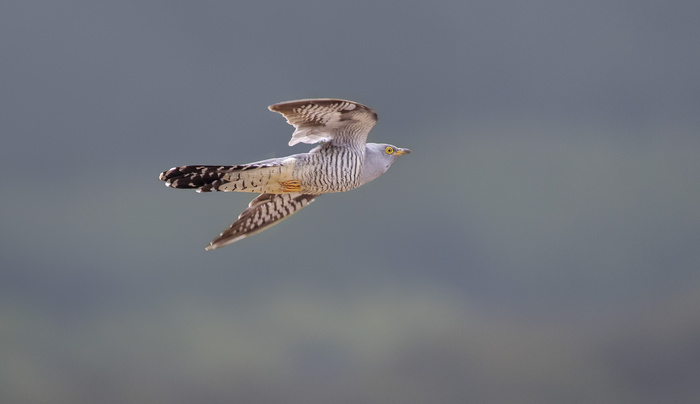
It was a great spectacle and two males shot by us at head height as we were standing near some bushes, we could hear the ‘Whoosh’ of their wings as they passed us. One of the great spring spectacles, we don’t get it every year but it’s great when it happens. A very enjoyable walk on a lovely spring morning.
I was walking earlier on this week in a local deciduous woodland hoping to see some Bluebells but I was very disappointed to see the lack of flowers in bloom, they should be out in profusion now. However, the forecasted sunshine and warm temperatures will bring them out next week and I will try and get some photographs of what is one of nature’s most glorious spectacles.
Susan and I took advantage of the nice weather yesterday and went walking up on a local hillside, we could hear a few Tree Pipits singing and could then see them parachuting down into the tops of trees. We always like to see them doing this, it is quite comical. We walked on a good bit further and then we could hear an unmistakable call, the one we have been waiting for… Cuckoo, Cuckoo, at last our favourite spring bird! We could see one flying in the distance and then surprisingly another and then another, three in total. Two were flying around disputing territory, great to see them doing this, they were rocketing through the trees, chasing each other relentlessly. Then suddenly there was a gentle ‘Bubbling’ call, a female Cuckoo, things went up a notch then with all three males flying around calling for the female. One landed in a tree and I was able to shoot it quickly.
Hand-held with my Sigma Contemporary lens, very useful in these situations. Others were flying around and I managed a few shots as they whizzed by.
It was a great spectacle and two males shot by us at head height as we were standing near some bushes, we could hear the ‘Whoosh’ of their wings as they passed us. One of the great spring spectacles, we don’t get it every year but it’s great when it happens. A very enjoyable walk on a lovely spring morning.
Memorable Day at Marakissa River Camp, The Gambia.
27th April 2018
27th April 2018
Marakissa River Camp is a compact but 'very basic' hotel surrounded by bird filled gardens. It was about an hour’s drive from our accommodation at Farakunku Lodges. As well as getting superb views of a Blue Breasted Kingfisher, see a previous blog, there was much more to see. As soon as we arrived Mas, our guide, went looking for birds on the river and as we were watching another stretch of the river, which backs right onto the gardens we could see many Pied Kingfishers. These Kingfishers are ubiquitous throughout The Gambia and if you are not careful you can switch off and become blasé about them, however, they are lovely birds and are very entertaining and can sometimes be seen in groups of up to ten birds, hovering or perched up chattering together.
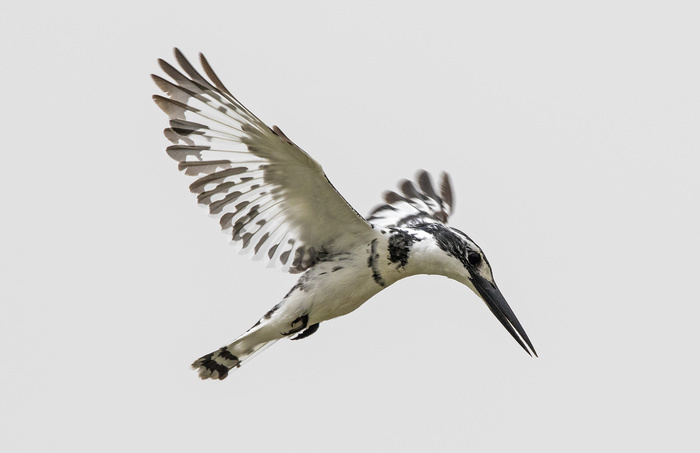
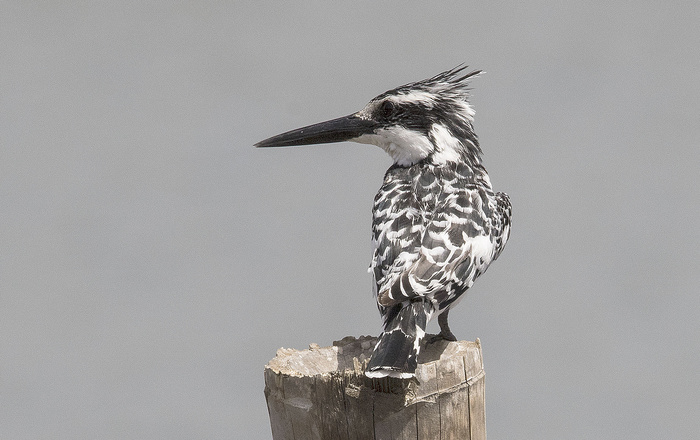
We were preoccupied watching these comical birds when our attention was caught by something moving in the undergrowth, suddenly a huge lizard broke cover and came walking towards us, unbelievably it was a Monitor Lizard and it was now coming directly towards us, obviously, for whatever reasons, either we were oblivious to it or it just didn’t care about us. However, when it heard my camera shutter firing, (because I couldn’t miss this unique photographic opportunity), it stopped about ten feet away and moved back into the undergrowth but not before giving us superb views as it walked along scenting the air,
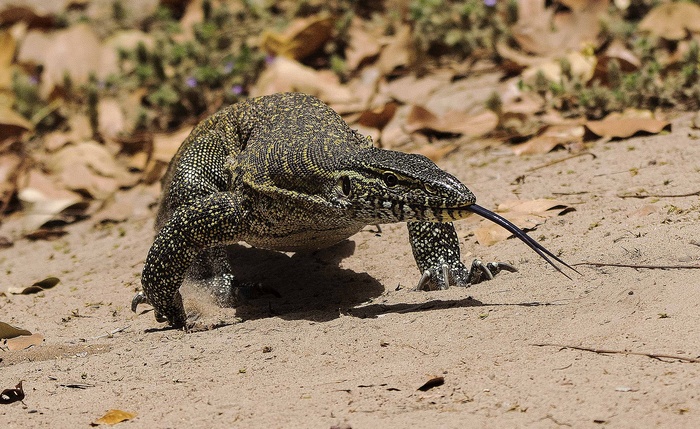
A great start to the day!!
We then saw a Blue Breasted Kingfisher flying past us up river, a beautiful spectacle in flight. Numerous other birds were in evidence around the reserve’s drinking pots especially Purple Glossy Starlings.
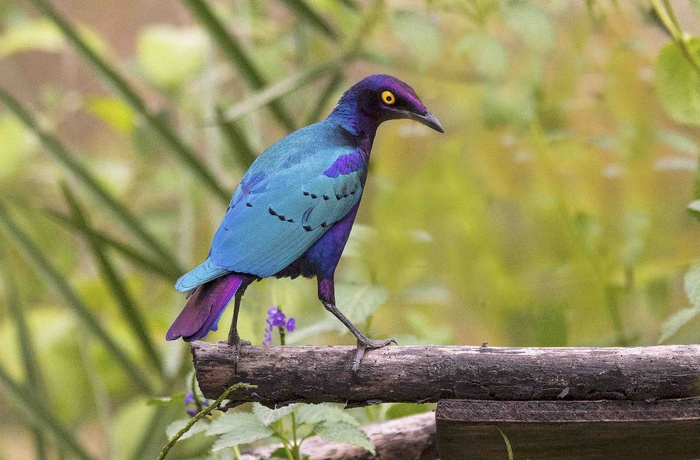
Rarely will someone ever get such opportunities to photograph lovely birds up close like you can here. The wonderful thing about Marakissa is that it is not a reserve and therefore there is no entrance fee, it is totally laid back, you can just have a cup of tea, coffee or a cold beer and perhaps a sandwich and the gardens are yours, where else can you see birds like that!! We had been sat down watching the drinking pots for about an hour when suddenly out of nowhere a Red Bellied Paradise Flycatcher landed briefly in front of us.
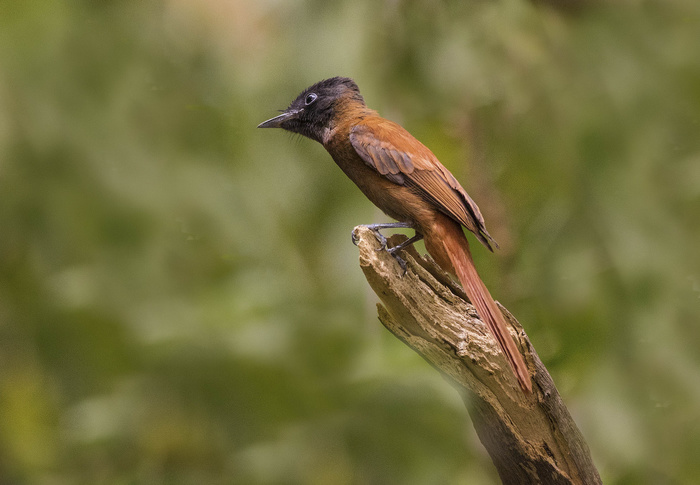
What a lovely bird.
Then another cracking bird flew in and perched above one of the pools, a Malachite Kingfisher.
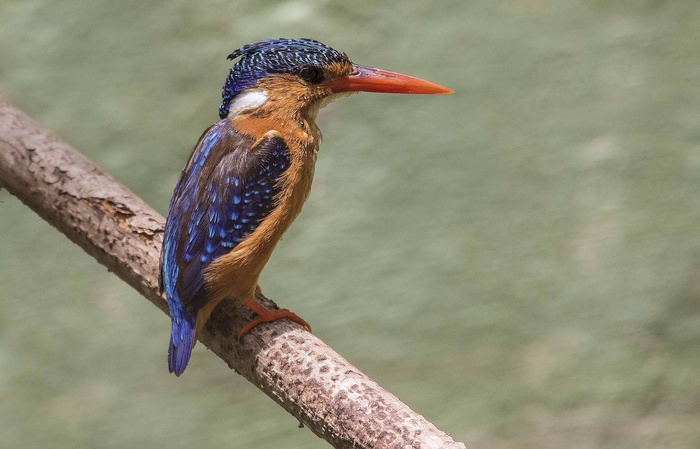
These tiny little jewels are only around 13cm. It proceeded to dive into the water to fish and remained totally unaffected by our presence - superb! It couldn’t get much better than that – or could it – the call went up from the Dutch owner of the hotel, ‘A giant is here’. We knew what he meant and I scrambled for my camera, heart thumping and to my disbelief a female Giant Kingfisher was now on the branch above the pool.
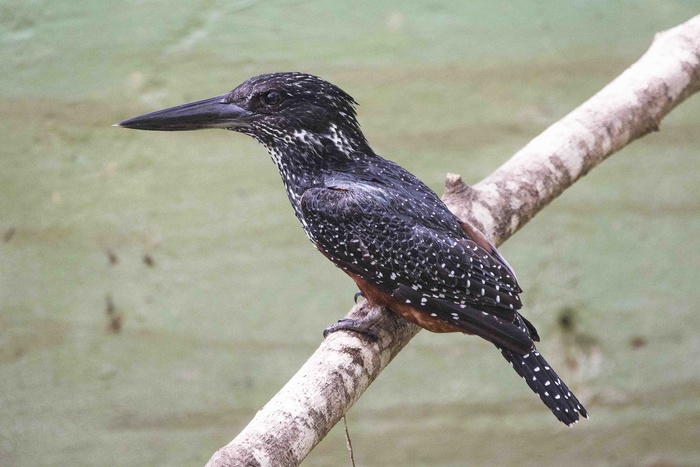
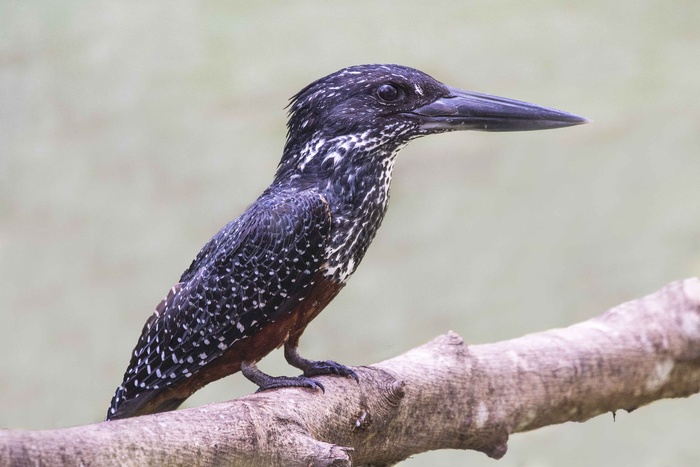
These birds are something to behold, up to 46cm, (18ins), from tail to beak. She just perched there watching the water for small fish. I managed to keep the lens still by leaning against a tree and took some real close-ups of this magnificent bird. We sat back down breathless and enjoyed a sandwich for lunch, what a morning’s birding.
After lunch we spent the last two hours relaxing watching the drinking pots and after seeing more nice birds we were thinking of packing in and driving back to Farakunku when something dropped down out of the trees onto one of the drinking pots. We slowly got up out of our seats to get a better view and we could now see a Shikra perched on a pot drinking.
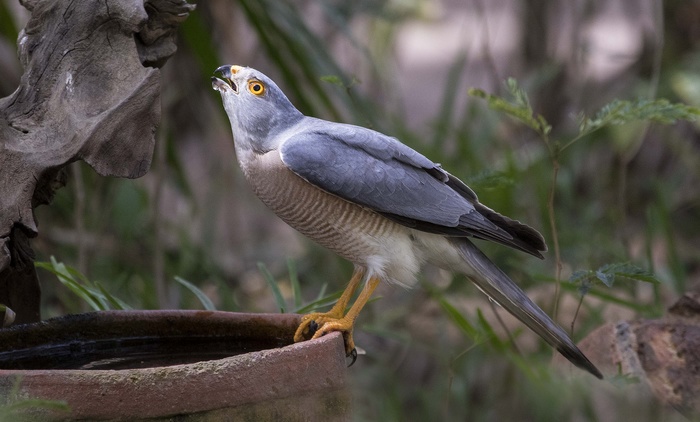
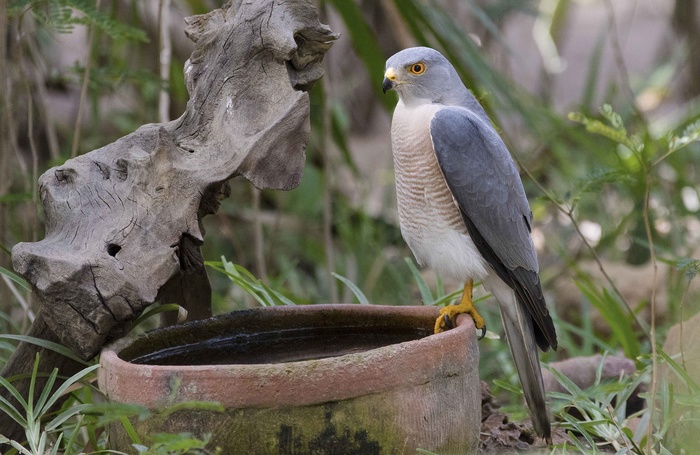
These birds are striking Sparrowhawk – like birds and I couldn’t believe it was allowing me to photograph it, what an end to the day. However, incredibly it wasn’t the end, sharp eyed Mas said ‘Steve, look up’ and as I did I couldn’t believe my eyes, a Lizard Buzzard was perched there just looking at us.
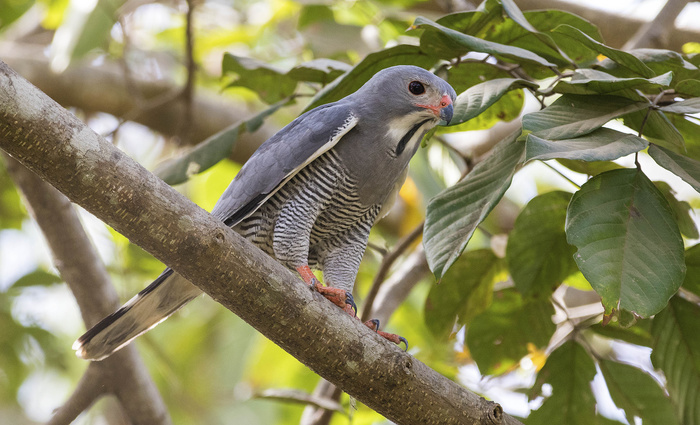
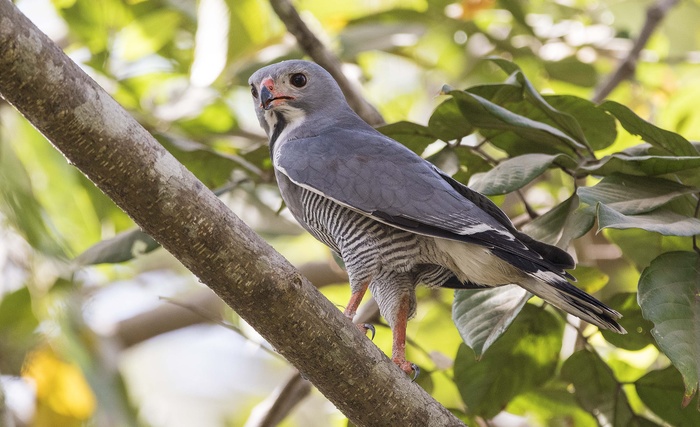
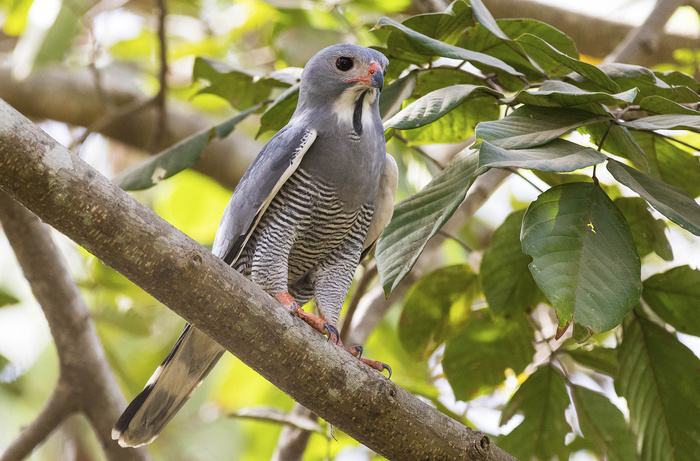
I prayed it would stay perched there for me to get a shot and thankfully the photography gods answered my prayers as I blazed away at what is a superb bird of prey, now it really was the end of a truly memorable days birding!!
We were preoccupied watching these comical birds when our attention was caught by something moving in the undergrowth, suddenly a huge lizard broke cover and came walking towards us, unbelievably it was a Monitor Lizard and it was now coming directly towards us, obviously, for whatever reasons, either we were oblivious to it or it just didn’t care about us. However, when it heard my camera shutter firing, (because I couldn’t miss this unique photographic opportunity), it stopped about ten feet away and moved back into the undergrowth but not before giving us superb views as it walked along scenting the air,
A great start to the day!!
We then saw a Blue Breasted Kingfisher flying past us up river, a beautiful spectacle in flight. Numerous other birds were in evidence around the reserve’s drinking pots especially Purple Glossy Starlings.
Rarely will someone ever get such opportunities to photograph lovely birds up close like you can here. The wonderful thing about Marakissa is that it is not a reserve and therefore there is no entrance fee, it is totally laid back, you can just have a cup of tea, coffee or a cold beer and perhaps a sandwich and the gardens are yours, where else can you see birds like that!! We had been sat down watching the drinking pots for about an hour when suddenly out of nowhere a Red Bellied Paradise Flycatcher landed briefly in front of us.
What a lovely bird.
Then another cracking bird flew in and perched above one of the pools, a Malachite Kingfisher.
These tiny little jewels are only around 13cm. It proceeded to dive into the water to fish and remained totally unaffected by our presence - superb! It couldn’t get much better than that – or could it – the call went up from the Dutch owner of the hotel, ‘A giant is here’. We knew what he meant and I scrambled for my camera, heart thumping and to my disbelief a female Giant Kingfisher was now on the branch above the pool.
These birds are something to behold, up to 46cm, (18ins), from tail to beak. She just perched there watching the water for small fish. I managed to keep the lens still by leaning against a tree and took some real close-ups of this magnificent bird. We sat back down breathless and enjoyed a sandwich for lunch, what a morning’s birding.
After lunch we spent the last two hours relaxing watching the drinking pots and after seeing more nice birds we were thinking of packing in and driving back to Farakunku when something dropped down out of the trees onto one of the drinking pots. We slowly got up out of our seats to get a better view and we could now see a Shikra perched on a pot drinking.
These birds are striking Sparrowhawk – like birds and I couldn’t believe it was allowing me to photograph it, what an end to the day. However, incredibly it wasn’t the end, sharp eyed Mas said ‘Steve, look up’ and as I did I couldn’t believe my eyes, a Lizard Buzzard was perched there just looking at us.
I prayed it would stay perched there for me to get a shot and thankfully the photography gods answered my prayers as I blazed away at what is a superb bird of prey, now it really was the end of a truly memorable days birding!!
River cruise in The Gambia.
22nd April 2018
22nd April 2018
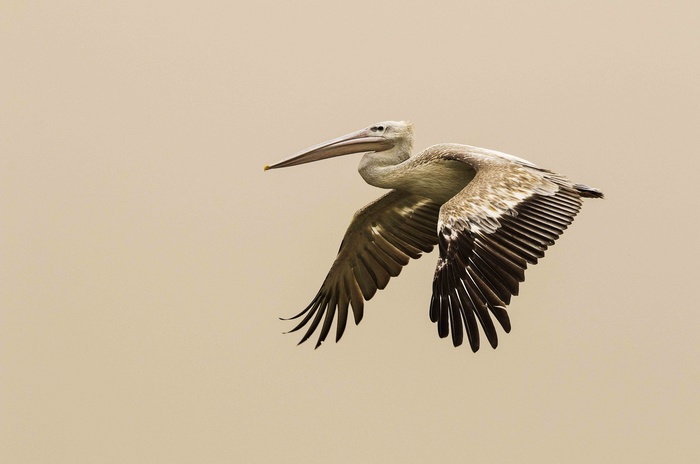
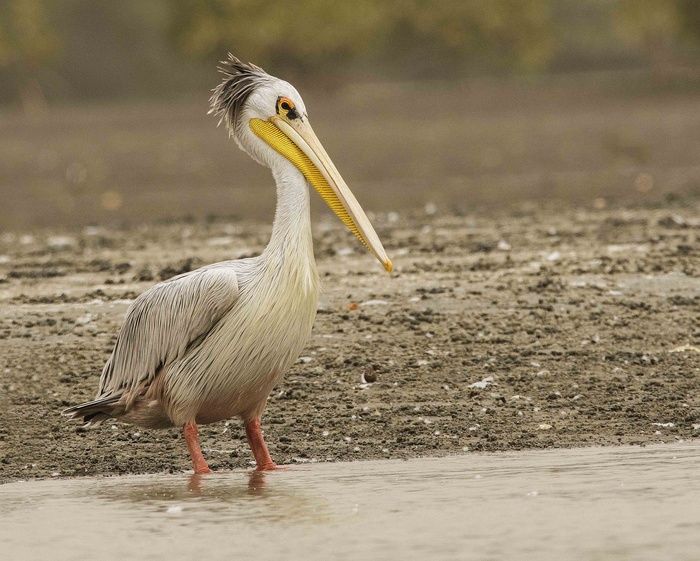
Part of our pre-arranged birding itinery included a boat trip along the River Allahein. This river forms in part the border between The Gambia and Senegal. It is quite a wide, fast flowing river but with some shallows containing a few small islands scattered along its length. Huge mounds of discarded Oyster shells can be seen piled high along its banks and in some places these shell mounds seemed to be part of the actual river bank. There were no specific birds on our list for this trip and we just gently motored along seeing what was around. We had quite a large boat to ourselves and therefore had the option to sit wherever we liked to see any wildlife that was on offer. As we meandered along shoals of small flying fish kept us company, leaping out of the water beside our boat. There weren’t many boats around and the ones we did see were crowded with people just on trips up and down the river, however, it is better, if you want to see wildlife, to pay a little more and have the privacy and freedom of your own boat. Generally the tourists that fill these boats are not really interested in the river’s wildlife as none we passed contained anyone using binoculars, they just go for the cruise and that’s fair enough, each to their own. However, as we slowly cruised passed a small island containing Pink-backed Pelicans,
Juvenile in flight.
Adult in breeding plumage.
we also saw Royal and Caspian Terns and a single Osprey. Suddenly, Mas our guide sat bolt upright and gestured to the boat man to pick up speed. We asked him what it was and he enthusiastically said 'Goliath Heron' - Mas didn’t get exited very often so we knew this was a good bird to see. As we approached this magnificent bird it made its way right to the top of the bush it was perched in giving superb views.
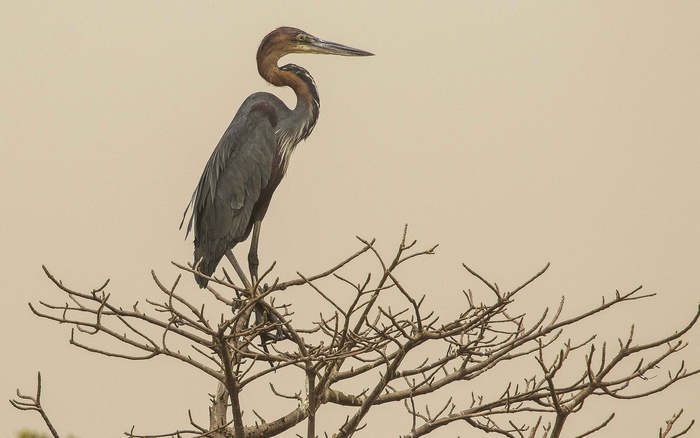
It was obviously watching us and I was praying it would remain for me to get a shot. We inched closer and closer until we were in range and I was very happy to get a few decent shots. These Herons are the biggest in the world standing almost five feet tall with a wingspan of seven and a half feet, they dwarf a Grey Heron!!
Suddenly it flew, taking off like a light aircraft disappearing up river, what a bird. We continued along the river and we could see some birds standing in the water in the distance. As we approached we could see they were Yellow-billed Storks.
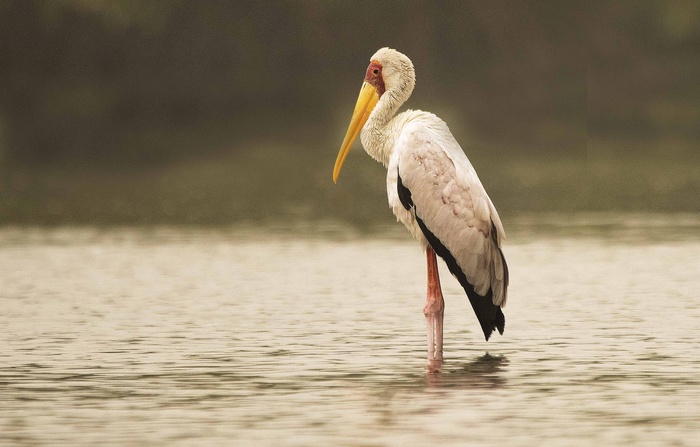
Some African Spoonbills were amongst them.
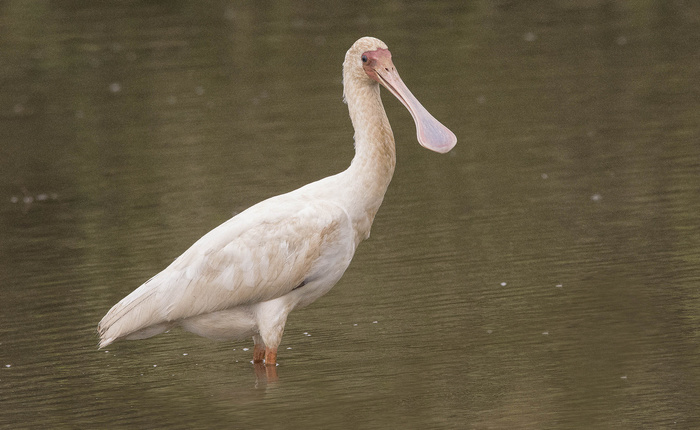
We cruised past them taking some shots as we passed, and then Mas said to the boat man, ‘Cut the engines’ and there incredibly was the Goliath Heron again, fishing in the shallows at the edge of the Mangroves.
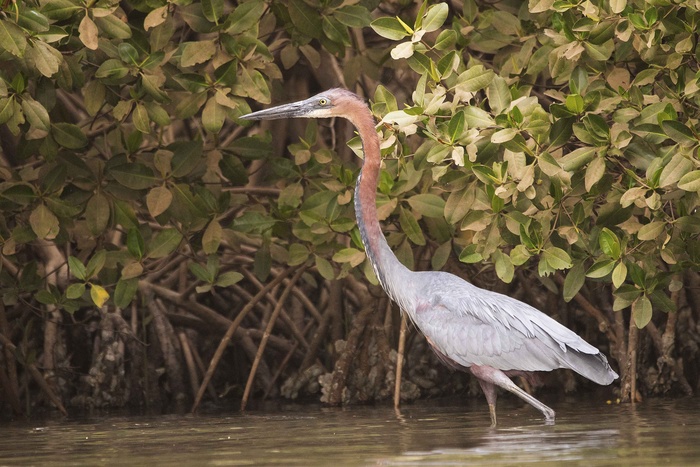
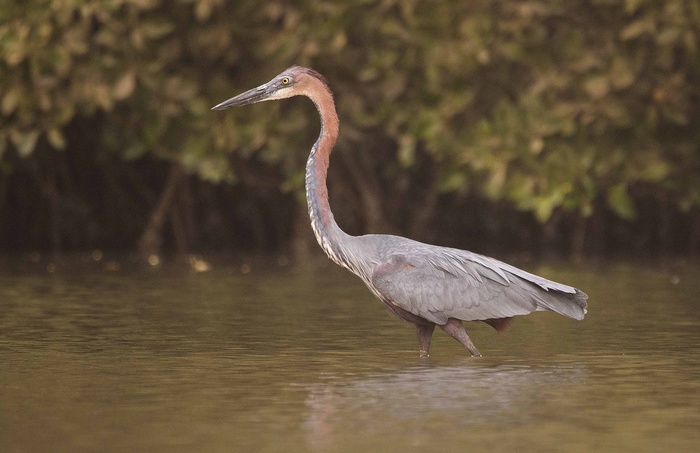
Once more we had some great views and shots of this huge bird as we quietly floated by. The engines were then restarted and we happily cruised back to a restaurant on the river bank for lunch, not before tipping the boat man for his efforts, it takes skill and knowledge of the river to get close to these birds without grounding the boat in the shallows. An excellent morning on the river with some great birds.
Juvenile in flight.
Adult in breeding plumage.
we also saw Royal and Caspian Terns and a single Osprey. Suddenly, Mas our guide sat bolt upright and gestured to the boat man to pick up speed. We asked him what it was and he enthusiastically said 'Goliath Heron' - Mas didn’t get exited very often so we knew this was a good bird to see. As we approached this magnificent bird it made its way right to the top of the bush it was perched in giving superb views.
It was obviously watching us and I was praying it would remain for me to get a shot. We inched closer and closer until we were in range and I was very happy to get a few decent shots. These Herons are the biggest in the world standing almost five feet tall with a wingspan of seven and a half feet, they dwarf a Grey Heron!!
Suddenly it flew, taking off like a light aircraft disappearing up river, what a bird. We continued along the river and we could see some birds standing in the water in the distance. As we approached we could see they were Yellow-billed Storks.
Some African Spoonbills were amongst them.
We cruised past them taking some shots as we passed, and then Mas said to the boat man, ‘Cut the engines’ and there incredibly was the Goliath Heron again, fishing in the shallows at the edge of the Mangroves.
Once more we had some great views and shots of this huge bird as we quietly floated by. The engines were then restarted and we happily cruised back to a restaurant on the river bank for lunch, not before tipping the boat man for his efforts, it takes skill and knowledge of the river to get close to these birds without grounding the boat in the shallows. An excellent morning on the river with some great birds.
A trio of Raptors in The Gambia.
17th April 2018
17th April 2018
Today we found ourselves in a local area named Tujering Woods. This area is not really a woods, it is more an open area sparsely populated with trees and scrub. First impressions are that it wouldn’t be very good for birds but that couldn’t be further from the truth. It held a large and diverse range of species and there are virtually no quiet spots in the whole area, there is something to see continually. After seeing birds like Yellow Penduline Tit, White Fronted Black Chat, Striped Kingfisher, African Silverbill, Red Winged Warbler, Beautiful Sunbird, Zitting Cisticola etc etc. We spotted one of our all-time favourite Raptors up in a Palm Tree, a Black Shouldered Kite.
]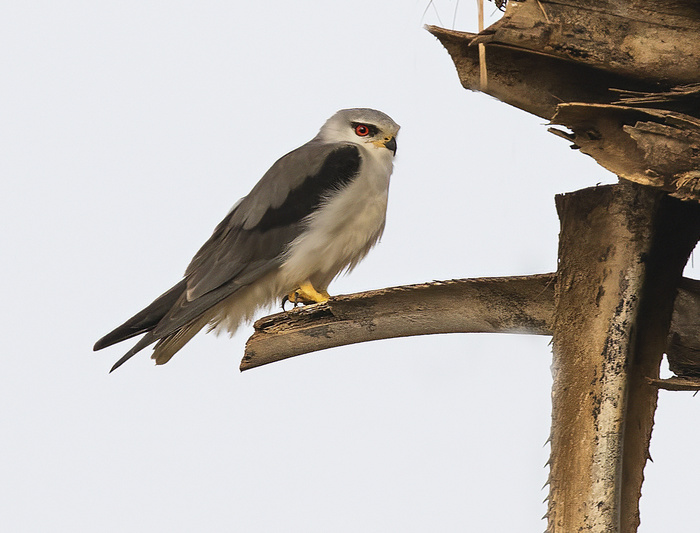
For me personally it has always been a bird I have struggled to see well and after my first viewing of one many years ago in a Cork Oak woodland in Portugal when I thought it was so beautiful - I wanted more!
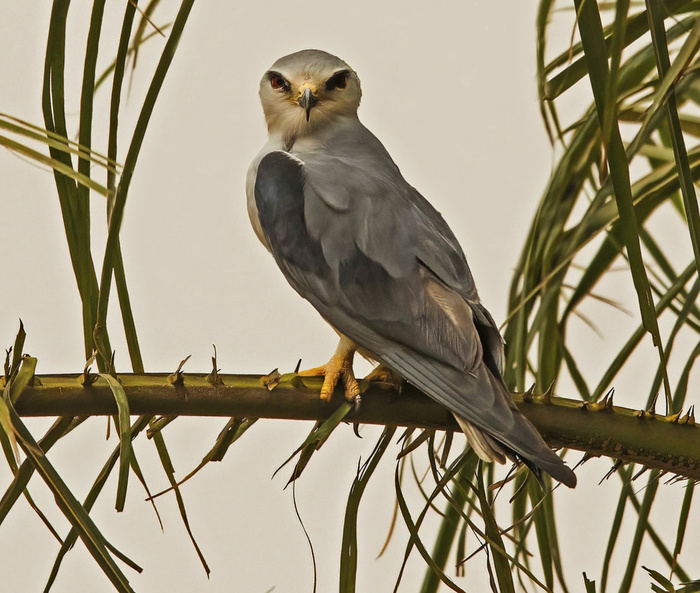
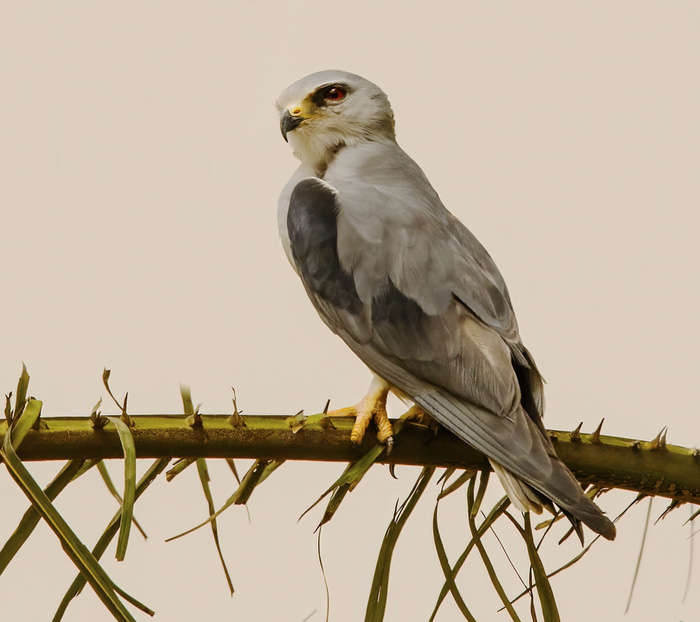
I managed to slowly get closer to the bird by sneaking from bush to bush and taking shots as I went along, at least you have some images doing it this way if the bird flies away. I had taken some reasonable shots of this ghost – like bird with its ruby red eyes and elegant light coloured plumage, I was hoping for more when suddenly it became very animated, I knew it wasn’t me because I had been very careful, then suddenly a different Raptor flew into a nearby tree causing the Black Shouldered Kite to fly off. I turned around to be confronted by a Dark Chanting Goshawk.
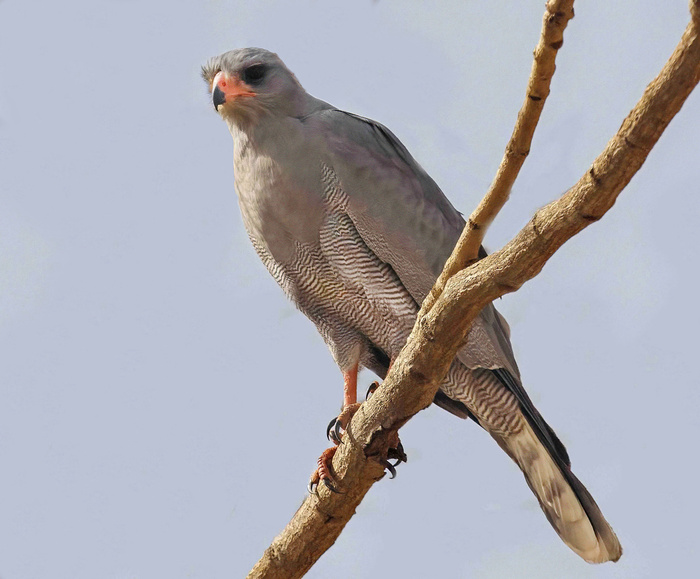
Another beautiful bird. I took a few shots before it also flew off in pursuit of the Kite, what a few minutes! We walked a little further on and in another Palm Tree we could see a medium sized bird which turned out to be a Grey Kestrel.
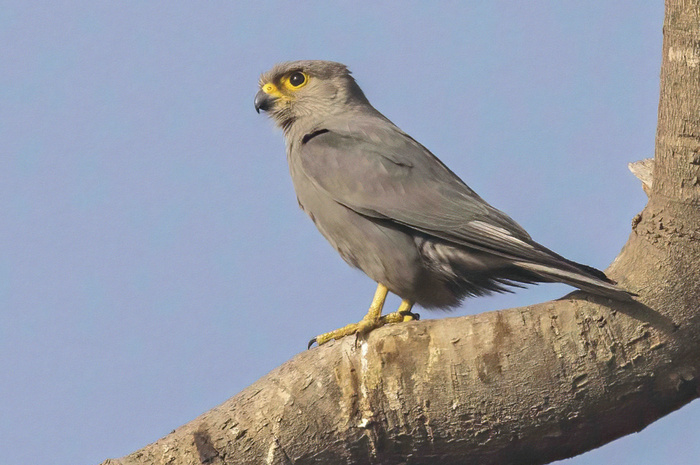
Another cracking bird, a lovely trio of Raptors. This area turned out to be very productive indeed and was a great morning’s birding.
]
For me personally it has always been a bird I have struggled to see well and after my first viewing of one many years ago in a Cork Oak woodland in Portugal when I thought it was so beautiful - I wanted more!
I managed to slowly get closer to the bird by sneaking from bush to bush and taking shots as I went along, at least you have some images doing it this way if the bird flies away. I had taken some reasonable shots of this ghost – like bird with its ruby red eyes and elegant light coloured plumage, I was hoping for more when suddenly it became very animated, I knew it wasn’t me because I had been very careful, then suddenly a different Raptor flew into a nearby tree causing the Black Shouldered Kite to fly off. I turned around to be confronted by a Dark Chanting Goshawk.
Another beautiful bird. I took a few shots before it also flew off in pursuit of the Kite, what a few minutes! We walked a little further on and in another Palm Tree we could see a medium sized bird which turned out to be a Grey Kestrel.
Another cracking bird, a lovely trio of Raptors. This area turned out to be very productive indeed and was a great morning’s birding.
Farakunku Tree and Bird Sanctuary, The Gambia, Part 3.
13th April 2018
13th April 2018
I was not always able to photograph all the birds we saw in the garden and sometimes you just have to be content with seeing the birds – after all that is what birdwatching is all about. We had brief views of two Violet Turacos, Rose-Ringed Parakeets and a Lizard Buzzard which flew within three feet of our heads as it snatched a lizard off the wall behind us. Having said that we had great success watching and photographing many lovely birds in the garden and on our penultimate visit we saw a flash of colour in a tree, right in the corner of the garden – unbelievably three Bearded Barbets briefly dropped onto a lower branch affording us good views before they flew away.
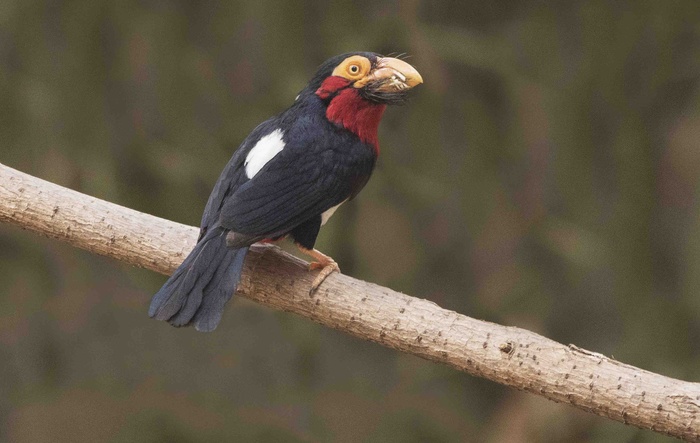
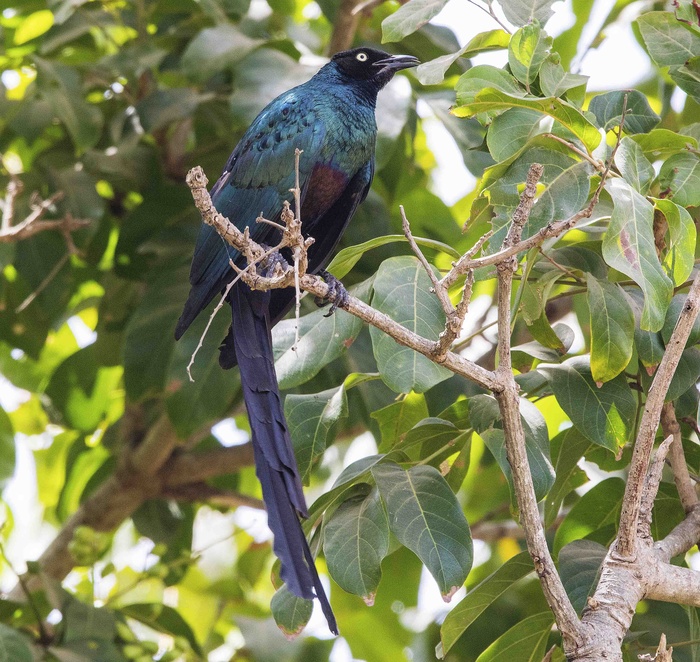
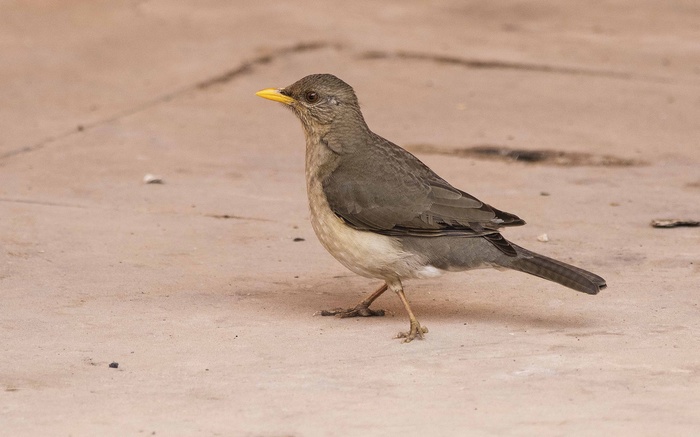
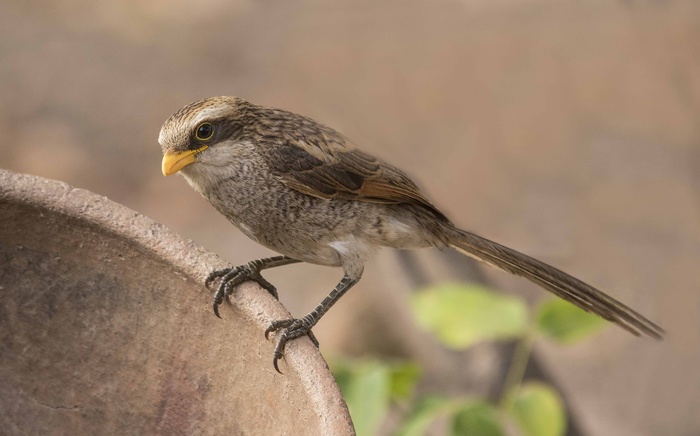
Other regular visitors to the water pots were Long Tailed Glossy Starlings, African Thrush and Yellow Billed Shrike, all very common birds.
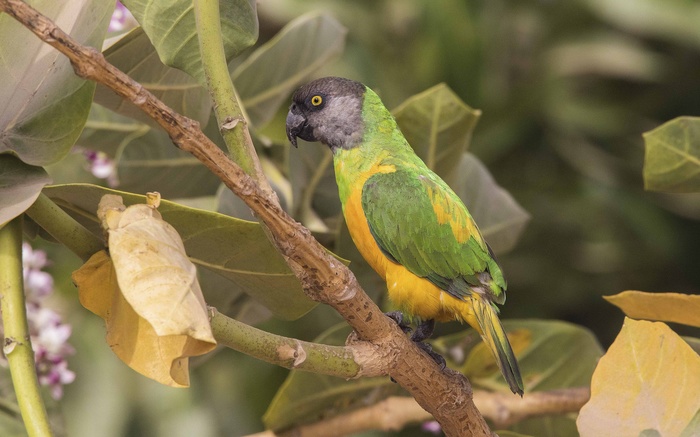
At the end of the day we were treated to a real flash of colour as two beautiful birds visited the garden, first to arrive was a Senegal Parrot, which we had seen flying over on a few occasions but had only seen perched once before.
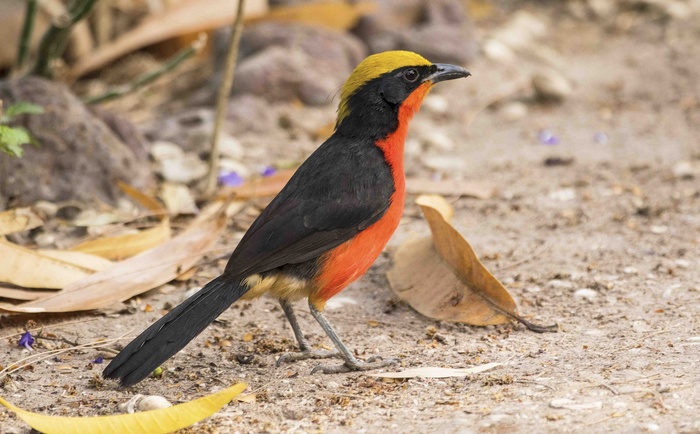
Then soon after the star turn of the afternoon came wandering along one of the paths, a Yellow Crowned Gonolek, totally unfazed by our presence.
There were also dozens of small birds such as Bronze Manikins, Blue Cheeked Cordon Bleus, Lavender Waxbills and Red Billed Fire Finches around the drinking pots.
These couple of hours in the garden rounded off nicely what were already good days, because there were no bad birding days for us in Africa. In addition we always had a superbly cooked dinner to look forward to, followed by a relaxing couple of hours on the veranda with an ice cold beer.
Below is a short Youtube video of some of the birds at the garden.
https://youtu.be/oHbw2L7QQbE
Other regular visitors to the water pots were Long Tailed Glossy Starlings, African Thrush and Yellow Billed Shrike, all very common birds.
At the end of the day we were treated to a real flash of colour as two beautiful birds visited the garden, first to arrive was a Senegal Parrot, which we had seen flying over on a few occasions but had only seen perched once before.
Then soon after the star turn of the afternoon came wandering along one of the paths, a Yellow Crowned Gonolek, totally unfazed by our presence.
There were also dozens of small birds such as Bronze Manikins, Blue Cheeked Cordon Bleus, Lavender Waxbills and Red Billed Fire Finches around the drinking pots.
These couple of hours in the garden rounded off nicely what were already good days, because there were no bad birding days for us in Africa. In addition we always had a superbly cooked dinner to look forward to, followed by a relaxing couple of hours on the veranda with an ice cold beer.
Below is a short Youtube video of some of the birds at the garden.
https://youtu.be/oHbw2L7QQbE
Farakunku Tree and Bird Sanctuary, The Gambia, Part 2.
13th April 2018
13th April 2018
On another evening in the Sanctuary a group of Green Wood Hoopoes came to drink.
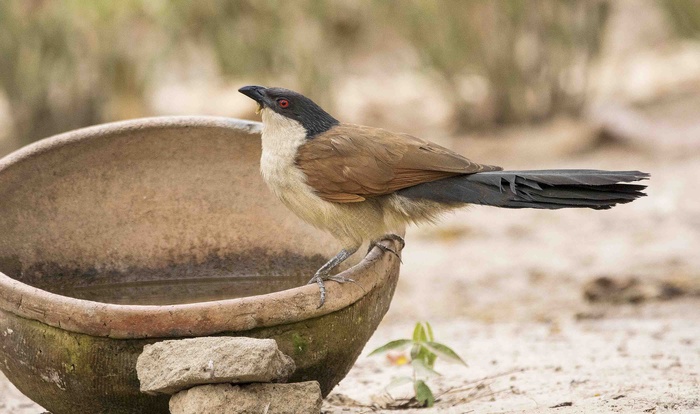
These lovely, delicate, birds, with long white flecked tails and a long red de-curved bill are a joy to watch, it was a large family group of adults and juveniles. This group visited the garden for three or four days and then totally disappeared, much to our disappointment. Nevertheless there were many other birds to take their place – one evening we saw a hitherto shy bird, a Senegal Coucal come to drink right in front of us.
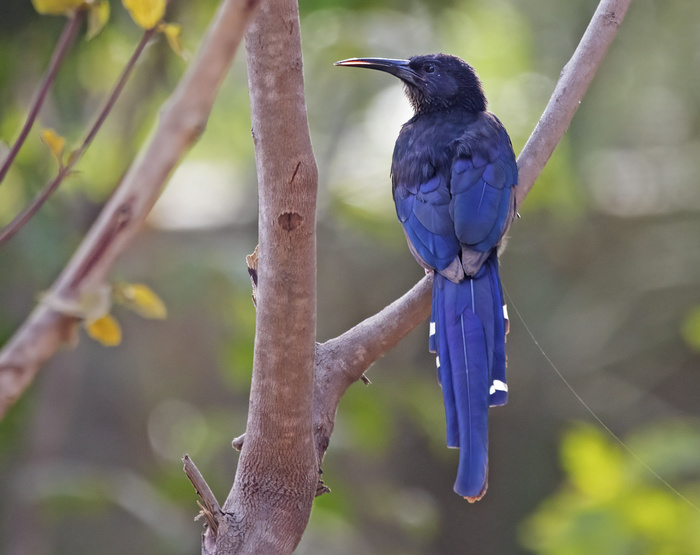
This was followed amazingly by a Blue Bellied Roller, a gorgeous bird.
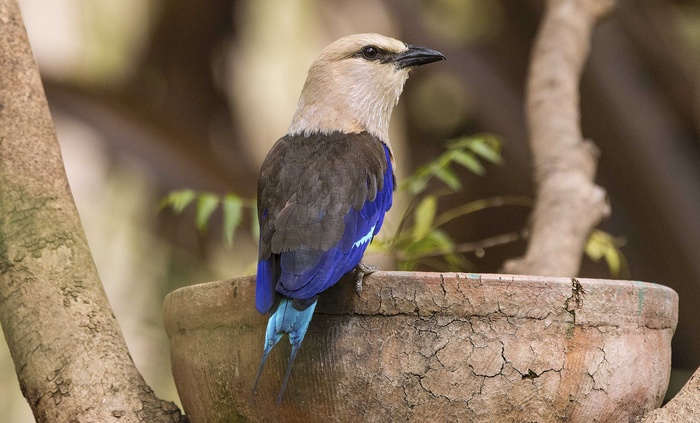
It’s some experience to have these lovely birds just 20 feet away, it’s amazing what a pot of water can do!
Suddenly six feet away clinging to a small sapling there was a Fine Spotted Woodpecker making his way to drink from a small hanging water basket.
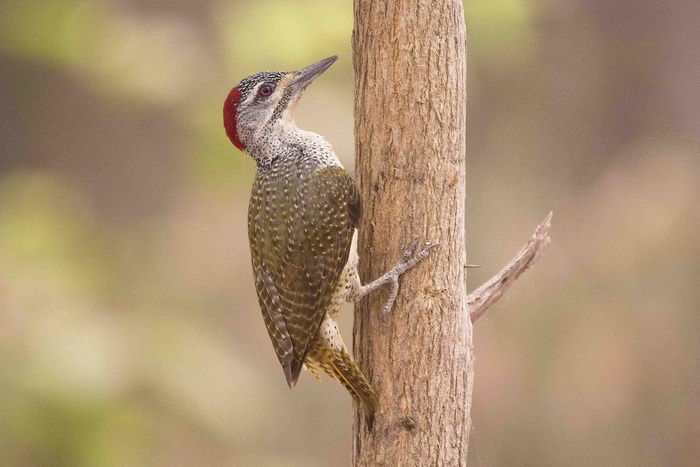
We kept very still and quiet and had amazing views of this lovely bird and at one stage a female joined him to drink. While watching the Woodpeckers we hadn’t noticed a Grey Backed Cameroptera looking for insects on the ground near our shelter.
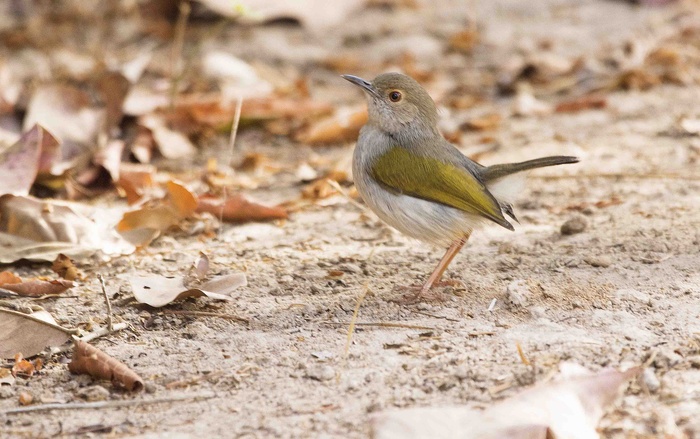
These tiny birds are very Wren-like in their habits and appearance and are easily overlooked. Then a beautiful long Tailed Glossy Starling flew into one of the trees just before we left for the evening.
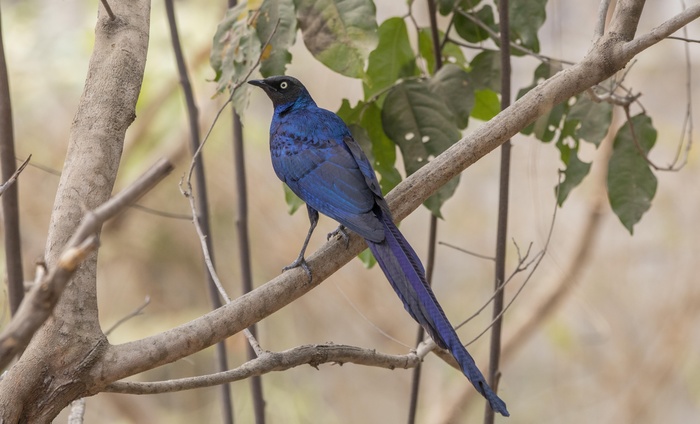
These lovely, delicate, birds, with long white flecked tails and a long red de-curved bill are a joy to watch, it was a large family group of adults and juveniles. This group visited the garden for three or four days and then totally disappeared, much to our disappointment. Nevertheless there were many other birds to take their place – one evening we saw a hitherto shy bird, a Senegal Coucal come to drink right in front of us.
This was followed amazingly by a Blue Bellied Roller, a gorgeous bird.
It’s some experience to have these lovely birds just 20 feet away, it’s amazing what a pot of water can do!
Suddenly six feet away clinging to a small sapling there was a Fine Spotted Woodpecker making his way to drink from a small hanging water basket.
We kept very still and quiet and had amazing views of this lovely bird and at one stage a female joined him to drink. While watching the Woodpeckers we hadn’t noticed a Grey Backed Cameroptera looking for insects on the ground near our shelter.
These tiny birds are very Wren-like in their habits and appearance and are easily overlooked. Then a beautiful long Tailed Glossy Starling flew into one of the trees just before we left for the evening.
Farakunku Tree and Bird Sanctuary, The Gambia.
13th April 2018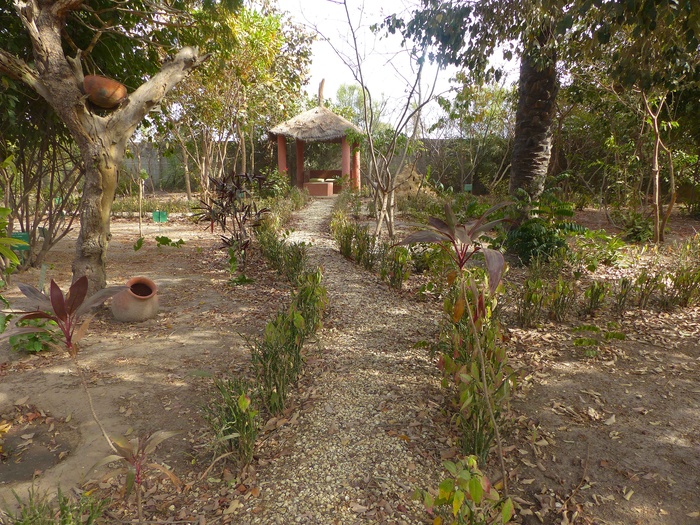
Farakunku tree and bird sanctuary was set up by Heather, the owner of the lodges to preserve plants, trees and to encourage the local wildlife by providing much needed water in a purposely dug pool and many locally-made clay pots and woven baskets. To maintain these water levels Alpha, one of groundsmen, hand draws the water from a very deep well which had been dug out for this purpose. It was quite an effort to draw so much heavy water to the surface from a 9 metre deep well.
This private garden is quite large and consists of three shelters with seating, enabling guests to observe the many and varied birds that come to drink, mainly in the evenings, after a typically hot and dry Gambian day. Susan and I went to this garden usually from 4.30pm – 6.30pm most days which we found was the most productive time.
The following is the first of three blogs to illustrate ‘just a few’ of the birds we saw there.
On our first evening we sat quietly in anticipation not knowing quite what to expect. We heard Blackcap and Brown Babblers in the trees and before long these gregarious birds came to drink from one of the pots in front of the shelter.
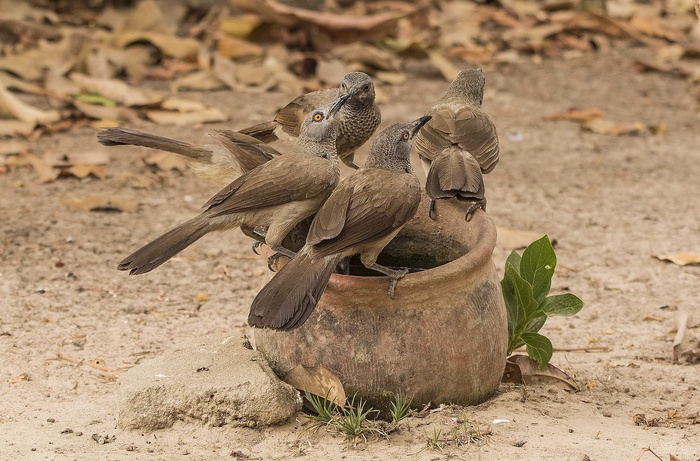
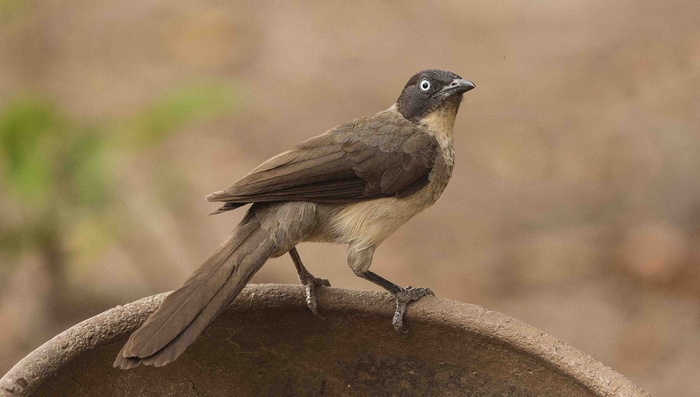
They seemed to have no fear of humans, totally ignoring our presence. Susan saw something moving to our left and to our delight an adult Greater Honeyguide came into view.
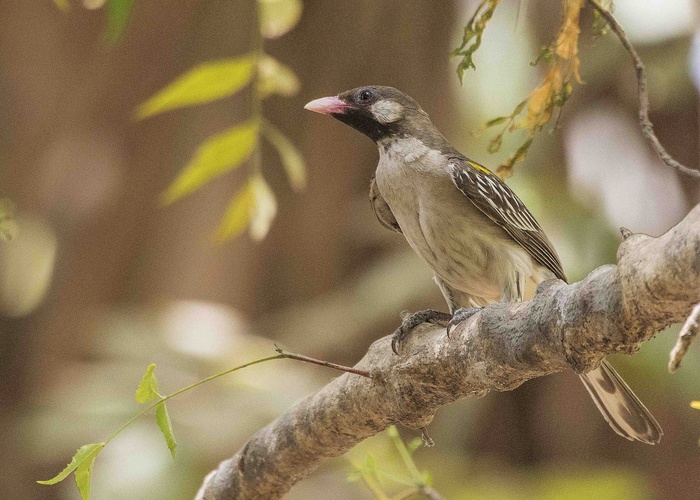
This intriguing bird is widely found in sub-Saharan Africa and like a Cuckoo it lays its eggs in the nests of other birds, Bee-Eaters are a favourite species. When the Honeyguide chick hatches it is equipped with sharp hooks at the tip of its beak, and at only a few days old uses these ‘weapons’ to kill its siblings and monopolise the supply of food
It has long been known in many parts of Africa that people and Greater Honeyguides work together to find wild-bees nests which provide a valuable resource for them both.
Honeyguides give a special call to attract people’s attention, then fly from tree to tree to indicate the direction of the bees’ nest. Humans are useful collaborators to the Honeyguide because of their ability to subdue stinging bees with smoke and chop open their nests to take the sticky rich honey for themselves and leave the wax and larvae within for the Honeyguide.
Not only do Honeyguides use calls to solicit human partnership, but in some cases, humans use specialised calls to recruit the bird’s assistance. Research in Mozambique has revealed that by using specialised calls to communicate and cooperate with each other, people and wild birds can significantly increase their chances of locating vital sources of calorie-laden food.
Next at the drinking pots was a Forked Tail Drongo
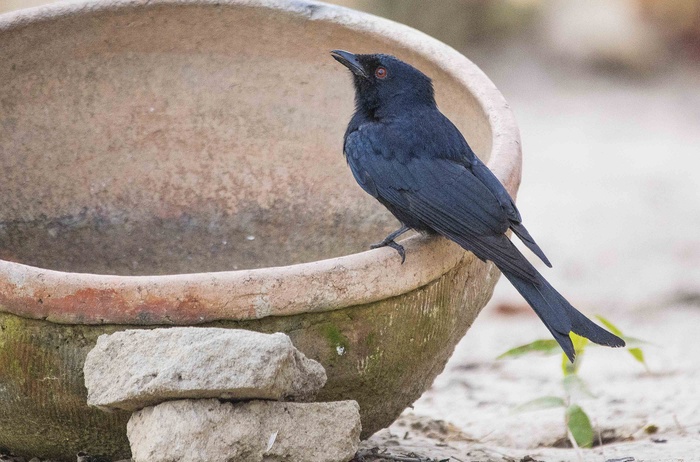
and then a family group of Piapiacs the latter being very raucous birds, similar in habits to our Magpies.
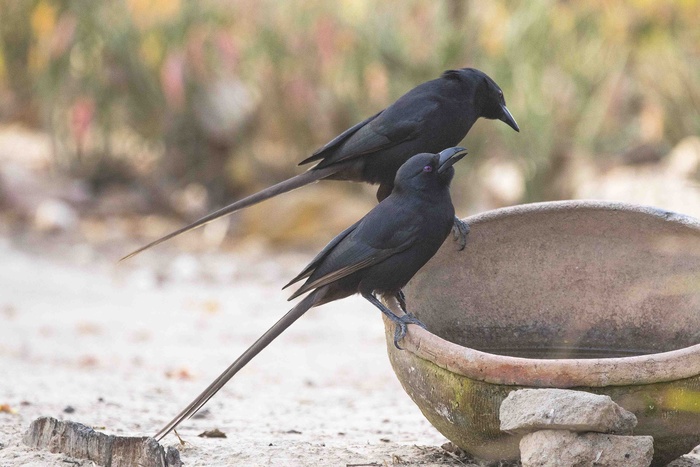
We were also entertained by a Western Grey Plantain Eater.
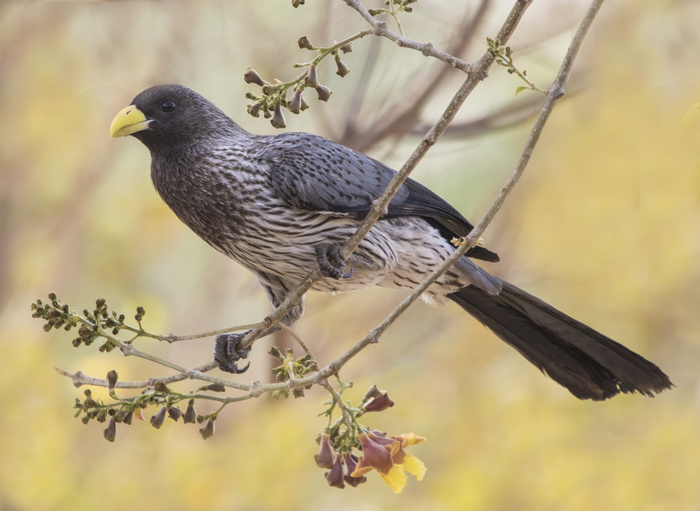
These birds are full of character and like to balance on the flimsiest of branches to enable them to eat the delicate yellow flowers that appear to be their favourite food. It was an enjoyable couple of hours and it was a real privilege to have this garden on our doorstep.
13th April 2018
Farakunku tree and bird sanctuary was set up by Heather, the owner of the lodges to preserve plants, trees and to encourage the local wildlife by providing much needed water in a purposely dug pool and many locally-made clay pots and woven baskets. To maintain these water levels Alpha, one of groundsmen, hand draws the water from a very deep well which had been dug out for this purpose. It was quite an effort to draw so much heavy water to the surface from a 9 metre deep well.
This private garden is quite large and consists of three shelters with seating, enabling guests to observe the many and varied birds that come to drink, mainly in the evenings, after a typically hot and dry Gambian day. Susan and I went to this garden usually from 4.30pm – 6.30pm most days which we found was the most productive time.
The following is the first of three blogs to illustrate ‘just a few’ of the birds we saw there.
On our first evening we sat quietly in anticipation not knowing quite what to expect. We heard Blackcap and Brown Babblers in the trees and before long these gregarious birds came to drink from one of the pots in front of the shelter.
They seemed to have no fear of humans, totally ignoring our presence. Susan saw something moving to our left and to our delight an adult Greater Honeyguide came into view.
This intriguing bird is widely found in sub-Saharan Africa and like a Cuckoo it lays its eggs in the nests of other birds, Bee-Eaters are a favourite species. When the Honeyguide chick hatches it is equipped with sharp hooks at the tip of its beak, and at only a few days old uses these ‘weapons’ to kill its siblings and monopolise the supply of food
It has long been known in many parts of Africa that people and Greater Honeyguides work together to find wild-bees nests which provide a valuable resource for them both.
Honeyguides give a special call to attract people’s attention, then fly from tree to tree to indicate the direction of the bees’ nest. Humans are useful collaborators to the Honeyguide because of their ability to subdue stinging bees with smoke and chop open their nests to take the sticky rich honey for themselves and leave the wax and larvae within for the Honeyguide.
Not only do Honeyguides use calls to solicit human partnership, but in some cases, humans use specialised calls to recruit the bird’s assistance. Research in Mozambique has revealed that by using specialised calls to communicate and cooperate with each other, people and wild birds can significantly increase their chances of locating vital sources of calorie-laden food.
Next at the drinking pots was a Forked Tail Drongo
and then a family group of Piapiacs the latter being very raucous birds, similar in habits to our Magpies.
We were also entertained by a Western Grey Plantain Eater.
These birds are full of character and like to balance on the flimsiest of branches to enable them to eat the delicate yellow flowers that appear to be their favourite food. It was an enjoyable couple of hours and it was a real privilege to have this garden on our doorstep.
Curious Osprey in The Gambia.
10th April 2018
10th April 2018
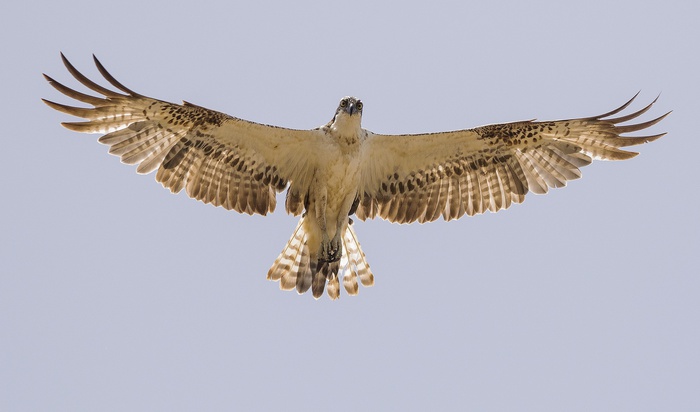
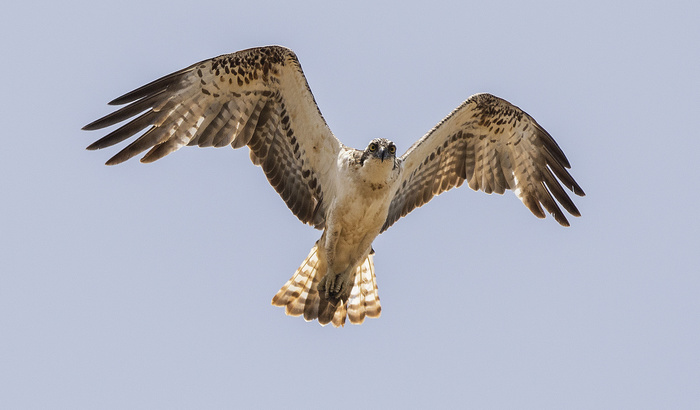
On one of our free days we usually had a taxi to a specific location that was recommended by Heather the owner of the Lodges we were staying at. These taxis involved a driver employed by Heather so they were honest and reliable, which is quite important, especially if you are for example a woman travelling on your own. These were mainly bird orientated destinations but with an opportunity to get some lunch and to see some local culture. One of these destinations was the Tanji Eco Lodge where you can stay in what looked like nice lodges right above the beach and also there was a nice restaurant and bar there. We wandered along what was ostensibly a deserted beach, the only thing we saw was a pair of shoes with a Cuttlefish placed beside them, both of which we presumed must have belonged to a fisherman. We walked about half a mile along the beach to a couple of lagoons where there were lots of Caspian and Royal Terns and the odd Pied Kingfisher. Perched in a distant tree we could see an Osprey eating a fish, we thought there would be one or two still around so we waited to see if one would come and fish in the lagoons. Sadly this didn’t happen and so we made our way back up off the beach and through a small boggy area and up into an open wood.
As we walked through this sparse woodland we saw a further four Ospreys all sitting in the trees. However, as we approached them they just took off and they proved too shy to get any shots. We had given up any hope of a photograph when unexplainably another Osprey, obviously a more curious bird came flying towards us and for whatever reason proceeded to hover above us giving very nice views indeed. Sometimes there’s no explaining wildlife behaviour, but we weren’t complaining! I managed to take some half decent shots before it also then flew away.
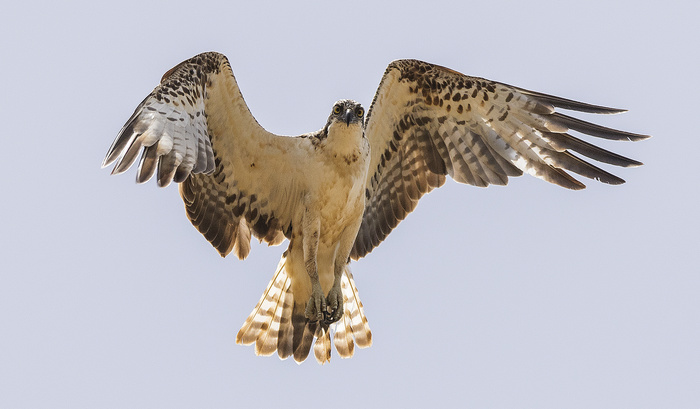
Contented, we walked back to the restaurant and enjoyed a very nice lunch indeed cooked by the two young men on duty, these young men in The Gambia really are very good cooks.
A very nice end to a morning’s birding!
As we walked through this sparse woodland we saw a further four Ospreys all sitting in the trees. However, as we approached them they just took off and they proved too shy to get any shots. We had given up any hope of a photograph when unexplainably another Osprey, obviously a more curious bird came flying towards us and for whatever reason proceeded to hover above us giving very nice views indeed. Sometimes there’s no explaining wildlife behaviour, but we weren’t complaining! I managed to take some half decent shots before it also then flew away.
Contented, we walked back to the restaurant and enjoyed a very nice lunch indeed cooked by the two young men on duty, these young men in The Gambia really are very good cooks.
A very nice end to a morning’s birding!
Bearded Barbet.
08th April 2018
08th April 2018
We were out early one morning in the local Savannah just walking around with Mas and he was mesmerising us with his mimicry, he had birds coming to us instead of us looking for them! On a very few occasions I thought I’d seen something he’d missed and I’d say ‘what was that Mas’ and without looking up he’d say what bird it was, he’d obviously seen it, he never failed to amaze us. A little later on he stopped and said ‘Bearded Barbet calling distantly’, we have seen Barbets in India but only brief views and they were another of our sought after species to see. Then he starts making this weird noise and unbelievably a Bearded Barbet starts responding. ‘He is coming’ he says and after a few more calls there is a Barbet in a tree in front of us!!
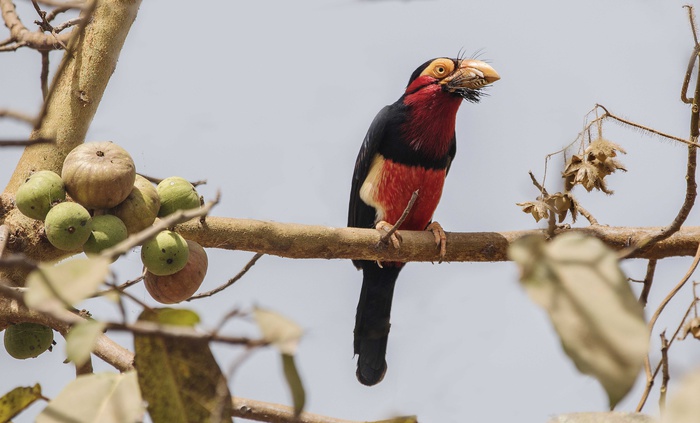
I know this sounds like I’m making this up but honestly I’m not and I can’t believe it as I’m photographing two Bearded Barbets right in front of us, I was in shock! We would never have seen birds like this without Mas’s expertise, quite unbelievable.
I know this sounds like I’m making this up but honestly I’m not and I can’t believe it as I’m photographing two Bearded Barbets right in front of us, I was in shock! We would never have seen birds like this without Mas’s expertise, quite unbelievable.
Blue Breasted Kingfisher.
08th April 2018
08th April 2018
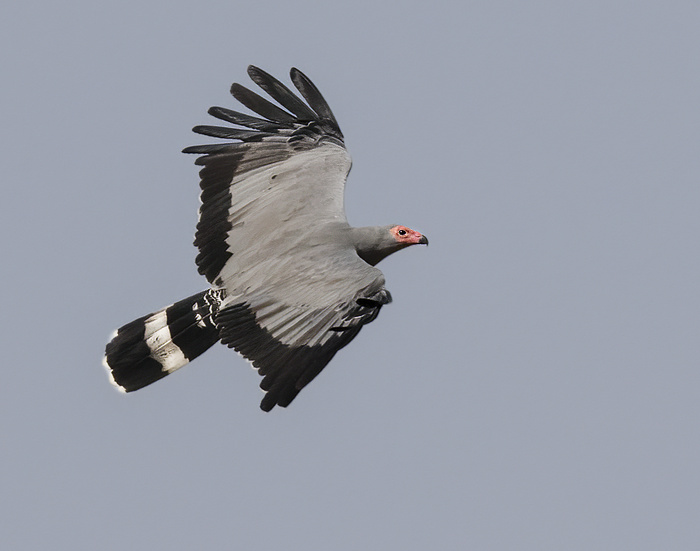
On one of our days out with Mas we went to a place called Marakissa, this is an hotel with gardens run by a Dutchman and his Gambian wife. A very nice couple who are very welcoming and they have a very nice set-up which backs onto a river where a variety of birds can be seen including Pied, Malachite, Giant and Blue Breasted Kingfishers. Pied Kingfishers can be seen throughout The Gambia, however, the other three are more difficult. We went for a walk in the local Savannah where we saw a good variety of birds, at one stage we were walking along and Mas said African Harrier Hawk calling nearby, suddenly a bird flew high into the air from a nearby tree, great birding again by Mas.
In total on the trip we saw 212 species of which only about twenty we had seen previously. We had ordered lunch for our return and we were sat down after we had eaten and Mas said to me ‘sit here and keep looking’, we had been sat watching the drinking pots and a good variety of birds had been coming to drink. It was quite warm and after lunch I felt like dozing off and I must admit to drifting a little bit, it was so pleasant. Suddenly Mas whispered ‘Steve, look’ I couldn’t believe my eyes a Blue Breasted Kingfisher was sat on a branch twenty feet away from us.
These birds are ten inches high!
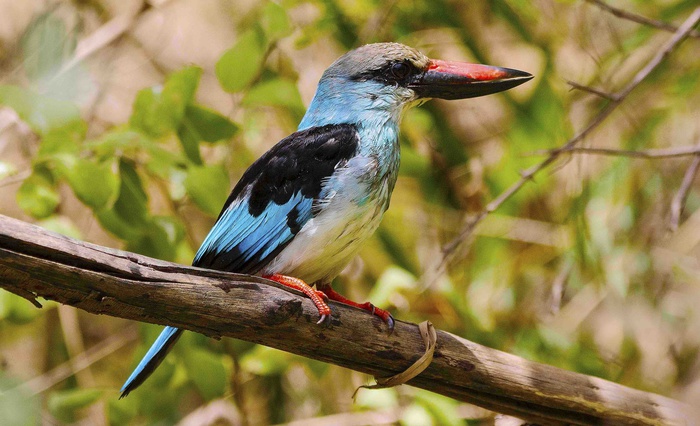
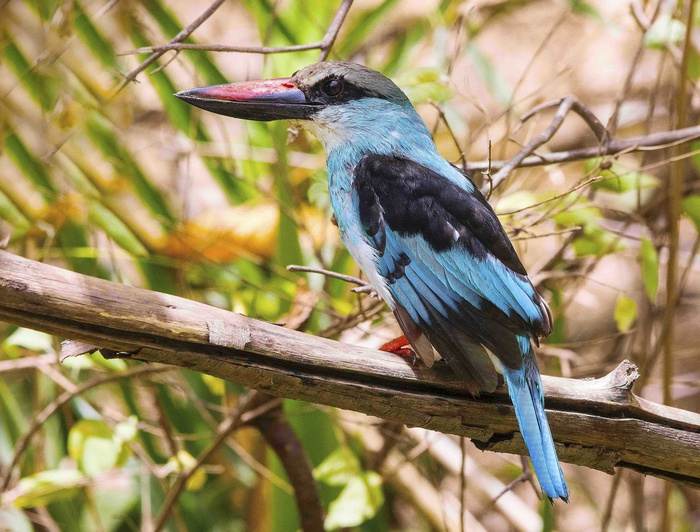
I never thought I would see one that close, what a bird. A great end to a day's birding!!
In total on the trip we saw 212 species of which only about twenty we had seen previously. We had ordered lunch for our return and we were sat down after we had eaten and Mas said to me ‘sit here and keep looking’, we had been sat watching the drinking pots and a good variety of birds had been coming to drink. It was quite warm and after lunch I felt like dozing off and I must admit to drifting a little bit, it was so pleasant. Suddenly Mas whispered ‘Steve, look’ I couldn’t believe my eyes a Blue Breasted Kingfisher was sat on a branch twenty feet away from us.
These birds are ten inches high!
I never thought I would see one that close, what a bird. A great end to a day's birding!!
Abyssinian Roller.
08th April 2018
08th April 2018
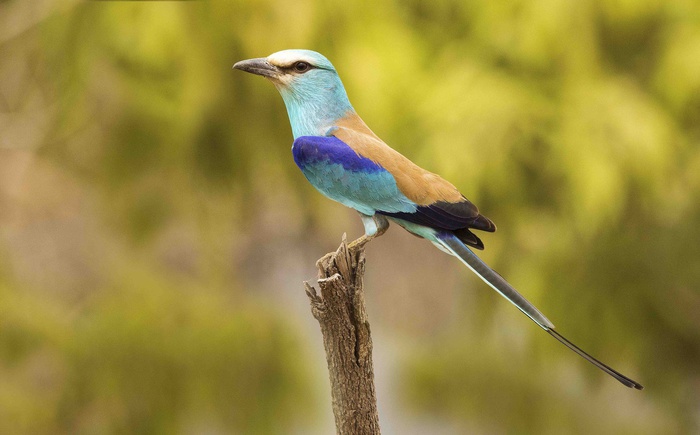
The Abyssinian Roller is fairly common in The Gambia but these birds like all Rollers are quite shy and difficult to approach. I wasn’t having much luck getting close to them when Susan and I were out walking with our guide ‘Mas’. I called him Mas for short, his proper name is Masaneh Sanyang.
Mas pictured outside our accommodation.
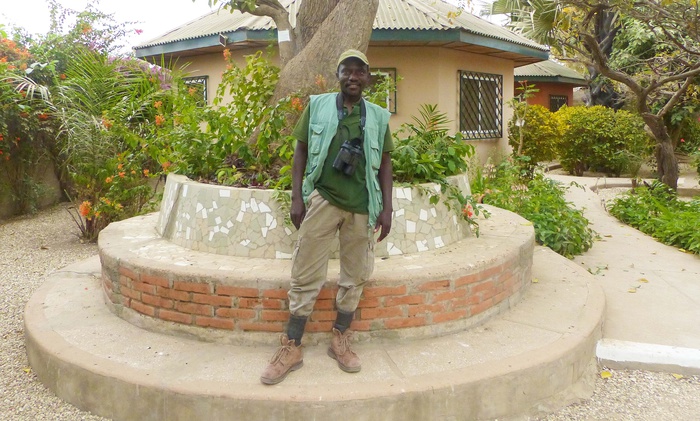
Mas was without doubt the best bird-guide I have ever been out with. He had really incredible eyesight and with his recognition of bird calls and songs combined with his uncanny bird mimicry made him a formidable birder. We were fortunate to have hired his services for six days as part of our holiday package and we extended this to eight days because we were so impressed with his ability. I have heard a few bird-guides names banded about in The Gambia over the years, these guides that are linked to bird tour companies and the likes of Chris Packham etc but if any of them are better than Mas then I would like to see them. He is forty six years old and he told me that a lot of these bird-guides that are leading people on bird trips currently were still in school when he was a bird-guide. Everywhere we went the other guides were in deference to him, he really commanded respect. Susan and I got on really well with him and every day out with him was an experience. We knew we were in for something special when on our first day with him we met him outside the gates of our accommodation and he started calling birds in using his mimicry, in about a minute he had a tree full of birds in front of us, we didn’t know where to look!! At the end of one of our days out we were driving along and he said do you still want Abyssinian Roller, I said yes and he turned off the road and pulled up quietly alongside a bird that I hadn’t seen but he obviously had. He cut the engine and the bird stayed put allowing me to take some shots, a great end to the day.
Mas pictured outside our accommodation.
Mas was without doubt the best bird-guide I have ever been out with. He had really incredible eyesight and with his recognition of bird calls and songs combined with his uncanny bird mimicry made him a formidable birder. We were fortunate to have hired his services for six days as part of our holiday package and we extended this to eight days because we were so impressed with his ability. I have heard a few bird-guides names banded about in The Gambia over the years, these guides that are linked to bird tour companies and the likes of Chris Packham etc but if any of them are better than Mas then I would like to see them. He is forty six years old and he told me that a lot of these bird-guides that are leading people on bird trips currently were still in school when he was a bird-guide. Everywhere we went the other guides were in deference to him, he really commanded respect. Susan and I got on really well with him and every day out with him was an experience. We knew we were in for something special when on our first day with him we met him outside the gates of our accommodation and he started calling birds in using his mimicry, in about a minute he had a tree full of birds in front of us, we didn’t know where to look!! At the end of one of our days out we were driving along and he said do you still want Abyssinian Roller, I said yes and he turned off the road and pulled up quietly alongside a bird that I hadn’t seen but he obviously had. He cut the engine and the bird stayed put allowing me to take some shots, a great end to the day.
The Gambia 2018.
08th April 2018
08th April 2018
We have just arrived home from a 17 day birding trip to The Gambia in West Africa:
I will be writing a series of Blog Posts over the coming weeks to show a flavour of the trip, some images will also follow in a travel folder and the usual full trip report will follow in due course.
All the birds photographed in the following Blog Posts were taken using a Sigma 150-600 Contemporary lens, (Handheld).
A tripod was used only for video recording.
I will be writing a series of Blog Posts over the coming weeks to show a flavour of the trip, some images will also follow in a travel folder and the usual full trip report will follow in due course.
All the birds photographed in the following Blog Posts were taken using a Sigma 150-600 Contemporary lens, (Handheld).
A tripod was used only for video recording.
Spring-like day in a Brecon Beacons Wood.
16th February 2018
16th February 2018
What a glorious late winter day today in the Brecon Beacons with relatively mild temperatures and light winds. A perfect day for a pleasant stroll while looking for signs of spring. We had hoped to hear a Lesser Spotted Woodpecker drumming or singing because this is one of the best times of the year to hear them. However, we had no luck today and even hearing these birds is becoming increasingly more difficult every year. We did see two Hawfinches earlier this week in Brecon,
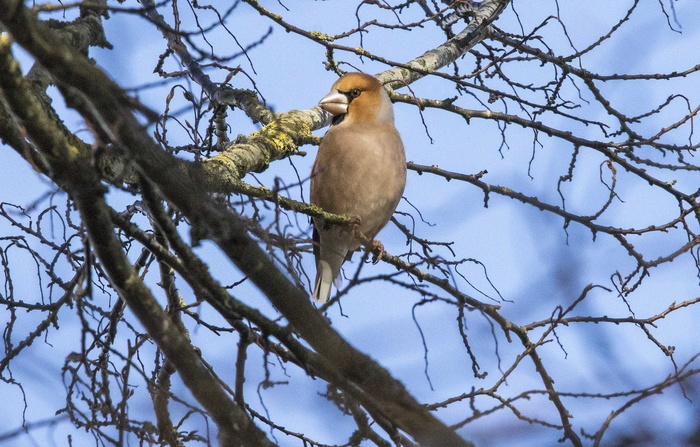
and at least you have a chance this winter to see these elusive finches because of a very large movement of them into the UK. Apparently there is a failure of the food crop they feed on in winter, in Germany in particular, and this has resulted in very large numbers of these birds in the UK, flocks of up to three hundred in southern England, unprecedented in our lifetime. We saw twenty birds in a churchyard near Hay on Wye this week which would never usually happen in winter.
As we walked through a local woodland today Susan heard the faint hoot of a Tawny Owl, I know there are birds in this wood and they sometimes sit out sunbathing on a day such as this near to their favourite roosting area. We walked on through the woods and one flew into the open and perched in front of us.
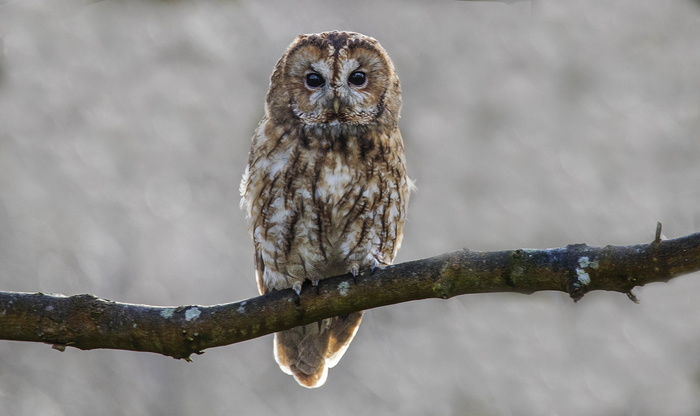
I fired a few quick frames off with my Sigma 150-600 Contemporary lens and managed to get a couple of record shots, something I wouldn’t have been able to do with my Canon 600 f4 lens. The Owl then flew up into the Ivy-clad trees and disappeared, it was all over in ten seconds!
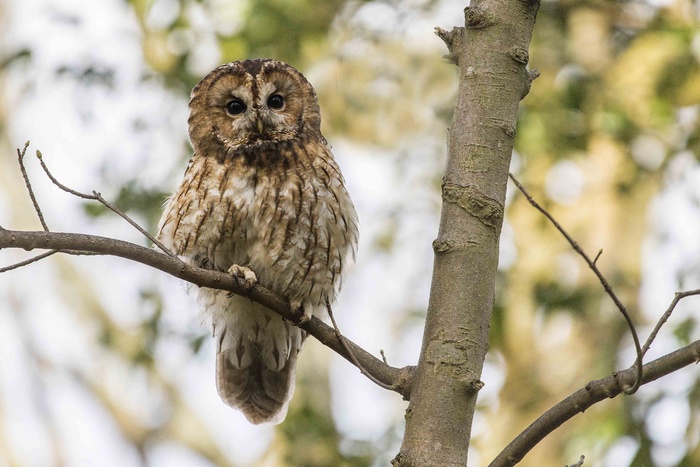
Albeit a very brief encounter it finished off a pleasant walk and we both left contented at seeing a lovely woodland bird.
and at least you have a chance this winter to see these elusive finches because of a very large movement of them into the UK. Apparently there is a failure of the food crop they feed on in winter, in Germany in particular, and this has resulted in very large numbers of these birds in the UK, flocks of up to three hundred in southern England, unprecedented in our lifetime. We saw twenty birds in a churchyard near Hay on Wye this week which would never usually happen in winter.
As we walked through a local woodland today Susan heard the faint hoot of a Tawny Owl, I know there are birds in this wood and they sometimes sit out sunbathing on a day such as this near to their favourite roosting area. We walked on through the woods and one flew into the open and perched in front of us.
I fired a few quick frames off with my Sigma 150-600 Contemporary lens and managed to get a couple of record shots, something I wouldn’t have been able to do with my Canon 600 f4 lens. The Owl then flew up into the Ivy-clad trees and disappeared, it was all over in ten seconds!
Albeit a very brief encounter it finished off a pleasant walk and we both left contented at seeing a lovely woodland bird.
The ‘Old War Horse’ is moving on.
18th January 2018
18th January 2018
This week I sold my old Canon 1D Mark ii camera on ebay. This camera never let me down in over ten years of use, it was still performing flawlessly. I have only used it for landscape work for the majority and it still delivered very good quality images, but there comes a time when new technology emerges that questions why you are still clinging on to the past.
When I looked in my photography cupboard last week I could see, in addition to the above camera;
Two Leica 7 x 42 BA binoculars and a Leica 62mm APO Spotting scope with 20-60 eyepiece, all just gathering dust. I know I said I wouldn’t part with the Leica bins in a previous equipment review but I’m so impressed with my Vortex Razor binoculars that the Leica's were just going to remain there.
These items all sold really quickly on ebay for a good price - quality always sells!
These items went a long way to offsetting the cost of new equipment and this week, after much deliberation, I decided to buy a Canon 1D Mark IV, a full frame camera with a 30mp sensor, 4K Video and a 3.2” rear touch screen. I will now be using this camera for landscape work and the odd video but it can still be used for wildlife if necessary. I have been familiarizing myself with the new controls, some of which are featured on my Canon 7D II. It is a hugely impressive angle of view when looking through the viewfinder at home when using this 5D IV with my Canon 17-40 f4 lens. I am very busy this week with family commitments so I can’t wait to try the new camera out next week.

Canon 1D ii 'War Horse'

Canon 5D IV with Battery Grip

Canon 5D IV with Battery Grip

Canon 1D ii (small rear screen)
Still in great condition!
As an footnote I was very pleased to hear from the new owner of the Leica APO scope that is is going to be used in the Dominican Republic to help locate displaced and stranded wildlife affected by the recent Hurricanes.
When I looked in my photography cupboard last week I could see, in addition to the above camera;
Two Leica 7 x 42 BA binoculars and a Leica 62mm APO Spotting scope with 20-60 eyepiece, all just gathering dust. I know I said I wouldn’t part with the Leica bins in a previous equipment review but I’m so impressed with my Vortex Razor binoculars that the Leica's were just going to remain there.
These items all sold really quickly on ebay for a good price - quality always sells!
These items went a long way to offsetting the cost of new equipment and this week, after much deliberation, I decided to buy a Canon 1D Mark IV, a full frame camera with a 30mp sensor, 4K Video and a 3.2” rear touch screen. I will now be using this camera for landscape work and the odd video but it can still be used for wildlife if necessary. I have been familiarizing myself with the new controls, some of which are featured on my Canon 7D II. It is a hugely impressive angle of view when looking through the viewfinder at home when using this 5D IV with my Canon 17-40 f4 lens. I am very busy this week with family commitments so I can’t wait to try the new camera out next week.
Canon 1D ii 'War Horse'
Canon 5D IV with Battery Grip
Canon 5D IV with Battery Grip
Canon 1D ii (small rear screen)
Still in great condition!
As an footnote I was very pleased to hear from the new owner of the Leica APO scope that is is going to be used in the Dominican Republic to help locate displaced and stranded wildlife affected by the recent Hurricanes.